1
/
of
2
エーザイ 株式会社
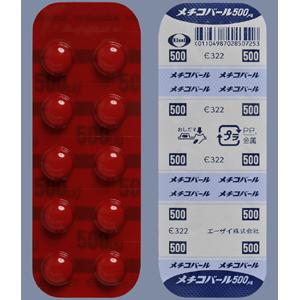
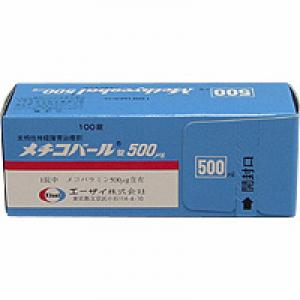
Methycobalamin tablets 500μg (100 tablets) (Eisai Mikopo)
Methycobalamin tablets 500μg (100 tablets) (Eisai Mikopo)
Regular price
¥3,100 JPY
Regular price
Sale price
¥3,100 JPY
Unit price
/
per
Taxes included.
Couldn't load pickup availability
Methylcobalamin tablets are an oral medication with methylcobalamin as the main ingredient. Methylcobalamin is the active form of vitamin B12 and has the effect of promoting nerve repair and nourishing nerves .
I. Basic Drug Information
- Generic name : Methylcobalamin
- English name : Methycobal
- Product Name : Methylcobalamin Tablets, Mecobalamin 250, Mecobalamin 500, Methylcobalamin Fine Granules 0.1%
- Dosage forms : sugar-coated tablets (250μg, 500μg), fine granules (0.1%)
- Indications : Peripheral neuropathy
-
Element
- Active ingredient : Each 250μg tablet contains 250μg of methylcobalamin; each 500μg tablet contains 500μg of methylcobalamin; each 1g of 0.1% fine granules contains 1000μg (1mg) of methylcobalamin.
-
add value
- 250μg tablets: calcium carbonate, hydrated silica, crystalline cellulose, titanium dioxide, stearic acid, calcium stearate, refined white sugar, talc, precipitated calcium carbonate, corn starch, lactose hydrate, white beeswax, hydroxypropyl cellulose, polyethylene glycol, povidone, polyethylene glycol 6000.
- 500μg tablets: calcium carbonate, hydrated silica, crystalline cellulose, titanium dioxide, stearic acid, calcium stearate, refined white sugar, talc, precipitated calcium carbonate, corn starch, lactose hydrate, white beeswax, hydroxypropyl cellulose, polyethylene glycol, povidone, polyethylene glycol 6000.
- 0.1% Fine particles: hydrated silica, crystalline cellulose, Red No. 102, corn starch, hydroxypropyl cellulose, D-mannitol.
-
Properties
- 250μg tablets: white sugar-coated tablets, identification code 321, diameter 6.2mm, weight 95mg, thickness 3.4mm.
- 500μg tablets: white sugar-coated tablets, identification code 322, diameter 7.3mm, weight 155mg, thickness 4.0mm.
- 0.1% Fine Granules: Peach-red fine granules.
- Methylcobalamin: Dark red crystals or crystalline powder, slightly soluble in water, poorly soluble in ethanol (99.5%), almost insoluble in acetone, and easily decomposes upon exposure to light.
II. Usage and Dosage
- 250μg tablets : Usually, adults take 6 tablets (1500μg of methylcobalamin) orally in 3 divided doses daily. The dosage may be adjusted according to age and symptoms.
- 500μg tablets : Usually, adults take 3 tablets (1500μg of methylcobalamin) orally in 3 divided doses daily. The dosage may be adjusted according to age and symptoms.
- 0.1% Fine Granules : The usual adult dose is 3 packets (1500 μg of methylcobalamin) taken orally in 3 divided doses daily. The dosage may be adjusted according to age and symptoms.
III. Taboos
No relevant information recorded.
IV. Precautions
-
Special populations
- Children, etc.: No clinical trials have been conducted for children, etc.
- People working with mercury and its compounds should avoid long-term, high-dose use.
-
Medication guidance
- If no effect is seen after taking this medicine, it should not be taken continuously for more than one month.
- PTP-packaged medications must be removed from the PTP blister pack before consumption to avoid accidental ingestion of the PTP blister pack, which could lead to esophageal mucosal puncture, perforation, and serious complications such as mediastinitis.
-
Drug Preservation
- Storage method: Store at room temperature.
- Tablets (PTP sheet packaging): Must be stored away from light and moisture (light exposure will reduce the content, and moisture may cause the tablets to turn red).
- Tablets (bottled): After opening the bottle or aluminum bag, they should be stored away from light and moisture (light will reduce the content, and moisture may cause the tablets to turn red).
- Fine granules: Do not remove from the packaging and mix; keep away from light (light will reduce the content).
V. Adverse Reactions
- Allergic reactions : Rash may occur occasionally (incidence <0.1%).
- Digestive system reactions : Loss of appetite, nausea, vomiting, and diarrhea may occur (incidence rate 0.1%~5%).
VI. Drug Interactions
No relevant information recorded.
VII. Pharmacological effects
- Adjusting biomembrane function : No relevant information recorded.
- Improves metabolic abnormalities : It acts as a coenzyme in methionine synthase, which is involved in the synthesis of methionine from homocysteine, and plays an important role in methyl transfer reactions; in experimental systems of brain-derived cells and spinal cord nerve cells, it participates in the process of thymidine synthesis from deoxyuridine, promotes the utilization of stored folic acid, participates in nucleic acid metabolism, and promotes nucleic acid and protein synthesis (compared to cyanocobalamin).
- Regulating blood lipids : No relevant information recorded.
- Protecting blood vessels : No relevant information recorded.
-
other
- Compared to cyanocobalamin, it is more likely to migrate into organelles within nerve cells.
- It can normalize the transport of skeletal proteins in the axons of sciatic nerve cells induced by streptozotocin in experimental diabetic rats; and can inhibit the appearance of degenerated nerves and promote intraaxonal transport and axonal regeneration from the perspectives of neuropathology and electrophysiology in the neurological disorders (rat and mouse) caused by drug-induced neurological disorders (rat and mouse) and axonal degeneration model mice and naturally occurring diabetic rats caused by doxorubicin, acrylamide, and vincristine.
- It promotes myelin formation (lecithin synthesis) and, compared to cyanocobalamin, increases the myelin formation rate of nerve fibers in cultured nerve tissue.
- It can restore the excitability of nerve fibers in damaged sciatic nerves and enable early recovery of endplate potentials; it can restore the amount of acetylcholine in the rat brain to normal levels due to choline-deficient diet, and improve the situation of delayed nerve conduction and reduced neurotransmitters.
VIII. Pharmacokinetics
-
absorb
- Single dose: After a single oral administration of 120 μg or 1500 μg of this drug on an empty stomach in healthy adult males, the peak plasma concentration is reached in about 3 hours, and absorption is concentration-dependent. The peak time for the 120 μg group was 2.8 ± 0.2 hours, the peak concentration was 743 ± 47 pg/mL, the increase in serum total vitamin B12 concentration compared to before administration was 37 ± 15 pg/mL, the percentage increase was 5.1 ± 2.1%, the increase in area under the curve from 0 to 12 hours was 168 ± 58 pg·hr/mL, and the half-life could not be calculated. The peak time for the 1500 μg group was 3.6 ± 0.5 hours, the peak concentration was 972 ± 55 pg/mL, the increase in serum total vitamin B12 concentration compared to before administration was 255 ± 51 pg/mL, the percentage increase was 36.0 ± 7.9%, the increase in area under the curve from 0 to 12 hours was 2033 ± 510 pg·hr/mL, and the half-life was 12.5 hours.
- Repeated administration: Healthy adult males took 1500 μg orally daily for 12 weeks. After 4 weeks of administration, the total vitamin B12 level in the serum was approximately twice that before administration. It then gradually increased, reaching approximately 2.8 times that before administration after 12 weeks. After 4 weeks of discontinuation, it was still approximately 1.8 times that before administration.
- Excretion : Within 8 hours after administration, the total amount of vitamin B12 excreted in urine is 40%-90% of the amount excreted 24 hours after administration.
IX. Clinical Research
- Domestic clinical trial (dose comparison trial): For peripheral neuropathy, a double-blind comparative trial was conducted, administering mecobalamin 1500 μg/day and 120 μg/day (low-dose group) orally in three divided doses for four consecutive weeks. For chronic and fixed-phase cases, the improvement rate (improvement or better) was 17.6% (6/34) in the 1500 μg group and 9.7% (3/31) in the 120 μg group; the proportion of slight improvement or better was 64.7% (22/34) in the 1500 μg group and 41.9% (13/31) in the 120 μg group, indicating that the 1500 μg/day dose is effective.
- Domestic clinical trial (compared to cyanocobalamin and placebo): For peripheral nerve disorders, patients were given 1500 μg/day of this drug, 1500 μg/day of cyanocobalamin, and placebo orally for 4 consecutive weeks in a double-blind comparative trial. Regarding the overall improvement (moderate or better), the improvement rate was 38.6% (17/44) in the drug group, 22.2% (10/45) in the cyanocobalamin group, and 26.7% (12/45) in the placebo group, indicating the effectiveness of this drug.
10. Packaging Specifications
- 250μg tablets : 100 tablets (10 tablets x 10, PTP packaging), 500 tablets (bottled with desiccant), 1000 tablets (10 tablets x 100, PTP packaging).
- 500μg tablets : 100 tablets (10 tablets x 10, PTP packaging), 210 tablets (21 tablets x 10, PTP packaging), 500 tablets (bottled, with desiccant), 1000 tablets (10 tablets x 100, PTP packaging), 1050 tablets (21 tablets x 50, PTP packaging), 3000 tablets (10 tablets x 300, PTP packaging), 3000 tablets (aluminum bag, 1000 tablets x 3).
- 0.1% fine granules : 60g (0.5g×3×40, divided into packets).
XI. Production Information
Manufacturer : E-Zai Co., Ltd.
Share