1
/
of
1
参天製薬株式会社
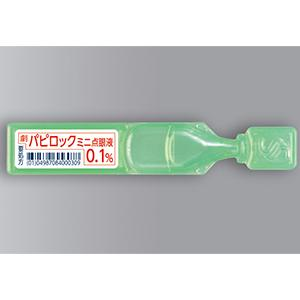
Cyclosporine Eye Drops 0.1% 0.4ml 30 パピロックミニ Eye Drops 0.1% Papilock Mini Dry Eye Symptoms
Cyclosporine Eye Drops 0.1% 0.4ml 30 パピロックミニ Eye Drops 0.1% Papilock Mini Dry Eye Symptoms
Regular price
¥12,500 JPY
Regular price
Sale price
¥12,500 JPY
Unit price
/
per
Taxes included.
Couldn't load pickup availability
Papilock Mini Cyclosporine Eye Drops 0.1% contain cyclosporine, an immunosuppressant ophthalmic medication. It relieves symptoms such as dry eye and foreign body sensation caused by keratoconjunctivitis sicca (dry eye syndrome) by suppressing abnormal ocular immune responses and reducing inflammation. It is suitable for patients who do not respond well to other treatments.
I. Basic Drug Information
- Generic name : Cyclosporine
- English name : Ciclosporin
- Product name : PAPILOCK Mini ophthalmic solution 0.1%
- Dosage form : sterile aqueous eye drops
- Indications : Spring catarrh (used when antihistamines are ineffective), suitable for cases of giant papillary hyperplasia of the palpebral conjunctiva where antihistamines are ineffective.
-
Element :
- Active ingredients: 1 mL contains 1 mg of シクロスポリン.
- Additives: ethylene glycol, polyoxyethylene 40 stearate, sodium chloride, sodium dihydrogen phosphate hydrate, sodium edetate hydrate, hydroxypropyl methylcellulose, pH adjuster.
-
Characteristics :
- Appearance: Colorless, clear liquid.
- pH: 6.5~7.5.
- Osmotic pressure ratio: 1.0~1.1.
II. Usage and Dosage
Usually, 1 drop at a time, 3 times a day.
III. Taboos
- Patients with a history of allergy to any of the ingredients in this product.
- Patients with eye infections (which may cause the infection to flare up or worsen).
IV. Precautions
-
Special populations :
- Pregnant women: Use only when the benefits of treatment clearly outweigh the risks. Animal studies (oral in rats) have shown teratogenic effects, dystocia, and perinatal mortality risks, and it has been shown to cross the placenta in humans (oral).
- Breastfeeding women: The benefits of treatment and the nutritional benefits of breast milk should be weighed to decide whether to continue breastfeeding (it has been proven that oral administration of drugs can enter breast milk).
- Children: No clinical studies have been conducted on low birth weight infants, newborns, infants, and toddlers; when administered orally, the incidence of hirsutism in children (10-18%) is higher than in adults (2-6%).
- Elderly individuals: Due to the usual decline in physiological functions, caution should be exercised when using this product.
-
Medication instructions :
- This medication should be used under the guidance of a physician skilled in spring catarrh treatment.
- This medication may trigger or worsen infections, and its use in combination with other immunosuppressants increases this risk, requiring close monitoring.
- When instilling eye drops, please note: Discard the first 1-2 drops (to prevent container fragments); avoid contact between the tip of the container and the eye; after instilling the drops, close your eyes and press on the lacrimal sac for 1-5 minutes; wipe off any contact with the skin immediately; allow at least 5 minutes between applications and use with other eye drops; use once opened and discard any remaining liquid; store protected from light.
-
Medication storage :
- Unopened: Store at room temperature. Shelf life: 3 years.
- After opening the aluminum-plastic packaging: place it in a light-proof dosing bag and use within 6 months if stored at room temperature; if stored at 2~8℃, use within 1 year.
- Do not use if the solution is cloudy.
V. Adverse Reactions
- Allergic reaction : Itchy eyes may occur (frequency unknown).
-
Other reactions :
- Ocular (1-5% untreated): eye irritation, corneal erosion, corneal ulcer (including corneal epithelial defects, keratitis, etc.).
- Ocular symptoms (1% unsatisfied): dry eyes, corneal edema, anterior chamber flare, tearing, blepharitis, eye pain, conjunctival congestion, etc.
- Infectious diseases (1% unsatisfactory): herpetic keratitis, stye, bacterial conjunctivitis, bacterial corneal ulcer, etc.
- Other (1% not fully compliant): Elevated ALT, elevated LDH, elevated BUN, elevated CK, positive urine ketones, elevated Mg, etc.
VI. Drug Interactions
This drug is mainly metabolized by the metabolic enzyme CYP3A. When used in combination with other drugs metabolized by this enzyme, it may increase the drug's blood concentration, so caution is advised.
VII. Pharmacological effects
- Mechanism of action : Cyclosporin binds to cyclin in T cells, inhibiting the dephosphorylation of the transcription factor NFAT and reducing the production of cytokines such as IL-2.
-
Other uses :
- It inhibits the production of cytokines such as IL-2, IL-4, IL-5, and IFN-γ by peripheral blood mononuclear globulins.
- It has an inhibitory effect on experimental allergic conjunctivitis, and can reduce histamine release and neutrophil infiltration in conjunctival tissue.
VIII. Pharmacokinetics
- Absorption : After eye drops, the blood concentration is below the lower limit of quantification (25 ng/mL). It is mainly distributed in the external ocular tissues such as the cornea and conjunctiva, with less migration to the internal ocular tissues (aqueous humor, lens, etc.).
- Excretion : Within 96 hours after a single eye instillation, 92.1% was excreted in feces and 3.1% in urine.
IX. Clinical Research
Domestic Phase II/III trials showed that in patients with spring catarrh (aged 7-39 years) who did not respond well to histamine, this drug was administered three times daily to the eyes. After 8 weeks of treatment, the palpebral conjunctival papillary score was significantly improved. The incidence of side effects was 22.2%, mainly eye irritation (14.8%) and pruritus (7.4%).
10. Packaging Specifications
Aluminum-plastic eye drop containers, 0.4mL × 90 bottles (30 bottles per bag, 3 bags in total, containing oxygen absorber).
XI. Production Information
Manufacturer : Santen Pharmaceutical Co., Ltd.
Share