第一三共株式会社
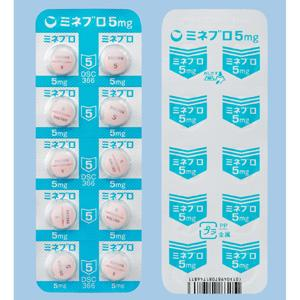
Minnebro Exacillinone Tablets 5.0mg 100 tablets MINNEBRO TABLETS Daiichi Sankyo Hypertension
Minnebro Exacillinone Tablets 5.0mg 100 tablets MINNEBRO TABLETS Daiichi Sankyo Hypertension
無法載入取貨服務供應情況
Minnebro esaxillin tablets are mineralocorticoid receptor antagonists that lower blood pressure by blocking mineralocorticoid receptors.
Used for the treatment of hypertension.
I. Basic Drug Information
- Generic name : Esaxerenone
- English name : MINNEBRO TABLETS, OD TABLETS
- Product name : MINNEBRO, MINNEBRO OD
- Dosage form : Plain tablets, oral disintegrable tablets (OD tablets)
- Indications : Hypertension
-
Element
Sales Name Active ingredients add value Minebro tablets 1.25mg One tablet contains 1.25 mg of ethasil. Lactose water and its components, low-substituted hydroxypropyl cellulose, hydroxypropyl cellulose, magnesium stearate, and yellow ferric oxide. Minebro tablets 2.5mg One tablet contains 2.5 mg of ethasil. Lactose water and its components, low-substituted hydroxypropyl cellulose, hydroxypropyl cellulose, magnesium stearate, and yellow ferric oxide. Minebro tablets 5mg One tablet contains 5mg of ethasil. Lactose water, low-substituted hydroxypropyl cellulose, hydroxypropyl cellulose, magnesium stearate, ferric oxide Minebro OD Tablets 1.25mg One tablet contains 1.25 mg of ethasil. Lactose water, low-substituted hydroxypropyl cellulose, hydroxypropyl cellulose, D-mannitol, crystalline cellulose, hydroxypropyl methylcellulose, povidone, light anhydrous silica, magnesium stearate, yellow ferric oxide Minebro OD Tablets 2.5mg One tablet contains 2.5 mg of ethasil. Lactose water, low-substituted hydroxypropyl cellulose, hydroxypropyl cellulose, D-mannitol, crystalline cellulose, hydroxypropyl methylcellulose, povidone, light anhydrous silica, magnesium stearate, yellow ferric oxide Minebro OD Tablets 5mg One tablet contains 5mg of ethasil. Lactose water, low-substituted hydroxypropyl cellulose, hydroxypropyl cellulose, D-mannitol, crystalline cellulose, hydroxypropyl methylcellulose, povidone, light anhydrous silica, magnesium stearate, ferric oxide -
Properties
Sales Name Dosage form color shape Diameter (mm) Thickness (mm) Weight (mg) Minebro tablets 1.25mg vegetarian tablets pale yellow to white - 6.6 Approximately 3.2 Approximately 100 Minebro tablets 2.5mg Plain tablets (with serrated edges) pale yellow to white - 8.1 Approximately 4.1 Approximately 200 Minebro tablets 5mg Plain tablets (with serrated edges) Slightly reddish white - 8.1 Approximately 4.1 Approximately 200 Minebro OD Tablets 1.25mg Plain tablets (orally collapsible tablets) pale yellow to white - 6.5 Approximately 3.1 Approximately 87 Minebro OD Tablets 2.5mg Plain tablets (collapse tablets for oral administration, with secant lines) pale yellow to white - 8.0 Approximately 4.0 Approximately 174 Minebro OD Tablets 5mg Plain tablets (collapse tablets for oral administration, with secant lines) Slightly reddish white - 8.0 Approximately 4.0 Approximately 174
II. Usage and Dosage
- The usual dosage for adults is 2.5 mg orally once daily, based on esaxaxillamine. If the effect is not satisfactory, the dosage may be increased to 5 mg.
-
Dosage for special populations
- For patients with moderate renal impairment (eGFR ≥ 30 mL/min/1.73 m² and ≤ 60 mL/min/1.73 m²) and diabetic patients with albuminuria or proteinuria, the initial dose is 1.25 mg orally once daily. Depending on the patient's serum potassium level and other conditions, the dose can be increased to 2.5 mg orally once daily after 4 weeks of treatment. If the effect is still not satisfactory, the dose can be increased to 5 mg.
- Dosage and administration precautions : If serum potassium levels exceed 5.0 mEq/L during administration, dose reduction should be considered; if they reach 5.5 mEq/L or above, dose reduction or discontinuation is required; if they reach 6.0 mEq/L or above, discontinuation is required immediately.
III. Taboos
- Patients with a history of allergy to any of the ingredients in this medicine.
- Patients with hyperkalemia or whose serum potassium level exceeds 5.0 mEq/L at the start of administration (there is a risk of exacerbating hyperkalemia).
- Patients with severe renal impairment (eGFR below 30 mL/min/1.73 m²).
- Patients currently using eplerenone preparations or potassium preparations (potassium chloride, potassium aspartate, potassium glutamate, potassium acetate), potassium retention diuretics (spironolactone, triamterene, tramapamide) (except when radioactive iodine is used for internal thyroid irradiation protection or to lower blood pressure), or aldosterone antagonists.
- Patients with a history of radioactive iodine irradiation inside the thyroid gland.
IV. Precautions
-
Special populations
- Patients with renal impairment : Contraindicated in patients with severe renal impairment; patients with moderate renal impairment should start with a low dose and monitor serum potassium levels more frequently, as the risk of hyperkalemia may be increased.
- Patients with liver impairment : Blood drug concentrations may be elevated in patients with severe liver impairment (Child-Pugh classification C), and no clinical trials have been conducted for this population; therefore, caution is advised when administering this medication. Patients with mild or moderate liver impairment (Child-Pugh classification A and B) should also have their condition monitored for changes when using this medication.
- Pregnant women and women who may become pregnant : administer only when the benefits of treatment outweigh the risks. A single oral administration of 14C-exaxilam to late-pregnancy rats resulted in radioactive transfer to the fetus; no teratogenicity was observed in rat and rabbit studies, but decreased corpus luteum number, implantation number, number of surviving embryos, and newborn weight were observed in rats.
- Lactating women : The decision to continue breastfeeding or discontinue medication should be made by comprehensively considering the treatment benefits and the nutritional benefits of breast milk. In lactating rats, a single oral administration of 14C-exaxilam resulted in radioactive transfer into breast milk.
- Children : No clinical trials have been conducted in children, and safety and efficacy have not been established.
- Elderly individuals : It is generally not recommended to lower blood pressure excessively, as this may trigger strokes or other complications. Furthermore, older adults often experience a decline in kidney function, which may increase the risk of hyperkalemia, necessitating more frequent monitoring of serum potassium levels.
- Diabetic patients with albuminuria or proteinuria need more frequent monitoring of serum potassium levels, as the risk of developing hyperkalemia may be increased.
-
Medication guidance
- During the administration period, serum potassium levels should be measured in principle before administration, within 2 weeks after administration (or after dose adjustment), and approximately 1 month later, and should also be measured periodically thereafter.
- Because dizziness and other symptoms may occur due to the blood pressure lowering effect, patients should be reminded to be cautious when performing dangerous mechanical operations such as working at heights or driving cars.
- When delivering medications, patients should be instructed that: medications packaged in PTP should be removed from the PTP blister pack before taking them to avoid accidentally swallowing the PTP blister pack, which could cause esophageal mucosal puncture or perforation and lead to serious complications such as mediastinitis; OD tablets can be placed on the tongue and disintegrate after being moistened by saliva, and can be taken without water, or can be taken with water, but patients are prohibited from taking OD tablets while lying down without water.
- The tablets of Minebro tablets 1.25mg, Minebro tablets 2.5mg, Minebro OD tablets 1.25mg, and Minebro OD tablets 2.5mg may have yellow spots on their surface due to the use of pigments; the tablets of Minebro tablets 5mg and Minebro OD tablets 5mg may have red spots on their surface due to the use of pigments, which is a normal phenomenon.
- Once opened, the aluminum-plastic packaging must be stored in a moisture-proof environment.
- Drug storage : Store at room temperature; shelf life is 3 years.
V. Adverse Reactions
- Allergic reactions : Allergic symptoms such as rashes may occur. If any abnormalities occur, discontinue use and take appropriate measures.
- Digestive system reactions : Symptoms such as diarrhea and nausea may occur. Close observation is required. If the symptoms are severe, appropriate treatment measures should be taken.
-
Other adverse reactions
system 1% or more Below 1% Frequency unknown blood - Anemia, thrombocytopenia, leukopenia - metabolism Elevated serum potassium levels, increased serum uric acid, hyperuricemia gout hyponatremia Nervous system - Dizziness, headache - liver - Abnormal liver function, elevated γ-GTP - Urinary system - Kidney function impairment, decreased GFR, increased serum creatinine, elevated BUN - other - Abnormal sensation, low blood pressure - - Serious adverse reactions : Hyperkalemia (incidence 1.7%). Serum potassium levels need to be monitored regularly. If abnormalities occur, the drug should be discontinued or the dosage adjusted and appropriate treatment measures should be taken.
VI. Drug Interactions
| Drug category / Drug name | Clinical symptoms and treatment methods | Mechanisms and Risk Factors |
|---|---|---|
| Potassium retention diuretics (spironolactone, triamterene, tramapamide, etc.) [Reference 2.4] | It may lead to an increase in serum potassium levels. | Potassium retention may be enhanced |
| Potassium preparations (potassium chloride, potassium aspartate, potassium glutamate, potassium acetate, etc.) [Ref. 2.4] | It may lead to an increase in serum potassium levels. | Potassium retention may be enhanced |
| Aldosterone antagonists | It may lead to an increase in serum potassium levels. | Potassium retention may be enhanced |
| Angiotensin inhibitors [Reference 8.1] | This may induce an increase in serum potassium levels, requiring more frequent monitoring of serum potassium levels. | - |
| Potent CYP3A inhibitors (itraconazole, clarithromycin, erythromycin, fluconazole, etc.) [Refer to 8.1, 16.7.1] | This may induce an increase in serum potassium levels, requiring more frequent monitoring of serum potassium levels. | CYP3A inhibitors inhibit the metabolism of this drug, thus increasing its plasma concentration. |
| Foods containing potent CYP3A inducers (rifampin, phenytoin, carbamazepine, etc.) and St. John's Wort [Ref. 16.7.2] | This may weaken the effect of this medication; therefore, it is advisable to avoid taking it concurrently with these medications/foods during the course of treatment. | CYP3A inducers promote the metabolism of this drug, thus reducing its plasma concentration. |
| Lithium preparations (lithium carbonate) | This may cause lithium poisoning; blood lithium levels should be monitored. | The mechanism is not yet clear, but some believe that sodium deficiency promotes lithium ion retention, and this drug may induce lithium poisoning by promoting sodium excretion. |
| Nonsteroidal anti-inflammatory drugs (NSAIDs) (such as indomethacin) [Reference 8.1] | This may weaken the antihypertensive effect of the drug, and patients with impaired renal function may develop hyperkalemia. | The mechanism is not yet clear, but it may be due to the inhibition of prostaglandin production, leading to enhanced sodium retention, which in turn weakens the antihypertensive effect and causes an increase in serum potassium levels; the risk factor is renal impairment. |
| Aminopterin | It may inhibit the action of triamterene. | The mechanism is not yet clear, but there are reports that similar drugs (spironolactone) can inhibit the efficacy of triamterene. |
| itraconazole | In 20 healthy adult males, when ethaxiloxin 2.5 mg was co-administered with itraconazole 200 mg (twice daily on day 1, once daily thereafter), the plasma AUC and Cmax of ethaxiloxin increased by 1.5 times and 1.1 times, respectively, compared with the treatment alone [Reference 10.2]. | CYP3A inhibitors inhibit the metabolism of this drug, thus increasing its plasma concentration. |
| Rifampicin | In 11 healthy adult males, when ethaxiloxin 5 mg was co-administered with rifampin 600 mg (once daily), the plasma AUC and Cmax of ethaxiloxin were reduced by 0.31 times and 0.66 times, respectively, compared with the monotherapy [Reference 10.2]. | CYP3A inducers promote the metabolism of this drug, thus reducing its plasma concentration. |
| Amlodipine | In 22 healthy adult males, when exaxilam 2.5 mg was co-administered with amlodipine 10 mg (once daily), amlodipine had no effect on the pharmacokinetics of exaxilam in plasma. In 18 healthy adult males, when amlodipine 2.5 mg was co-administered with exaxilam 5 mg (once daily), the AUC of amlodipine in plasma increased by 1.2 times compared with the monotherapy, but the Cmax did not increase. | - |
| Digoxin | In 19 healthy adult males, when esaxaxillamine 5 mg (once daily) was combined with digoxin 0.25 mg (once daily), the Cmax of digoxin in steady-state plasma increased by 13% compared with that of digoxin alone, but the trough concentration and AUC did not increase. | - |
VII. Pharmacological effects
- Modulating biomembrane function : Exasilen is a non-steroidal mineralocorticoid receptor blocker that can selectively bind to the nuclear mineralocorticoid receptor and inhibit the activation of the mineralocorticoid receptor by aldosterone, an adrenocortical hormone produced by the renin-angiotensin system, etc., thereby potentially regulating biomembrane-related functions and improving abnormal states caused by excessive receptor activation.
- Improving metabolic abnormalities : In hypertensive animal models (DOCA hypertensive rats and Dahl salt-sensitive hypertensive rats), esaxil can dose-dependently and persistently inhibit the rise in blood pressure, possibly by improving metabolic abnormalities related to blood pressure regulation; at the same time, it has a certain regulatory effect on abnormal changes in metabolic indicators such as serum potassium and uric acid, reducing the risk of metabolic-related adverse reactions such as hyperkalemia and hyperuricemia.
- Regulating blood lipids : The direct effect of regulating blood lipids has not been explicitly mentioned. It mainly has a positive impact on the overall health of the cardiovascular system by lowering blood pressure and improving related metabolic disorders, which may indirectly help maintain the stability of blood lipid metabolism.
- Protecting blood vessels : By inhibiting excessive activation of mineralocorticoid receptors and reducing aldosterone-mediated vascular damage, such as alleviating endothelial dysfunction and inhibiting vascular smooth muscle proliferation, it exerts a vascular protective effect and slows the progression of hypertension-related vascular lesions.
- Mechanism of action supplement : It is known that excessive activation of mineralocorticoid receptors promotes the reabsorption of sodium and water in urine, leading to elevated blood pressure and accelerating damage to tissues such as the heart, blood vessels, and kidneys. Exaxilam exerts its antihypertensive effect by inhibiting the activation of this receptor, and may also have a certain protective effect on target organs.
- Receptor binding selectivity : Exasilen can bind to the mineralocorticoid receptor in rats and humans, inhibiting aldosterone binding and receptor activation; it has no affinity for other steroid hormone receptors such as glucocorticoid receptors, nor does it have the ability to activate mineralocorticoid receptors, thus exhibiting high receptor selectivity.
Effects on urinary electrolytes : Subcutaneous injection of aldosterone into bilaterally adrenaled rats activates renal tubular mineralocorticoid receptors, promoting sodium reabsorption and potassium excretion, leading to a decrease in the urinary sodium/potassium ratio; a single oral administration of etaxylene inhibits this decrease. Furthermore, inhibition of renal tubular mineralocorticoid receptors in guinea pigs inhibits sodium reabsorption and potassium excretion, increasing the urinary sodium/potassium ratio; a single oral administration of etaxylene increases this ratio in a dose-dependent manner.
VIII. Production Information
Manufacturer: Daiichi Sankyo Co., Ltd.
Share