1
/
of
1
参天製薬株式会社
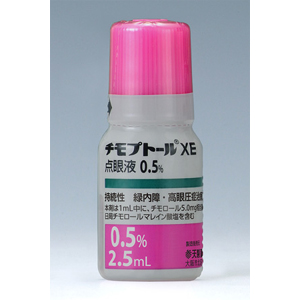
Timolol eye drops 0.5%: 2.5ml x 10 drops of Timoptol XE eye drops 0.5% XE. For glaucoma and ocular hypertension.
Timolol eye drops 0.5%: 2.5ml x 10 drops of Timoptol XE eye drops 0.5% XE. For glaucoma and ocular hypertension.
Regular price
¥27,000 JPY
Regular price
Sale price
¥27,000 JPY
Unit price
/
per
Taxes included.
Couldn't load pickup availability
Timoptol XE timolol eye drops contain timolol (a non-selective beta-blocker), which lowers intraocular pressure by reducing aqueous humor production. It is suitable for open-angle glaucoma and ocular hypertension, and is especially suitable for those requiring long-term stable pressure control.
I. Basic Drug Information
- Generic Name : Timolol Maleate Continuous Eye Drops
- English name : TIMOPTOL XE ophthalmic solution
- Product Name : Timolol XE Eye Drops 0.25%, Timolol XE Eye Drops 0.5%
- Dosage form : Eye drops (sterile aqueous eye drops with slight viscosity)
- Indications : Glaucoma, ocular hypertension
-
Element
- Active ingredient : Timolol maleate (2.5 mg per 1 mL of the 0.25% formulation, equivalent to 3.42 mg of timolol; 5.0 mg per 1 mL of the 0.5% formulation, equivalent to 6.84 mg of timolol)
- Additives : ジェランガム, トロメタモール, ベンゾドデシニウムodor compound, D-マンニトール
- Appearance : Colorless to slightly white, sterile aqueous eye drops with a slight viscosity; pH value between 6.5 and 7.5; osmotic pressure ratio between 0.9 and 1.1.
II. Usage and Dosage
Normally, use the 0.25% formulation, one drop once a day. If the effect is not satisfactory, use the 0.5% formulation, one drop once a day.
III. Taboos
- Patients with a history of allergy to any of the ingredients in this product.
- Patients with bronchial asthma or a history of it, bronchospasm, or severe chronic obstructive pulmonary disease (may trigger or worsen asthma attacks).
- Patients with poorly controlled heart failure, sinus bradycardia, atrioventricular block (second or third degree), or cardiogenic shock (may experience worsening of these symptoms).
IV. Precautions
-
Special populations
- Patients with right heart failure due to pulmonary hypertension: may experience worsening of symptoms.
- Patients with congestive heart failure: May experience worsening of symptoms.
- Patients with diabetic ketoacidosis and metabolic acidosis: may experience enhanced inhibition of myocardial contractility by acidosis.
- Poorly controlled diabetes patients need to pay attention to their blood sugar levels, as these may mask symptoms of hypoglycemia.
- Pregnant women or women who may become pregnant: Use only when the benefits outweigh the risks. Animal studies have shown that high doses may lead to delayed ossification and an increased number of stillbirths.
- For breastfeeding mothers: The benefits of treatment and the nutritional benefits of breast milk need to be weighed before deciding whether to continue breastfeeding, as the medication may pass into the breast milk.
- Children, etc.: No clinical trials have been conducted for children, etc.
- Elderly individuals: Their physiological functions are generally lower, so they need to be careful.
-
Medication guidance
- Before applying the eye drops, keep the cap tightly closed, turn the eye drop container downwards, and shake once (no need to shake multiple times).
- To prevent contamination of the eye drops, be careful not to let the tip of the container come into direct contact with your eyes when applying eye drops.
- Open the affected eye, apply the medication into the conjunctival sac, close the eye and apply pressure to the lacrimal sac for 1-5 minutes before opening the eye again.
- When used in combination with other eye drops, this medication should be used last, with an interval of at least 10 minutes. If other eye drops need to be used after this medication, sufficient time must be allowed between applications to prevent gelled eye drops from interfering with the absorption of other medications.
- After instillation, the eye drops may gel upon contact with tears on the surface of the eye, causing blurred vision or a sticky feeling for several minutes, which is a characteristic of the formulation.
- Systemic absorption may produce side effects similar to those of systemic administration of beta-blockers, and caution is advised.
- When switching from a miotic to this medication, refractive adjustments may be necessary due to the loss of the miotic effect. Furthermore, there are reports that using this medication alone in angle-closure glaucoma can lead to increased intraocular pressure; therefore, it should be used in combination with a miotic in angle-closure glaucoma.
- Medication storage : Store at room temperature, protected from light, and avoid freezing. Once the outer box is opened, it must remain protected from light.
V. Adverse Reactions
- Allergic reaction : Systemic allergic reactions may occur (frequency unknown).
- Digestive system reactions : No relevant information was mentioned.
-
Other serious side effects
- Ocular pemphigoid (frequency unknown): May present with conjunctival congestion, corneal epithelial disturbance, dry keratoconjunctivitis, conjunctival atrophy, entropion, eyelid-eyeball adhesion, etc.
- Bronchospasm, dyspnea, respiratory failure (frequency unknown): caused by bronchial smooth muscle contraction due to β-receptor blockade.
- Heart conduction block, congestive heart failure, cardiac arrest (frequency unknown): caused by the negative chronotropic and inotropic effects of β-receptor blockade.
- Cerebral ischemia, cerebrovascular disorders (frequency unknown).
-
Other side effects
- Less than 1%: Discomfort, fatigue.
- Unknown frequency: weakness, tinnitus, muscle pain, chest tightness, rash, cough.
VI. Drug Interactions
This agent is primarily metabolized by CYP2D6.
| Drug name, etc. | Clinical symptoms and treatment methods | Mechanisms and risk factors |
|---|---|---|
| Olmesartan, Isoprostaglandin | The frequency of ocular inflammatory side effects such as conjunctival congestion is increasing. | Mechanism unclear |
| Adrenaline, dipiformin hydrochloride | Reports indicate that the mydriatic effect is enhanced. | Mechanism unclear |
| Catecholamine depleting agents (such as reserpine) | Excessive inhibition of the sympathetic nervous system may lead to low blood pressure, bradycardia, dizziness, absentness, and orthostatic hypotension. | It may enhance the β-blocking effect when combined with catecholamine depleting agents. |
| β-blockers (systemic administration) (such as atenolol, propranolol hydrochloride, metoprolol tartrate) | It may enhance the effect of lowering intraocular pressure or the systemic effects of beta-blockers. | The effects may be additive. |
| Calcium channel blockers (such as verapamil hydrochloride and diltiazem hydrochloride) | It may lead to atrioventricular conduction disorder, left ventricular failure, and hypotension. | Enhanced interaction |
| Digitalis preparations (such as digoxin and digoxin) | Cardiac conduction disorders (bradycardia, atrioventricular block, etc.) may occur. | Additive stimulation enhances the inhibitory effect of cardiac stimulation transmission. |
| Drugs that inhibit CYP2D6 (such as quinidine sulfate and selective serotonin reuptake inhibitors). | Reports indicate that β-blocking effects (such as decreased heart rate and bradycardia) are enhanced. | It may inhibit the metabolic enzyme P450 (CYP2D6) of this drug, thereby increasing the blood concentration of this drug. |
VII. Pharmacological effects
- Adjusting biomembrane function : No specific details were mentioned.
- Improvement of metabolic disorders : No specific details were mentioned.
- Regulating blood lipids : No specific details were mentioned.
- Protecting blood vessels : No specific mention was made of this.
-
Other functions
- Mechanism of action: The details of the intraocular pressure-lowering mechanism of timolol maleate are not yet clear, but some studies suggest that it mainly works by inhibiting aqueous humor production.
- Intraocular pressure lowering effect: In animal experiments, it has a significant inhibitory effect on α-chloroalose-induced high intraocular pressure and water-induced intraocular pressure elevation.
- β-receptor blocking effect: When administered systemically, it can significantly inhibit the increase in heart rate, myocardial contractility and cardiac output induced by isoproterenol. Its β-receptor blocking effect is comparable to that of indolol and several times stronger than that of propranolol. It also has no significant endogenous sympathetic nerve stimulation effect, direct myocardial inhibition effect and local anesthetic effect.
VIII. Pharmacokinetics
-
absorb
- In healthy adults, one drop of 0.5% timolol maleate eye drops resulted in an average plasma concentration of 0.41 ng/mL one hour after lacrimal sac compression, compared to 1.28 ng/mL in the untreated group; and 0.46 ng/mL in the eyelid closure group, compared to 1.34 ng/mL in the untreated group. This indicates that lacrimal sac compression and eyelid closure significantly inhibited drug transfer to plasma.
- In healthy adult males, the highest plasma concentration after 8 days was an average of 0.28 ng/mL when 0.5% timolol eye drops were administered twice daily; while the highest plasma concentrations in the morning and evening were 0.46 ng/mL and 0.35 ng/mL, respectively.
- Excretion : After a single oral dose of 4 mg of 14C-timolol, 6-23% of the unchanged body is excreted in the urine.
-
distributed
- The protein binding rate of 14C-timolol in human plasma is approximately 60% (concentration 5-100 ng/mL, determined by ultrafiltration).
- In white rabbits, after applying 14C-timolol maleate to the eyes, the drug was distributed at high concentrations in the cornea, iris, ciliary body, and aqueous humor, but less in the lens, optic nerve, and plasma. In colored rabbits, the distribution in tissues without melanin was similar to that in white rabbits, while the concentration was higher in the iris, ciliary body, and choroid containing melanin.
- For white rabbits, the concentrations of 0.5% of this preparation and 0.5% timolol maleate eye drops (without thickener) were both higher at all measurement time points. However, the concentration change trends and disappearance processes were similar.
- Metabolism : Timolol is primarily metabolized by CYP2D6 (in vitro experiments). After a single oral dose of 4 mg of 14C-timolol in humans, carboxylic acid metabolites generated from demethyl ethylamino groups and metabolites from the morpholine ring cleavage can be detected in the urine.
IX. Clinical Research
- Domestic Phase II trial: This study involved 102 patients with glaucoma and ocular hypertension (89 cases in efficacy analysis). The drug was administered at 29 institutions nationwide at 0.25% or 0.5% concentrations, once daily for 8 weeks. Results showed an efficacy rate of 71.1% (32/45 cases) for the 0.25% formulation and 79.5% (35/44 cases) for the 0.5% formulation. Six out of 101 patients (5.9%) experienced side effects, primarily corneal epithelial defects (3.0%, 3/101 cases).
- Domestic Phase III trial: 390 patients with glaucoma and ocular hypertension (350 cases for efficacy analysis) were included in a nationwide trial at 89 institutions. The patients used either this medication (0.5%) once daily or timolol maleate eye drops (0.5%) twice daily for 8 weeks. Results showed comparable efficacy between the two drugs. In the this medication group, 19 out of 192 patients (9.9%) experienced side effects, primarily conjunctival congestion (6 cases).
10. Packaging Specifications
- Timolol XE Eye Drops 0.25%: Plastic eye drop container, 2.5mL × 10 vials
- Timolol XE Eye Drops 0.5%: Plastic eye drop container, 2.5mL × 10 vials
XI. Production Information
Manufacturer : Santen Pharmaceutical Co., Ltd.
Share