1
/
of
1
トーアエイヨー 株式会社
Isosorbide Dinitrate Patches 40mg: 100 patches (40mg Isosorbide Dinitrate Frandol Tapes) (For East Asian coronary heart disease, angina pectoris, and myocardial infarction)
Isosorbide Dinitrate Patches 40mg: 100 patches (40mg Isosorbide Dinitrate Frandol Tapes) (For East Asian coronary heart disease, angina pectoris, and myocardial infarction)
Regular price
¥11,000 JPY
Regular price
Sale price
¥11,000 JPY
Unit price
/
per
Taxes included.
Couldn't load pickup availability
Isosorbide dinitrate is a commonly used nitrate vasodilator, mainly used to prevent and treat cardiovascular diseases such as coronary heart disease and angina pectoris. It works by relaxing vascular smooth muscle.
I. Basic Drug Information
- Generic name : Isosorbide dinitrate
- English name : Isosorbide Dinitrate
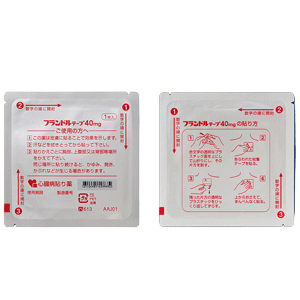
- Product name : Frandol Tapes 40mg
- Dosage form : Transdermal absorption patch
- Indications : For the treatment of ischemic heart disease, including angina pectoris, myocardial infarction (excluding the acute phase) and other ischemic heart diseases.
-
Element :
- Each tablet contains 40mg of the active ingredient isosorbide dinitrate;
- Additives include acrylic acid-octyl acrylate copolymer, isopropyl isostearate, polyisobutylene liquid, etc.
-
Characteristics :
- Formulation characteristics: White, semi-transparent, viscous patch with a transparent coating material;
- Properties of the active ingredient: white crystals or crystalline powder, extremely soluble in N,N-dimethylformamide or acetone, readily soluble in chloroform or toluene, slightly soluble in methanol, ethanol (95%) or diethyl ether, almost insoluble in water; prone to explosion when exposed to high heat or impact.
II. Usage and Dosage
- Adults typically take one tablet (containing 40mg of isosorbide dinitrate) and apply it to any part of the chest, upper abdomen, or back.
- Replace every 24 or 48 hours;
- The dosage can be adjusted according to the symptoms.
III. Taboos
The following patients are prohibited from using this product:
- Patients with severe hypotension or cardiogenic shock (whose blood pressure may be further lowered due to vasodilation, exacerbating symptoms);
- Patients with angle-closure glaucoma (may have elevated intraocular pressure);
- Patients with head trauma or cerebral hemorrhage (may increase intracranial pressure);
- Patients with severe anemia (the symptoms of anemia may worsen due to a drop in blood pressure, such as dizziness and orthostatic vertigo);
- Patients with a history of allergy to nitrates or nitrites;
- Patients taking medications that stimulate guanylate cyclase (such as riociguat) or phosphodiesterase 5 inhibitors (such as sildenafil, vardenafil, tadalafil) may experience enhanced blood pressure reduction.
IV. Precautions
-
Special populations :
- Pregnant women: Use only when the benefits outweigh the risks;
- Breastfeeding women: The benefits of treatment need to be weighed against the benefits of breastfeeding; animal studies have shown that the drug can enter breast milk.
- Children: No clinical trials have been conducted in children;
- Elderly individuals: Due to often impaired liver function, blood drug concentrations may remain elevated, requiring caution;
- Patients with impaired liver function: Slowed metabolism may lead to increased blood drug concentrations, requiring a reduced dosage.
-
Medication instructions :
- This medication is not intended to relieve acute attacks of angina; in such cases, fast-acting nitrates should be used.
- Symptoms should be closely monitored during medication. If the effect is not good (such as worsening of angina attacks), the treatment plan should be changed in time.
- To avoid abruptly stopping medication, the dosage should be gradually reduced while combining it with other medications to prevent symptoms from worsening.
- It may cause a decrease in attention, concentration, or reflexes; avoid driving or operating dangerous machinery.
- Avoid applying to areas of skin damage, eczema, or dermatitis; clean the skin before application (remove sweat, dirt, etc.), and pay special attention to skin symptoms caused by sealing during the summer; change the application site each time to avoid skin irritation;
- When using an automated external defibrillator (AED), pay attention to the placement area to avoid interfering with the device.
-
Drug storage : Store at room temperature.
V. Adverse Reactions
-
Allergic reaction :
- Primary irritant contact dermatitis (incidence rate of over 5%): manifested as irritation symptoms, redness, itching, etc.
- Allergic contact dermatitis;
- Skin rash (incidence rate 0.1% to 5% or less);
- Mild hyperpigmentation following contact dermatitis (incidence less than 0.1%).
-
Digestive system reaction :
- Nausea (incidence rate less than 0.1%);
- Stomach upset, loss of appetite, vomiting (incidence unknown).
-
Other reactions :
- Circulatory system: decreased blood pressure (below 0.1%~5%), dizziness, vertigo, hot flashes, flushing, palpitations (below 0.1%);
- Nervous system: headache (less than 0.1%~5%), fatigue, malaise (incidence unknown).
VI. Drug Interactions
- Contraindications : Concomitant use with guanylate cyclase stimulants (such as riociguat) may enhance the antihypertensive effect by jointly promoting cGMP production.
-
Merging Notes :
- When used with alcohol: may enhance vasodilatory effects, leading to a more severe drop in blood pressure;
- When used in combination with diuretics: may enhance the antihypertensive effect;
- When used in combination with other vasodilators (such as nitrates): may worsen side effects such as headache and decreased blood pressure.
VII. Pharmacological effects
- Adjusting biomembrane function : By dilating coronary arteries and relieving vascular spasm, it improves myocardial blood supply.
- Improve metabolic abnormalities : Improve the imbalance between myocardial oxygen supply and demand, and relieve symptoms of ischemic heart disease.
- Effects on hemodynamics : It can reduce end-dilation volume of myocardium (average reduction of 8.5%) and end-systolic volume (average reduction of 9.3%), thus improving cardiac function.
- Long-lasting effect : The effect lasts for more than 24 hours after application, and the effect remains stable after 48 hours; it can improve exercise tolerance, and the effect is positively correlated with the dose.
VIII. Pharmacokinetics
- Absorption : After applying one 40mg patch to the chest in healthy adult males, the plasma concentration of isosorbide dinitrate reached 2.29±0.23ng/mL at 6 hours, 2.60±0.20ng/mL at 12 hours, 2.28±0.19ng/mL at 24 hours, and 1.65±0.12ng/mL at 48 hours, indicating stable absorption.
- Excretion : Not explicitly mentioned.
IX. Clinical Research
A clinical study of 342 patients (104 receiving this medication and 238 receiving the bioequivalent formulation) showed that:
- Among patients with angina pectoris, 59.9% (199/332) experienced moderate to severe improvement.
- Among patients with myocardial infarction (excluding the acute phase), 59.3% (48/81) showed moderate to severe improvement.
- Among other patients with ischemic heart disease, 50.0% (5/10) showed moderate to severe improvement.
10. Packaging Specifications
- 50 pieces [(1 piece × 10) × 5]
- 70 pieces [(1 piece × 7) × 10]
- 100 coins [(1 coin × 10) × 10]
- 350 pieces [(1 piece × 7) × 50]
XI. Production Information
- Manufacturer : Toa Eiyo Co., Ltd.
Share