1
/
of
1
キッセイ薬品工業株式会社
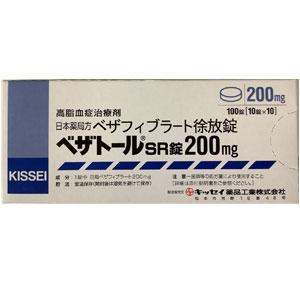
Benzalkonium Chloride SR Extended-Release Tablets 200mg 100 Tablets (BEZATOL SR Tablets) - For High Blood Lipids, Lowering Blood Lipids
Benzalkonium Chloride SR Extended-Release Tablets 200mg 100 Tablets (BEZATOL SR Tablets) - For High Blood Lipids, Lowering Blood Lipids
Regular price
¥4,000 JPY
Regular price
Sale price
¥4,000 JPY
Unit price
/
per
Taxes included.
Couldn't load pickup availability
Benzafibrate SR sustained-release tablets are a long-acting lipid-lowering drug with bezafibrate as the main ingredient. It belongs to the fibrate class of lipid-regulating drugs and works by regulating lipid metabolism. It is mainly used to improve dyslipidemia.
I. Basic Drug Information
- Generic Name : Benzafibrate SR Extended-Release Tablets
- English Name : BEZATOL SR Tablets
- Product name : ベザトールSR tablets 100mg, ベザトールSR tablets 200mg, BEZATOL SR Tablets 10mg, BEZATOL SR Tablets 200mg
- Dosage form : Extended-release tablets (film-coated tablets)
- Indications : Hyperlipidemia (including familial hyperlipidemia)
-
Element
- Active ingredient: Each tablet contains Bezafibrate, a Japanese pharmaceutical company formula, available in 100mg and 200mg formulations.
- Additives: lactose hydrate, hydroxypropyl methylcellulose, anhydrous citric acid, povidone, magnesium stearate, hydroxypropyl cellulose, maltitol, talc, titanium dioxide, polysorbate 80.
- Properties
| Sales Name | ベザトールSR tablet 100mg | ベザトールSR tablet 200mg |
|---|---|---|
| Dosage form | Film-coated sheets | Film-coated sheets |
| tone | White | - |
| shape | Surface, inside, side - | Surface, inside, side - |
| diameter | 7.1mm | 9.1mm |
| thickness | Approximately 3.4mm | Approximately 4.1mm |
| quality | Approximately 133mg | Approximately 265mg |
| Identification code | - | - |
II. Usage and Dosage
- Normally, the adult dosage is 400 mg of Bezafibrate daily, divided into two doses, taken orally after breakfast and dinner.
- For patients with renal impairment and the elderly, the dosage should be appropriately reduced. Specifically, adjustments should be made based on serum creatinine levels (Scr) and creatinine clearance rate (Ccr).
| Serum creatinine level (Scr) | Creatinine clearance rate (Ccr) | Dosage |
|---|---|---|
| Scr ≤ 1.5 mg/dL | 60mL/min ≦Ccr | 400mg/day (200mg×2) |
| 1.5 mg/dL < Scr < 2.0 mg/dL | 50mL/min < Ccr < 60mL/min | 200mg/day (200mg x 1) |
- For situations where it is difficult to measure creatinine clearance, Yasuda's estimated formula (male: (176 - age) × weight / (100 × serum creatinine value)) can be used to set the dosage.
III. Taboos
- Artificial dialysis patients (including peritoneal dialysis) [see 9.2.1].
- Patients with severe kidney disease such as renal insufficiency [see 9.2.1].
- Patients with serum creatinine levels above 2.0 mg/dL [see 9.2.1].
- Patients with a history of allergy to any of the ingredients in this product.
- Pregnant women or women who may become pregnant [see 9.5].
IV. Precautions
-
Special populations
- Patients with gallstones or a history of gallstone disease: may develop gallstones.
- Patients with renal impairment: This medication is contraindicated in patients undergoing artificial dialysis (including peritoneal dialysis), patients with severe kidney disease such as renal insufficiency, or patients with serum creatinine levels above 2.0 mg/dL. These patients are prone to rhabdomyolysis with rapid deterioration of renal function. For patients with other abnormal renal function test values, when used in combination with HMG-CoA reductase inhibitors, it should only be used as a last resort for treatment, and should be started with a small dose. Regular renal function tests should be performed, and the medication should be discontinued immediately if any abnormalities occur. Patients with kidney disease (other than those mentioned above) and those with serum creatinine levels exceeding 1.5 mg/dL (other than those mentioned above) may experience symptom exacerbation and rhabdomyolysis.
- Patients with liver dysfunction: Patients with liver dysfunction or a history of liver dysfunction may have elevated blood concentrations.
- Pregnant women: Not allowed to participate.
- For breastfeeding mothers: The benefits of treatment and the nutritional benefits of breast milk should be considered before deciding whether to continue or stop breastfeeding. Animal experiments (rats) have shown that drugs can be transferred into breast milk.
- Children, etc.: No clinical trials were conducted on children, etc.
- Elderly patients: Elderly patients often have low liver and kidney function and tend to be underweight, making them prone to side effects. When administering the medication, it is necessary to pay attention to the patient's complications, medical history, and symptoms, and start with a small dose. During the medication period, regular clinical examinations related to kidney function are required to confirm whether there is any functional impairment. If any abnormalities are found, the medication should be stopped immediately and appropriate measures should be taken. When used in combination with sulfonylurea hypoglycemic drugs (such as glibenclamide), hypoglycemia symptoms may occur, which should be noted.
-
Medication guidance
- A thorough examination should be conducted before using this medication to confirm hyperlipidemia.
- This medication is mainly excreted through the kidneys in the urine. Special care should be taken when administering this medication to patients with renal impairment, and the dosage should be reduced according to the serum creatinine level.
- The basic treatment for hyperlipidemia, namely dietary therapy, should be implemented first, followed by consideration of exercise therapy, reducing risk factors for ischemic heart disease such as hypertension and smoking.
- Blood lipid levels should be checked regularly during medication. If no treatment response is observed, medication should be discontinued.
- This is a sustained-release tablet and should not be split or broken before taking; the whole tablet should be taken. Medications packaged in PTP should be removed from the PTP blister pack before taking to avoid accidental ingestion of the PTP blister pack, which could lead to serious complications.
- Drug storage : Store at room temperature. Avoid moisture after repackaging. Avoid moisture after opening the PTP aluminum-plastic packaging.
V. Adverse Reactions
- Allergic reactions : Shock, allergic reactions (facial swelling, lip swelling, etc.), mucocutaneous ocular syndrome (Stevens-Johnson syndrome), erythema multiforme, frequency unknown may occur.
-
Digestive system reaction
- 1% Unsatisfied: Abdominal pain, nausea, loss of appetite, abdominal distension, diarrhea, stomatitis.
- Frequency unknown: vomiting, constipation, stomach ulcers, heartburn, thirst.
-
Other adverse reactions
- Nervous system: Frequency unknown, with symptoms including headache, dizziness, drowsiness, insomnia, and numbness.
- Muscles (Note 1): 1-5% had elevated CK; 1% had muscle pain and muscle spasms.
- Liver: 1-5% of patients have elevated AST, ALT, and LDH; those with unclear frequency may have liver dysfunction or jaundice (accompanied by elevated AST, ALT, and γ-GTP).
- Kidney (Note 2): 1% of patients had elevated BUN and creatinine levels.
- Blood: Frequency unknown, but includes anemia, leukopenia, thrombocytopenia, and thrombocytopenia.
- Skin: 1% had rashes and itching; urticaria and photosensitivity were present at varying frequencies.
- Other: 1% of patients with unsatisfactory results had elevated uric acid; patients with unknown frequency of hypoglycemia, general malaise, hair loss, gallstones, erectile dysfunction, abnormal taste, fever, edema, and frequent urination.
Note 1: If the above muscle-related symptoms occur, the dosage should be reduced or the medication should be discontinued.
Note 2: For patients with existing renal dysfunction, this may worsen symptoms. If any abnormalities occur, the medication should be discontinued immediately and appropriate measures should be taken.
VI. Drug Interactions
| Drug names, etc. | Clinical symptoms and treatment methods | Mechanisms and risk factors |
|---|---|---|
| insulin | Hypoglycemia symptoms may occur; when using this combination therapy, blood glucose levels and the patient's condition should be closely monitored. | It may enhance the blood sugar-lowering effect by improving insulin sensitivity, among other things. |
| Cyclosporine | Kidney problems may occur, so close monitoring of changes in kidney function test values (creatinine, BUN, etc.) is necessary. | The side effects of kidney dysfunction may reinforce each other. |
| Anion exchange resins (such as cholestyramine) | This may delay or reduce the absorption of this agent; when used in combination, the dosage should be administered at least 2 hours apart. | This may be due to the adsorption effect of the anion exchange resin. |
| Sulfonylurea hypoglycemic drugs (such as glibenclamide, etc.) | Hypoglycemia may occur when used in combination with elderly individuals; caution is advised. | - |
VII. Pharmacological effects
- Adjusting biomembrane function : No relevant content.
- Improvement of metabolic disorders : No relevant information.
-
Regulate blood lipids
- Mechanism of action: It inhibits cholesterol synthesis, specifically the process of cholesterol synthesis from acetyl-CoA to mevalonate; it inhibits triglyceride synthesis, specifically acetyl-CoA carboxylase activity; it promotes lipoprotein metabolism, enhancing LPL (lipoprotein lipase) and HTGL (hepatic triglyceride lipase) activity in patients with hypertriglyceridemia, enhancing LDL receptor activity in patients with type II hyperlipoproteinemia, and promoting LDL metabolism.
- Serum lipid-improving effects: It can significantly reduce serum total cholesterol and serum triglycerides in patients with hyperlipidemia, and significantly increase HDL-cholesterol; in rats with hypercholesterolemia induced by high cholesterol diet, oral administration of this agent can dose-dependently inhibit the increase of serum total cholesterol; in rats with hypertriglyceridemia induced by fructose, oral administration of this agent can dose-dependently inhibit the increase of serum triglyceride.
- Protecting blood vessels : No relevant information.
VIII. Pharmacokinetics
-
absorb
- Single-return administration: In 10 healthy adult males, a single-return oral administration of one 200mg Bezafibrate extended-release tablet resulted in a peak plasma concentration of 3.5 μg/mL in 4.5 hours and a disappearance half-life of 3.0 hours.
- Repeated administration: Six healthy adult males were given one 200mg Bezafibrate extended-release tablet orally twice daily for 7 consecutive days. Steady state was reached after 2 days of administration, and a stable blood concentration was obtained.
- Excretion : In healthy adult males, after a single oral administration of 1, 2, or 4 tablets of Bezafibrate extended-release tablets (200 mg), 59.0%, 69.1%, and 70.5% of the administered dose were excreted in the urine within 48 hours, respectively, with the majority being excreted within 24 hours.
- Metabolism : In healthy adult males, after a single oral administration of 1, 2, or 4 tablets of Bezafibrate extended-release tablets (200 mg), unaltered forms and metabolites (glucuronide conjugates and hydroxylates) were detected in the urine, while only unaltered forms were detected in the blood.
IX. Clinical Research
- A domestic phase III double-blind comparative trial: 286 patients with hyperlipidemia were enrolled. They were given either Bezafibrate extended-release tablets 200mg each, twice daily after breakfast and dinner, or clofibrate tablets 200mg each, three times daily after each meal, for 16 weeks. Results showed that the improvement rate of moderate to severe improvement was 70% (85/121 cases) in the Bezafibrate group and 42% (53/126 cases) in the clofibrate group, with the Bezafibrate group showing a significantly higher improvement. Regarding the rate of change in serum lipid concentration (decreased total cholesterol and triglycerides, increased HDL-cholesterol) in patients with abnormal pre-treatment values, the Bezafibrate group was significantly superior to the clofibrate group in all aspects. Regarding the incidence of side effects, the Bezafibrate group had an incidence of 2.1% (3/141 cases), with symptoms including itching, upper abdominal pain, stomach pain, and nausea, each accounting for 0.7% (1/141 cases); the clofibrate group had an incidence of 5.7% (8/141 cases).
- Other: In foreign countries, when the regular tablets are taken at a daily dose of 600mg (divided into 3 doses), there are reports of a higher frequency of side effects such as digestive symptoms.
10. Packaging Specifications
- ベザトールSR tablets 100mg: 100 tablets [10 tablets (PTP) × 10], 500 tablets [10 tablets (PTP) × 50]
- Vezatoer SR Tablets 200mg: 100 tablets [10 tablets (PTP) x 10], 500 tablets [10 tablets (PTP) x 50], 1000 tablets [10 tablets (PTP) x 100], 1000 tablets [aluminum-plastic packaging bag, plastic bottle]
XI. Production Information
- Manufacturer : Kissei Pharmaceutical Industry Co., Ltd. (Otachibana Pharmaceutical Industry Co., Ltd.)
Share