1
/
of
1
第一三共株式会社
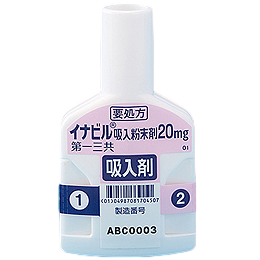
Inavir Dry Powder Inhaler 20mg 2 containers (2 kits) INAVIR DRY POWDER INHALER Daiichi Sankyo San Influenza
Inavir Dry Powder Inhaler 20mg 2 containers (2 kits) INAVIR DRY POWDER INHALER Daiichi Sankyo San Influenza
Regular price
¥10,000 JPY
Regular price
Sale price
¥10,000 JPY
Unit price
/
per
Taxes included.
Couldn't load pickup availability
Inavir dry powder inhaler is suitable for the treatment of influenza A and B, and is especially suitable for patients within 48 hours of the onset of illness.
I. Basic Drug Information
- Generic Name : Lanimirvir Oxide Hydrate Inhalation Powder
- English name : LANINAMIVIR OCTANOATE HYDRATE INHALATION POWDER
- Product name : INAVIR° DRY POWDER INHALER (イナビル inhalation powder)
- Dosage form : Inhalation powder
- Indications : Treatment and prevention of influenza A or B virus infection.
-
Element
- Active ingredient: 1 container contains 20.76 mg of lanimivir octanoate hydrate (20 mg as lanimivir octanoate).
- Additive: Lactose hydrate (Note: Contains milk protein as an impurity)
- Appearance : White powder
II. Usage and Dosage
| Applicable situations | crowd | Dosage and administration |
|---|---|---|
| treat | Adults and children aged 10 and above | 40 mg of lanimivir octanoate was administered via a single inhalation; alternatively, 20 mg of lanimivir octanoate was administered via inhalation once daily for two consecutive days. |
| treat | Children under 10 years old | Based on lanimivir octanoate, a single inhalation dose of 20 mg is recommended. |
| prevention | Adults and children aged 10 and above | 40 mg of lanimivir octanoate was administered via a single inhalation; alternatively, 20 mg of lanimivir octanoate was administered via inhalation once daily for two consecutive days. |
| prevention | Children under 10 years old | Based on lanimivir octanoate, a single inhalation dose of 20 mg is recommended. |
Supplementary Explanation
- This medication comes in container 1 and contains 20 mg of the drug, calculated as lanimivir octanoate. The medication is filled in two locations and should be administered via inhalation as follows:
Applicable situations Adults and children aged 10 and above Children under 10 years old Treatment (single dose) 2 containers (4 in total) 1 container (2 locations) Treatment (administered every 2 days) 2 containers (4 in total) 1 container (2 locations) prevention 2 containers (4 in total) 1 container (2 locations) - Treatment is recommended to begin as soon as symptoms appear; there is currently no evidence to support the effectiveness of administration 48 hours after symptom onset.
- For prevention, medication should be started within 2 days of contact with an infected person with influenza virus infection. There is currently no evidence to support the effectiveness of administration 48 hours after contact. Furthermore, this medication has no preventive effect against influenza virus infection 10 days after the start of administration.
III. Taboos
This drug is contraindicated in patients with a history of allergy to any of its ingredients.
IV. Precautions
-
Special populations
- Pregnant women or women who may become pregnant: Use only when the benefits of treatment outweigh the risks. Animal studies (rats) have shown that this drug can cross the placenta.
- Breastfeeding women: The decision to continue breastfeeding should be made by comprehensively considering the benefits of treatment and the nutritional benefits of breast milk. Animal experiments (rats) show that this drug can be transferred into breast milk.
- Children: Use only when the patient is deemed suitable for inhalation administration; for low birth weight infants, newborns or infants, no clinical studies have been conducted on efficacy and safety indicators, and the patient's condition should be closely monitored during administration.
- Elderly (over 65 years old): The physiological functions of the elderly are often declining, and the patient's condition needs to be closely monitored when administering medication.
- Patients with chronic respiratory diseases (such as bronchial asthma, chronic obstructive pulmonary disease, etc.): There is limited experience in using this medication on these patients, and their condition needs to be closely monitored during administration.
- Patients with a history of dairy product allergy: This medicine contains milk protein as an impurity, and there are reports that it may cause allergic reactions. Caution should be exercised when administering the medication.
- Patients with impaired renal function: Impaired renal function may affect the metabolism of this drug, and the patient's renal function should be monitored when administering the drug.
- Patients with underlying diseases (including chronic metabolic diseases such as diabetes and chronic heart dysfunction) or those with weakened immune function: The patient's condition should be closely monitored when administering the medication.
-
Medication guidance
- This medicine is for oral inhalation only and should not be administered via other routes.
- When administering the medication, provide the patient or guardian with the accompanying instructions and guide them on proper use, including how to dispose of the empty container.
- This medicine is packaged in moisture-proof aluminum-plastic packaging and must be opened immediately before inhalation.
- Regardless of whether they are taking antiviral medications for influenza, there are reports of abnormal behaviors in influenza patients that may lead to falls and other accidents. Patients and their families should be informed that: ① abnormal behaviors may occur; ② if recovering at home, family members should take measures to prevent falls and other accidents for at least two days after the onset of fever. Particular attention should be paid to reports of serious abnormal behaviors that could lead to falls and other accidents, especially among school-aged male children and adolescents, which often occur within two days of the onset of fever.
- Influenza virus infection may be complicated by bacterial infection, and the symptoms of bacterial infection may be confused with those of influenza. If it is a bacterial infection, appropriate measures such as the use of antibacterial agents should be taken.
- Reports indicate that syncope and shock may occur after administration of this medication. This may be related to the worsening of the systemic condition, such as fever and dehydration, associated with influenza virus infection. It may also be induced by forceful inhalation of the medication or prolonged breath-holding, or directly caused by the medication. Patients should fully understand the inhalation method described in the instructions and be guided to inhale the medication in a relaxed state (such as sitting).
- Influenza virus infection may lead to increased airway sensitivity, and there are reports of bronchospasm and decreased respiratory function. Close observation is required when administering medication.
- This medicine is ineffective against influenza C virus infection and bacterial infection; a clear diagnosis is required before its use.
- Antiviral drugs are not necessary for the treatment of all influenza A or B virus infections; the necessity should be carefully assessed before using this medication.
- The intended users of this medication for prevention are, in principle, high-risk individuals (the elderly, patients with chronic respiratory diseases, patients with chronic heart diseases, patients with metabolic diseases, patients with renal dysfunction, etc.) who live with or are in close proximity to patients with influenza virus infection.
- The foundation of influenza prevention is vaccination; the use of this medication cannot replace vaccination.
- Drug storage : Store at room temperature
V. Adverse Reactions
-
Allergic reaction
- Incidence rate below 0.5%: Urticaria
- Unknown frequency: rash, erythema, itching, anaphylactic shock, Stevens-Johnson syndrome, toxic epidermal necrolysis (TEN)
-
Digestive system reaction
- Incidence rate above 0.5%: Diarrhea
- Incidence rate below 0.5%: Gastroenteritis, nausea, vomiting, abdominal pain, stomatitis, abdominal distension, loss of appetite, abdominal discomfort.
-
Other adverse reactions
- Neuropsychiatric system: Incidence less than 0.5% (dizziness, headache); frequency unknown (abnormal behavior, syncope, shock).
- Respiratory system: Frequency unknown (cough, bronchospasm, dyspnea)
- Hematologic system: Incidence less than 0.5% (elevated white blood cell count)
- Liver: Incidence rate above 0.5% (elevated ALT); Incidence rate below 0.5% (abnormal liver function, elevated AST, elevated γ-GTP)
- Urinary system: Incidence less than 0.5% (proteinuria)
- Other: Incidence less than 0.5% (elevated CRP, positive urine glucose); frequency unknown (facial pallor, cold sweats, decreased blood pressure).
If the above adverse reactions occur, close observation is required, and appropriate measures such as discontinuing the medication should be taken if any abnormalities are found.
VI. Drug Interactions
| Drug Name | Clinical symptoms and treatment methods | Mechanism of action and risk factors |
|---|---|---|
| Intranasal live attenuated influenza vaccine | It may not achieve the same effect as the nasal attenuated live influenza vaccine. | This medication may inhibit the proliferation of the vaccine virus, thereby reducing the effectiveness of the nasal attenuated live influenza vaccine. |
VII. Pharmacological effects
- Modulation of biomembrane function : No clear information available.
- Improvement of metabolic disorders : No clear information available.
- Regulating blood lipids : No clear information available.
- Protecting blood vessels : No clear information available.
-
Anti-influenza virus effect
- Mechanism of action : Lanimir vir caprylate hydrate is the prodrug, which is hydrolyzed into the active metabolite lanimir vir, exerting its antiviral effect. Lanimir vir selectively inhibits the neuraminidase of influenza A and B viruses, preventing the release of newly formed viruses from infected cells, thereby inhibiting viral replication.
- In vitro antiviral activity against influenza viruses : Lanimivir can inhibit neuraminidase of influenza A and B viruses at low concentrations (IC50 of laboratory strains: 2.32~38.8 nM, IC50 of clinical isolates: 1.29~26.5 nM); it also has antiviral activity against oseltamivir phosphate-resistant strains (IC50: 5.62~48.9 nM), influenza A H1N1 virus (pdm09) (IC50: 0.41 nM), and highly pathogenic avian influenza A (H5N1) virus (IC50: 0.28~2.1 nM) (neuraminidase inhibitory activity).
- In vivo antiviral effects : In a mouse model of influenza A virus infection, a single intranasal administration of lanimivir octanoate hydrate at doses of 6.6–660 μg/kg significantly reduced viral titers in the lungs; administration at doses of 21–190 μg/kg significantly increased the number of surviving mice. In a ferret model of influenza B virus infection, single intranasal administration of lanimivir octanoate hydrate at doses of 24 μg/kg and 240 μg/kg reduced viral titers in nasal irrigation fluid. In a mouse model of H1N1 influenza A virus (pdm09) infection, a single intranasal administration of lanimivir octanoate hydrate at doses of 700 μg/kg significantly reduced viral titers in the lungs. In a mouse model of highly pathogenic avian influenza type A (H5N1) virus infection, a single intranasal administration of 75 μg/kg or more of lanimivir octanoate hydrate reduced the viral titer in the lungs 3 days after infection; administration of 750 μg/kg or more reduced the viral titer in the lungs 6 days after infection.
- Drug resistance : In eight clinical studies (including one international joint trial) conducted in China on the treatment of influenza virus infection with lanimivir caprylate hydrate, no strains with reduced sensitivity to the active metabolite lanimivir were found among the influenza virus strains isolated from 1,917 patients.
VIII. Pharmacokinetics
-
absorb
-
Adults : In 16 healthy adult males, the plasma concentration parameters of the active metabolite lanimivir were as follows after a single inhalation of 20 mg or 40 mg of this drug (calculated as lanimivir caprylate):
Dosage Number of examples Cmax (ng/mL) Tmax (hr) AUC0-tz (ng·hr/mL) t1/2 (hr) 20mg 8 19.0±3.1 4.0 (3.0~6.0) 558.0±96.4 66.6±9.1 40mg 8 38.3±9.8 4.0 (3.0~6.0) 1080±156 74.4±19.3 (Note: Tmax is the median (minimum to maximum value), and other parameters are the mean ± standard deviation.) -
Children : In 19 children aged 4–12 years with influenza virus infection, the plasma concentrations of the active metabolite lanimivir after a single inhalation of 20 mg or 40 mg of this drug (calculated as lanimivir caprylate) are as follows (unit: ng/mL, mean ± standard deviation):
Dosage Number of examples 1 hour after administration 4 hours after administration 24 hours after administration 144 hours after administration 20mg 8 12.0±8.1 17.6±10.0 5.3±2.7 0.5±0.8 40mg 11 21.7±7.7 32.7±10.0 9.6±3.0 2.0±1.1
-
Adults : In 16 healthy adult males, the plasma concentration parameters of the active metabolite lanimivir were as follows after a single inhalation of 20 mg or 40 mg of this drug (calculated as lanimivir caprylate):
-
distributed
-
Tissue distribution : Following a single inhalation of 40 mg of this drug (calculated as lanimivir caprylate) in 35 healthy adult males, the concentrations of the active metabolite lanimivir in plasma, alveolar mucus, and alveolar macrophages were as follows:
Sample type Cmax (ng/mL) Tmax (hr) AUC last (ng·hr/mL) t1/2 (hr) plasma 25.45 3.5 826 45.7 alveolar mucus 3.51×10³ 4.0 88.1×10³ 358.5 alveolar macrophages 143×10³ 8.0 11.2×10⁶ 211.0 (Note: There were 5 cases at each measurement time point. Plasma concentrations were found in 35 cases at 0.25 hours, 2 hours, and 3.5 hours. Plasma concentrations were below the lower limit of quantitation in 1 case at 0.25 hours, 2 cases at 168 hours, and 4 cases at 240 hours.) - Following a single intratracheal administration of 14C-lanimivir octanoate hydrate to rats, high concentrations of radioactivity were observed in the primary target tissues, the trachea and lungs. The elimination half-life of radioactivity in the lungs was 23.2 hours, while almost no radioactivity was detected in the central nervous system (brain and spinal cord).
- Protein binding rate (ultracentrifugation): In terms of human plasma protein binding rate, lanimivir caprylate hydrate is 67-70%, while the active metabolite lanimivir is less than 0.4% (in vitro experiments).
-
Tissue distribution : Following a single inhalation of 40 mg of this drug (calculated as lanimivir caprylate) in 35 healthy adult males, the concentrations of the active metabolite lanimivir in plasma, alveolar mucus, and alveolar macrophages were as follows:
- Metabolism : After inhalation administration, lanimivir caprylate hydrate is presumably hydrolyzed in the trachea and lungs to the active metabolite lanimivir. In vitro metabolism assays (human liver microsomes) showed that lanimivir caprylate hydrate and lanimivir had no inhibitory effect on major cytochrome P450 subtypes (1A2, 2C9, 2C19, 2D6, and 3A4); human cultured hepatocyte assays showed that lanimivir caprylate hydrate and lanimivir did not induce cytochrome P450 subtypes (1A2 and 3A4).
- Excretion : In 8 healthy adult males, after a single inhalation of 40 mg of this drug (calculated as lanimivir caprylate), the cumulative urinary excretion rate of the active metabolite lanimivir was 23.1% of the administered dose up to 144 hours after administration.
-
Pharmacokinetics in Special Populations
- Patients with renal impairment : In 13 patients with renal impairment classified according to creatinine clearance (CLcr), the t1/2 of the active metabolite lanimivir remained unchanged after a single inhalation of 20 mg of this drug (calculated as lanimivir caprylate). Compared with patients with normal renal function, the AUC0-inf of patients with mild renal impairment (CLcr: 50~80 mL/min), moderate renal impairment (CLcr: 30~50 mL/min), and severe renal impairment (CLcr: <30 mL/min) were 1.1 times, 2.0 times, and 4.9 times, respectively.
- Elderly patients : In 6 healthy elderly patients (over 65 years old), after a single inhalation of 40 mg of this drug (calculated as lanimivir caprylate), compared with non-elderly patients (20-45 years old), the Tmax of the active metabolite lanimivir remained unchanged, the Cmax was 0.5 times, and the AUC0-inf was 1.8 times.
IX. Clinical Research
-
Treatment trial results
- International Consortium Phase III Trial (Adults) : An international consortium of Phase III double-blind comparative trials using oseltamivir phosphate as a control drug was conducted in Japan, Taiwan, South Korea, and Hong Kong, enrolling a total of 1003 patients (787 in Japan, 188 in Taiwan, 21 in South Korea, and 7 in Hong Kong). The primary endpoint was duration of influenza illness (time to "absence" or "mild" influenza symptoms lasting for more than 21.5 hours). Results showed that the median duration of influenza illness was 73.0 hours in the lanimivir caprylate 40 mg single inhalation group and 73.6 hours in the oseltamivir 75 mg group (twice daily for 5 consecutive days). The upper limit of the 95% confidence interval for the difference between the two groups (6.9 hours) was lower than the non-inferiority threshold of 18 hours, confirming that a single inhalation dose of lanimivir phosphate was non-inferior to multiple oral doses of oseltamivir. The incidence of adverse reactions in the lanimivir octanoate 40mg group was 13.1% (44/337 cases), with diarrhea being the main adverse reaction (6.5%, 22/337 cases).
-
Domestic Phase III trial (children)
- Children aged 3–9 years : A phase III double-blind comparative trial was conducted, with lanimivir caprylate 20 mg administered as a single inhalation, and oseltamivir phosphate (2 mg/kg/dose, twice daily for 5 consecutive days, as a control). A total of 123 patients were enrolled (61 in the lanimivir group and 62 in the oseltamivir group). The primary endpoint was duration of influenza (time to "absence" or "mild" of cough and nasal symptoms and a body temperature below 37.4°C for more than 21.5 hours). Results showed that the median duration of influenza was 56.4 hours in the lanimivir group and 87.3 hours in the oseltamivir group. The incidence of adverse reactions in the lanimivir group was 8.2% (5/61 cases), with the main adverse reactions being diarrhea (4.9%, 3/61 cases) and vomiting (3.3%, 2/61 cases).
- A double-blind comparative trial was conducted in adolescents aged 10–19 years . Patients received a single inhalation of 20 mg or 40 mg lanimivir octanoate, with a total of 120 patients enrolled (64 in the 20 mg group and 56 in the 40 mg group). The primary endpoint was duration of influenza illness (time to complete resolution of all influenza symptoms to "absence" or "mild" for at least 21.5 hours). Results showed that the median duration of influenza illness was 87.1 hours in the 20 mg group and 76.0 hours in the 40 mg group, with no statistically significant difference between the two groups (median difference: -11.1 hours, 95% confidence interval: -32.9–13.0), but the duration of influenza illness was shorter in the 40 mg group than in the 20 mg group. The incidence of adverse reactions was 3.1% (2/64) in the 20 mg group, mainly diarrhea; the incidence of adverse reactions was 5.4% (3/56) in the 40 mg group.
-
Prevention test results
-
Domestic Phase III trial (adults and children aged 10 and above)
- Single inhalation administration : A double-blind trial was conducted in cohabiting family members or co-living persons (10 years and older) of patients with influenza A or B virus infection to evaluate the inhibitory effect of lanimivir octanoate 40 mg single inhalation and 20 mg once daily for 2 consecutive days on the onset of influenza virus infection within 10 days. A total of 791 patients were included (267 in the 40 mg single inhalation group, 269 in the 20 mg twice daily group, and 265 in the placebo group). The results showed that the incidence of clinical influenza virus infection was 4.5% (12/267) in the 40mg single-dose group, 4.5% (12/269) in the 20mg double-dose group, and 12.1% (32/265) in the placebo group; the incidence rate was significantly lower in the 40mg single-dose group compared with the placebo group (P=0.0015); the risk reduction rate (95% confidence interval) of the 40mg single-dose group and the 20mg double-dose group compared with the placebo group was 62.8% (29.3~80.4) and 63.1% (29.8~80.5), respectively, with similar effects between the two groups. Analysis by viral type and subtype showed the following infection rates: Type A (H3N2) virus infection rate: 4.5% (12/265) in the 40mg single-dose group, 4.7% (12/258) in the 20mg twice-dose group, and 12.4% (32/258) in the placebo group; Type B virus infection rate: 0.0% in all three groups. The adverse reaction rate was 1.9% (5/267) in the 40mg single-dose group and 1.9% (5/269) in the 20mg twice-dose group. The main adverse reaction was positive urine glucose (0.7%, 2/267).
- Two-day inhalation administration : A double-blind comparative trial was conducted in cohabiting family members or co-living persons (10 years and older) of patients with influenza A or B virus infection to evaluate the inhibitory effect of lanimivir caprylate 20 mg once daily for two consecutive days on the onset of influenza virus infection within 10 days. A total of 965 patients were included (487 in the lanimivir group and 478 in the placebo group). The results showed that the incidence of clinical influenza virus infection in the lanimivir group was 3.9% (19/487), while it was 16.9% (81/478) in the placebo group. The incidence rate in the lanimivir group was significantly lower than that in the placebo group (P<0.0001); the risk reduction rate (95% confidence interval) relative to the placebo group was 77.0% (62.7–85.8%). Analysis by viral type and subtype showed the following infection rates: Type A (H3N2) virus infection rate: 3.6% (16/443) in the lanimivir group and 17.3% (75/434) in the placebo group; Type B virus infection rate: 7.0% (3/43) in the lanimivir group and 14.0% (6/43) in the placebo group. The incidence of adverse reactions in the lanimivir group was 3.1% (17/552 cases), with diarrhea being the primary adverse reaction (0.7%, 4/552 cases).
- A domestic Phase III trial (children under 10 years old) : A double-blind comparative trial was conducted in cohabiting family members or co-living persons (2-9 years old) of patients with influenza A or B virus infection to evaluate the inhibitory effect of a single inhalation of lanimivir caprylate 20 mg on the onset of influenza virus infection within 10 days. A total of 341 patients were included (171 in the lanimivir group and 170 in the placebo group). The results showed that the incidence of clinical influenza virus infection in the lanimivir group was 10.5% (18/171), while it was 19.4% (33/170) in the placebo group. The incidence rate in the lanimivir group was significantly lower than that in the placebo group (P=0.0232); the risk reduction rate (95% confidence interval) relative to the placebo group was 45.8% (7.5-68.2%). Analysis by viral type and subtype showed that the incidence of type A (H3N2) virus infection was 10.9% (18/165) in the lanimivir group and 19.6% (33/168) in the placebo group; the incidence of type B virus infection was 0.0% (0/2) in the lanimivir group, and no related infections were observed in the placebo group. The incidence of adverse reactions in the lanimivir group was 1.2% (2/171 cases), with adverse reactions including loose stools, elevated ALT, and elevated AST (0.6% each, 1/171 cases).
-
Domestic Phase III trial (adults and children aged 10 and above)
- Post-marketing surveillance (domestic Phase IV trial) : A double-blind comparative trial was conducted on patients (20-77 years old) with influenza virus infection and concurrent chronic respiratory disease, using oseltamivir phosphate as a control drug. A total of 204 patients were enrolled (102 in the lanimivir group and 102 in the oseltamivir group). The primary efficacy endpoint was duration of influenza (time to "absence" or "mild" influenza symptoms lasting more than 21.5 hours). Results showed that the median duration of influenza was 64.7 hours in the lanimivir group and 59.7 hours in the oseltamivir group, with similar recovery outcomes between the two groups. The incidence of adverse reactions in the lanimivir group was 13.7% (14/102 patients), with diarrhea being the main adverse reaction (2.9%, 3/102 patients).
(Note: The maximum approved single dose of this drug is 20 mg (children under 10 years old) and 40 mg (adults and children over 10 years old))
10. Packaging Specifications
2 containers (2 boxes)
XI. Production Information
Manufacturer : Daiichi Sankyo Co., Ltd.
Company Address : 3-5-1 Nihonbashi Honcho, Chuo-ku, Tokyo
Share