1
/
of
1
太陽ファルマ株式会社
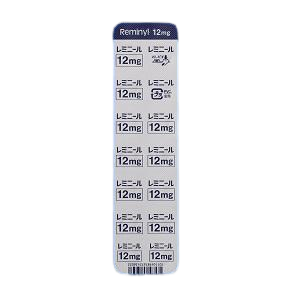
Reminyl galantamine hydrobromide tablets 12mg 140 tablets REMINYL tablets Alzheimer's disease
Reminyl galantamine hydrobromide tablets 12mg 140 tablets REMINYL tablets Alzheimer's disease
Regular price
¥42,000 JPY
Regular price
Sale price
¥42,000 JPY
Unit price
/
per
Taxes included.
Couldn't load pickup availability
Galantamine hydrobromide tablets improve cognition by enhancing the function of cholinergic neurons in the brain. They are indicated for mild to moderate Alzheimer's disease and other dementia conditions.
I. Basic Drug Information
- Generic name : galantamine hydrobromide (galantamine hydrochloride)
- English name : Galantamine Hydrobromide
- Trade name : Reminyl, specific dosage form trade names include Reminyl Tablets, Reminyl OD Tablets, Reminyl Oral Solution
-
Dosage form :
- Tablets: 4mg, 8mg, 12mg (Specifications)
- Oral disintegrating tablets (OD tablets): 4mg, 8mg, 12mg specifications
- Oral solution (for internal use): 4mg/mL Specification
- Indications : Suppression of the progression of cognitive symptoms in mild to moderate Alzheimer's disease.
-
Element
-
Active ingredient : Each unit of each dosage form contains galantamine hydrobromide, converted to galantamine content as follows:
- 4mg tablets/orally disintegrating tablets: Each tablet contains 5.1mg of galantamine hydrobromide (equivalent to 4mg of galantamine).
- 8mg tablets/orally disintegrating tablets: Each tablet contains 10.3mg of galantamine hydrobromide (equivalent to 8mg of galantamine).
- 12mg tablets/orally disintegrating tablets: Each tablet contains 15.4mg of galantamine hydrobromide (equivalent to 12mg of galantamine).
- Oral solution: Each 1 mL contains 5.1 mg of galantamine hydrobromide (equivalent to 4 mg of galantamine).
-
add value
- Tablets: Lactose water and extract, crystalline cellulose, crospovidone, magnesium stearate, light anhydrous cellulose, hydroxypropyl methylcellulose, povidone, titanium dioxide, talc; 4mg formulation also contains yellow ferric oxide; 8mg formulation also contains ferric oxide.
- Intraoral disintegrating tablets: Crystalline cellulose, anhydrous calcium hydrogen phosphate, calcium carbonate, hydroxypropyl methylcellulose, dibutyl sebacate, aspartame, light anhydrous ketosilicic acid, magnesium stearate, 4mg (also contains yellow ferric oxide), 8mg (also contains ferric oxide)
- Oral solution: Methyl parahydroxybenzoate (パラオキシbenzoic acid methylbenzoate), Propyl parahydroxybenzoate (パラオキシbenzoate) Sodium saccharin hydrate, sodium saccharin hydrate, sodium hydroxide
-
Active ingredient : Each unit of each dosage form contains galantamine hydrobromide, converted to galantamine content as follows:
-
Properties
-
tablet
Specification Color and dosage form Diameter (mm) Thickness (mm) Weight (mg) Identification code 4mg Light yellow film-coated tablets (Light yellow film-coated tablets) 5 2.8 64.4 JANSSEN G4 8mg Peach-colored film-coated tablets (Peach-colored film-coated tablets) 7 3.1 127.0 JANSSEN G8 12mg White to light yellow film-coated tablets 8 3.6 189.3 JANSSEN G12 -
Oral disintegrating tablets
Specification Color and dosage form Diameter (mm) Thickness (mm) Weight (mg) Identification code 4mg Yellowish pigment tablets (oral disintegrating tablets) 7 2.9 140 JP110 8mg Micro-red pigment tablets (oral disintegrating tablets) 7 2.9 140 JP111 12mg White plain tablets (collapse tablets for oral administration) 8 3.4 210 JP112 -
Oral solution : Colorless and clear liquid (無色澄明の液剤), pH 4.0~6.0. Identification codes for different packaging specifications are as follows.
Packaging specifications Identification code 1mL Dispensed Product TYP115 2mL Dispensed Product TYP116 3mL Dispensed Product TYP117
-
tablet
II. Usage and Dosage
- Standard adult dosage : Usually, the dosage is 8 mg once a day (4 mg twice a day) based on galantamine, and then increased to 16 mg once a day (8 mg twice a day) orally after 4 weeks; depending on symptoms, the dosage may be increased to 24 mg once a day (12 mg twice a day), but the current dose must be administered for more than 4 weeks before increasing the dosage.
-
Adjustment for special populations
- For patients with moderate hepatic impairment (Child-Pugh Class B): Start with 4 mg once a day for at least 1 week, then continue with 8 mg twice a day for at least 4 weeks, with subsequent escalations not exceeding 16 mg per day.
- Patients with severe hepatic impairment (Child-Pugh Class C): No prior experience with this medication, safety not established, avoid use unless necessary for treatment.
- Patients with severe renal impairment (creatinine clearance <9 mL/min): There is no experience with this medication, and its safety has not been established. Avoid use unless necessary for treatment.
- Medication timing : To reduce side effects, it is recommended to administer the medication after meals.
-
Precautions for use of different dosage forms
- Tablets/Intraoral Disintegrating Tablets: Tablets must be removed from the PTP packaging before taking to avoid accidentally swallowing the PTP packaging; Intraoral disintegrating tablets can be placed on the tongue and taken after being moistened and disintegrated by saliva. No water is needed, but they can also be taken with water. However, it is forbidden to take them without water while lying in bed.
- Oral solution: For oral use only. For repackaged products, remove the contents before consumption. Do not take the package directly.
III. Taboos
This medicine is contraindicated in patients with a history of allergy to any of its ingredients.
IV. Precautions
(a) Special populations
-
Pregnant and breastfeeding women
- Pregnant women or women who may become pregnant: Use only when the benefits of treatment outweigh the risks.
- Breastfeeding women: The decision to continue breastfeeding should be made by comprehensively considering the benefits of treatment and the nutritional benefits of breast milk; although it is unclear whether the drug enters human milk, animal experiments (rats) show that the drug can enter the mammary glands.
- Children : No clinical trials have been conducted in children, and safety and efficacy have not been established.
- Elderly : After a single oral dose of 4 mg tablets, the plasma drug concentration (Cmax: 34.4±7.8 ng/mL, AUC∞: 296±50.5 ng・h/mL) in healthy elderly individuals is higher than that in healthy adults. Adverse reactions should be monitored during medication.
-
Patients with underlying diseases
- Patients with heart disease (myocardial infarction, valvular heart disease, cardiomyopathy, etc.) and electrolyte abnormalities (hypokalemia, etc.) may experience bradycardia, cardiac conduction block, and QT interval prolongation. Close observation is required to prevent the development of serious arrhythmias.
- Patients with sinoatrial node dysfunction, atrial and atrioventricular node conduction disorders: the medication may induce bradycardia or arrhythmia through vagal nerve stimulation.
- Patients with a history of peptic ulcer disease, gastrointestinal obstruction, or recent gastrointestinal surgery: the medication may promote gastric acid secretion and gastrointestinal motility, exacerbating existing symptoms.
- Patients with lower urinary tract obstruction or those who have recently undergone bladder surgery: may experience a worsening of their original symptoms.
- Patients with epilepsy or other spastic disorders or a related medical history may experience spastic seizures, and patients with Alzheimer's disease may also experience spasticity.
- Patients with a history of bronchial asthma or obstructive pulmonary disease: the medication may cause bronchial smooth muscle contraction and increased bronchial mucus secretion, which may worsen symptoms.
- Patients with extrapyramidal diseases (Parkinson's disease, Parkinson's syndrome, etc.): Medications may enhance the function of striatal cholinergic nerves, inducing or aggravating symptoms.
(II) Medication Instructions
- Diagnosis-related : This medication is only indicated for patients diagnosed with Alzheimer's disease. It does not inhibit the pathological progression of Alzheimer's disease, and its effectiveness against other types of dementia has not been established. Differential diagnosis with other dementia diseases is required before use.
- Dosage management : The initial dose is 8 mg per day, which aims to reduce gastrointestinal side effects. In principle, the medication should not be used for more than 4 weeks. If no therapeutic effect is observed during the course of treatment, the medication should not be continued blindly.
- Activity restrictions : Alzheimer's patients may experience a gradual decline in their ability to drive and operate machinery, and may also experience dizziness and drowsiness after taking the medication. During the course of medication (especially in the first few weeks of administration), patients should be instructed to avoid driving a car or operating dangerous machinery.
- Weight monitoring : Patients with Alzheimer's disease may experience weight loss, and there have been reports of weight loss with cholinesterase inhibitors, including this drug. Regular weight monitoring is necessary during treatment.
- Drug interactions : Do not use in combination with other drugs that inhibit acetylcholinesterase (such as donepezil); when using in combination with other drugs, refer to the "Drug Interactions" section to avoid adverse interactions.
(III) Drug Preservation
- Standard storage : Store at room temperature (tablets and oral solutions have a shelf life of 36 months; intraorally disintegrating tablets have a shelf life of 60 months).
- Special dosage form storage : Orally disintegrating tablets should be kept away from high temperature and high humidity environments; oral solutions should be kept away from freezing.
- General Note : Keep out of reach of children.
V. Adverse Reactions
(a) Allergic reaction
- Acute generalized exanthematous pustulosis (frequency unknown): characterized by fever, erythema, and numerous small pustules. When symptoms appear, medication should be discontinued immediately and appropriate treatment measures should be taken.
- Other allergic reactions (frequency unknown): Rash, itching, etc. may occur. If these occur, seek medical attention promptly.
(ii) Digestive system reactions
- Common reactions (1%~5%): nausea (14.9%), vomiting (12.4%), loss of appetite (8.3%), diarrhea (6.2%), and decreased appetite (5.4%).
- Rare reactions (<1%): abdominal pain, bloating, constipation, etc.
(iii) Serious adverse reactions
- Cardiovascular system : Absence of consciousness (0.1%), bradycardia (1.1%), cardiac conduction block (1.3%), QT interval prolongation (0.9%). If these occur, medication should be discontinued immediately and symptomatic treatment should be given.
- Liver damage : Hepatitis (frequency unknown), which may be accompanied by jaundice and elevated liver enzymes. Liver function needs to be monitored regularly, and medication should be discontinued immediately if abnormalities occur.
- Muscle damage : Rhabdomyolysis (frequency unknown), manifested as muscle pain, weakness, elevated creatine kinase (CK), and elevated myoglobin in blood and urine. If symptoms appear, medication should be stopped immediately and appropriate treatment should be given.
(iv) Other adverse reactions
| System Classification | 5% or more | 1%~5% | <1% | Frequency unknown |
|---|---|---|---|---|
| Systemic disorders and local drug reactions | - | fatigue, abnormal feeling | Asthenia, fever, chest pain, fatigue, gait disturbance | - |
| Abnormal clinical examination | - | Weight loss, abnormal liver function test values, increased CK, positive white blood cells in urine, elevated blood pressure, and elevated blood sugar. | Positive blood in urine, increased blood triglycerides, positive red blood cells in urine, increased white blood cell count, increased blood cholesterol, increased LDH, decreased blood potassium, decreased blood pressure, increased blood uric acid, abnormal electrocardiogram, and decreased total protein. | - |
| Injury, poisoning and management of complications | - | Falling down | - | - |
VI. Drug Interactions
| Drug category / Drug name | Clinical symptoms and treatment methods | Mechanism of action and risk factors |
|---|---|---|
| Cholinergic receptor agonists (acetylcholine, betaine, etc.), cholinesterase inhibitors (neostigmine, etc.) | It may enhance cholinergic stimulation, leading to a significant decrease in heart rate, etc. Close monitoring of heart rate is necessary, and dosage adjustment may be required if necessary. | This drug has an additive effect with the cholinergic effects of the aforementioned drugs, synergistically enhancing their efficacy and reducing adverse reactions. |
| Succinylcholine | Anesthesia may enhance the muscle relaxant effect of succinylcholine, requiring adjustment of the succinylcholine dosage. | This drug can enhance the depolarizing and muscle-relaxing effects of succinylcholine. |
| Digoxin, beta-blockers (propranolol, atenolol, carvedilol, etc.) | This may cause a significant decrease in heart rate; regular heart rate monitoring is necessary, and the medication regimen may need to be adjusted if necessary. | The inhibitory effects of drugs on conduction are additive, thus enhancing the inhibition of the cardiac conduction system. |
| Anticholinergic drugs (atropine, brombutazone, troxetine, biperiden, etc.) | The drugs may weaken each other's efficacy; therefore, combined use should be avoided as much as possible. If combined use is necessary, efficacy should be monitored. | This drug has an antagonistic effect with anticholinergic drugs. |
| CYP2D6 inhibitors (amitriptyline, fluvoxamine, paroxetine, etc.) | This may lead to an increase in the blood concentration of this drug, causing adverse reactions such as nausea and vomiting. In such cases, the dosage of this drug should be reduced. | These drugs work by inhibiting CYP2D6 enzyme activity, thus reducing the drug's metabolic rate and increasing its blood concentration. |
| CYP3A4 inhibitors (itraconazole, erythromycin, etc.) | This may lead to an increase in the blood concentration of this drug, causing adverse reactions, and the dosage of this drug needs to be reduced. | These drugs work by inhibiting CYP3A4 enzyme activity, thus reducing the drug's metabolic rate and increasing its blood concentration. |
| Nonsteroidal anti-inflammatory drugs | This may worsen digestive symptoms; close monitoring of the patient's gastrointestinal response is necessary, and medication adjustments may be required. | This drug promotes gastric acid secretion and gastrointestinal motility through cholinergic action, which may exacerbate the irritation of the gastrointestinal tract caused by nonsteroidal anti-inflammatory drugs (NSAIDs). |
VII. Pharmacological effects
(I) Mechanism of Action
Patients with Alzheimer's disease exhibit decreased cholinergic function in the brain, which is considered a cause of memory impairment. Galantamine increases the concentration of acetylcholine (ACh) in the brain by competitively inhibiting acetylcholinesterase (AChE); it also enhances cholinergic function in the brain through allosteric enhancement of nicotinic acetylcholine receptors (nAChR) (APL effect); in addition, the drug has neuroprotective effects, inhibiting the decline in neuronal function.
(II) Specific pharmacological effects
- Acetylcholinesterase inhibition : It selectively and reversibly competitively inhibits acetylcholinesterase, and oral administration can increase the concentration of acetylcholine in the rat brain.
- Allosteric enhancement of nicotinic acetylcholine receptors : Allosteric sites on nicotinic acetylcholine receptors, which are different from the binding sites of acetylcholine, enhance the effect of acetylcholine on the receptor.
- Neuroprotective effect : It has a protective effect against neuronal damage caused by β-amyloid protein.
- Improving memory impairment : Oral administration can improve memory impairment in a rat model of cerebral ischemia.
VIII. Pharmacokinetics
(a) Absorption
- Absorption rate and extent : In healthy adults, after a single oral dose of tablets (4 mg or 8 mg) on an empty stomach, the drug is rapidly absorbed, reaching peak plasma concentration (Cmax) in 1.0 to 1.5 hours; with multiple doses (4 mg, 8 mg, 12 mg, twice daily, increasing weekly), steady-state plasma concentration is reached within 4 days. At steady state, Cmin,ss, Cmax,ss, and AUCτ,ss are directly proportional to the dose.
- Food effects : In healthy adults, compared with single oral administration of 4 mg tablets on an empty stomach and after a meal, the time to peak plasma concentration (tmax) was slightly delayed after administration of the tablets after a meal, but there was no significant difference in Cmax and AUC. Food had no significant effect on the total amount of drug absorbed.
- Dosage form bioequivalence : In healthy adults, there were no significant differences in blood drug concentration parameters (Cmax, AUC∞, t1/2) between a single oral dose of 8 mg orally disintegrating tablets (anhydrous/with water) and 8 mg tablets (with water), indicating bioequivalence among the three administration methods. In healthy adults, there were no significant differences in steady-state blood drug concentration parameters between multiple oral doses of 12 mg oral solution and 12 mg tablets, indicating bioequivalence.
(II) Distribution
Drug-protein binding rate: The drug-protein binding rate was determined by balanced dialysis (100 ng/mL). Data on drug-protein binding rate were obtained from relevant studies (see literature for specific data).
(III) Metabolism
It is mainly metabolized through CYP2D6 and CYP3A4 in the cytochrome P450 enzyme system, with both enzymes participating in the biotransformation process of the drug.
IX. Production Information
Manufacturer: Taiyo Falma Co., Ltd.
Share