1
/
of
1
日本ベーリンガーインゲルハイム株式会社
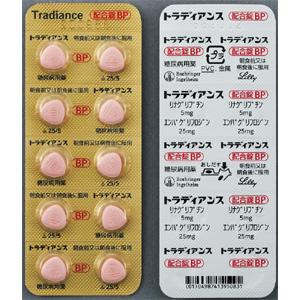
Tradiance (Empagliflozin/Linagliflozin) Combination Tablets BP 100 tablets (for type 2 diabetes)
Tradiance (Empagliflozin/Linagliflozin) Combination Tablets BP 100 tablets (for type 2 diabetes)
Regular price
¥66,000 JPY
Regular price
Sale price
¥66,000 JPY
Unit price
/
per
Taxes included.
Couldn't load pickup availability
Empagliflozin is used to treat type 2 diabetes.
I. Basic Drug Information
- Generic Name : Empagliflozin/Linagliptin Compound Tablets
- English name : Empagliflozin/Linagliptin Combination Tablets
- Product name : Tradiance Combination Tablets AP, Tradiance Combination Tablets BP
- Dosage form : Film-coated tablets
- Indications : Type 2 diabetes mellitus, limited to cases where the patient is deemed suitable for combination therapy with empagliflozin and linagliptin.
-
Element
-
Active ingredient :
- TransAsia Compound Tablets (AP): Each tablet contains 10mg empagliflozin and 5mg linagliptin.
- TransAsia Combination Tablets BP: Each tablet contains 25mg empagliflozin and 5mg linagliptin.
- Excipients : D-mannitol, partially pregelatinized starch, hydroxypropyl methylcellulose, povidone, crospovidone, talc, magnesium stearate, hydroxypropyl cellulose, titanium dioxide, polyethylene glycol 6000EP; among which, Trans-Ansitol Complex Tablet AP contains yellow ferric oxide, and Trans-Ansitol Complex Tablet BP contains ferric oxide.
-
Active ingredient :
-
Properties
| Drug Name | Appearance | Vertical Line | Thickness | Weight | Specification Marking |
| ---- | ---- | ---- | ---- | ---- | ---- |
| Triadion Complex Tablets (AP) | Pale yellow film-coated tablets | Approx. 8.1mm | Approx. 3.2mm | Approx. 185mg | 10/5 |
| Trans-Agent Tablets (BP) | Pale reddish film-coated tablets | Approx. 8.1mm | Approx. 3.2mm | Approx. 185mg | 25/5 |
II. Usage and Dosage
- The usual dosage for adults is one tablet once daily (empagliflozin/linagliptin is 10mg/5mg or 25mg/5mg), taken orally before or after breakfast.
-
When to use :
- Triadion tablets (AP 10mg/5mg): In principle, use should be considered in the following situations, including when empagliflozin 10mg and linagliptin 5mg are being used in combination and the condition is stable, when empagliflozin 10mg monotherapy is ineffective, and when linagliptin 5mg monotherapy is ineffective.
- Transamin BP (25mg/5mg): In principle, it should be considered for use in the following situations, including when the patient is already using empagliflozin 25mg and linagliflozin 5mg in combination and the condition is stable, when the combination therapy of empagliflozin 10mg and linagliflozin 5mg is ineffective, and when the monotherapy of empagliflozin 25mg is ineffective; especially when the treatment of empagliflozin 10mg and linagliflozin 5mg is ineffective, the patient's condition should be closely monitored.
- Precautions : This is not a first-line treatment for type 2 diabetes. It should only be considered when dietary and exercise therapies are ineffective.
III. Taboos
- Patients with a history of allergy to any of the ingredients in this medicine.
- Patients with severe ketoacidosis, diabetic coma or prodromal coma, or type 1 diabetes (who require rapid correction of hyperglycemia via intravenous fluids and insulin and are not suitable for this medication) should not use this medication.
- Patients with severe infections, before or after surgery, or with severe trauma (insulin injections are recommended for blood glucose management; this medication is not suitable for them).
- Patients with severe renal impairment or end-stage renal disease undergoing dialysis (empagliflozin may not be effective).
IV. Precautions
(a) Special populations
-
Patients with renal dysfunction
- This product is contraindicated for patients with severe renal impairment or end-stage renal disease undergoing dialysis.
- When used in patients with moderate renal impairment, the necessity should be carefully assessed, as empagliflozin may not be able to fully exert its effect. Renal function should be monitored regularly during medication. If eGFR remains below 45 mL/min/1.73 m², discontinuation of the drug should be considered.
- Patients with mild renal dysfunction should also monitor changes in renal function during medication.
-
Patients with liver dysfunction
- Clinical studies on efficacy and safety have not been conducted in patients with severe hepatic impairment; caution should be exercised when using this product.
- Patients with mild to moderate liver dysfunction should be closely monitored while taking this medication.
-
Pregnant and breastfeeding women
- This medication is not recommended for pregnant women or women who may become pregnant; insulin preparations should be used instead. Animal studies have shown that empagliflozin may cause dilation of the renal pelvis and renal tubules in young animals and can cross the placenta; linagliptin can also cross the placenta.
- It is recommended that breastfeeding women stop breastfeeding, as animal studies have shown that both empagliflozin and linagliptin can pass into breast milk.
- Children : No clinical studies have been conducted on children or other populations, and use is not recommended for children.
-
elderly
- Older adults often experience a decline in physiological function, which may delay their perception of dehydration symptoms (such as thirst), requiring special attention.
- When used by elderly people aged 75 and above, attention should be paid to adverse events related to reduced body fluid volume, as clinical studies have shown that the incidence of adverse events related to reduced body fluid volume in the empagliflozin 25mg group is higher than that in people under 75 years of age.
(II) Medication Instructions
- During medication, patients should be fully informed of the symptoms of hypoglycemia and how to manage them, and patients engaged in activities such as working at heights or driving should be reminded to be aware of the risk of hypoglycemia.
- Regularly monitor blood sugar levels to confirm the efficacy of the medication. If the effect is still not good after 3 months of medication, other treatment options should be considered.
- Inform the patient of the symptoms of ketoacidosis (nausea, vomiting, loss of appetite, abdominal pain, excessive thirst, fatigue, difficulty breathing, altered consciousness, etc.), which can occur even if blood sugar is not high, and seek medical attention immediately if symptoms occur.
- Patients should be reminded to pay attention to the symptoms of urinary tract infection and genital infection, and to deal with any abnormalities promptly, and to consider discontinuing medication if necessary; at the same time, patients should be instructed to drink enough water to prevent dehydration.
- During the course of taking this medication, urine glucose tests may be positive and serum 1,5-AG may be decreased. These results should not be used as a reference for blood glucose control and should be communicated to the patient and testing personnel in advance.
- The medication is packaged in PTP blister packs. Patients must be instructed to remove the tablets from the PTP blister pack before taking the medication to avoid accidental ingestion of the PTP blister pack, which could lead to serious complications such as damage to the esophageal mucosa.
(III) Drug Preservation
- Storage conditions: Store at room temperature.
- Validity period: 36 months
V. Adverse Reactions
(a) Allergic reaction
- Unknown frequency: angioedema, urticaria, bronchoconstriction.
(ii) Digestive system reactions
- More than 1%: constipation
- 0.2~1%: Abdominal distension
- Unknown frequency: abdominal distension, gastroenteritis, stomatitis
(iii) Other adverse reactions
| System Classification | 1% or more | 0.2~1% Not enough | Frequency unknown |
|---|---|---|---|
| Infectious diseases | Urinary tract infection, cystitis, genital tract infection (vulvitis, vulvovaginal candidiasis, balanitis, etc.) | - | - |
| Metabolic and nutritional disorders | lipid dyslipidemia | Decreased body fluid volume | - |
| Blood and lymphatic disorders | - | - | Blood Concentration |
| Neurological disorders | - | - | Dizziness, abnormal taste |
| Respirator, chest wall and mediastinal obstruction | - | - | Nasopharyngitis, cough |
| Skin and subcutaneous tissue disorders | - | rash | Pruritus |
| Kidney and urinary tract disorders | Frequent urination | polyuria | Increased urine output and difficulty urinating |
| Reproductive system disorders | - | vulvovaginal pruritus | Vulvar pruritus, phimosis |
| General systemic disorders | - | Thirsty | Feeling hungry, edema |
| Clinical examination | Positive blood ketone bodies, increased pancreatic enzymes (blood amylase, lipase), and positive urine ketone bodies. | Weight loss, elevated serum creatinine | Weight gain, decreased glomerular filtration rate, and increased hemoglobin |
(iv) Serious adverse reactions
- Hypoglycemia (incidence 0.5%) : Symptoms of hypoglycemia may occur. Similar to other DPP-4 inhibitors, severe hypoglycemia, even leading to loss of consciousness, may occur when used in combination with sulfonylureas. If symptoms occur, carbohydrate-containing foods should be consumed; when used in combination with alpha-glucosidase inhibitors, intravenous glucose administration is necessary.
- Dehydration (frequency unknown) : Symptoms of dehydration may include thirst, polyuria, frequent urination, and decreased blood pressure. In severe cases, it may lead to thromboembolism, including cerebral infarction. If dehydration is suspected, medication should be discontinued and appropriate treatment such as rehydration should be administered.
- Ketoacidosis (frequency unknown) : Ketoacidosis, including diabetic ketoacidosis, may occur. Close monitoring of related symptoms is necessary. If any abnormalities occur, timely examination and discontinuation of medication are required.
- Pyelonephritis, necrotizing fasciitis of the vulva and perineum (Fournier gangrene), and sepsis (frequency unknown) : Pyelonephritis and necrotizing fasciitis of the vulva and perineum may occur, and in severe cases, sepsis (including septic shock) may develop. Close observation and timely treatment are required.
- Intestinal obstruction (frequency unknown) : Symptoms of intestinal obstruction may include severe constipation, abdominal distension, persistent abdominal pain, and vomiting. If any abnormalities occur, medication should be stopped immediately and appropriate treatment measures should be taken.
- Liver dysfunction (incidence 0.2%) : Elevated AST and ALT levels may occur, requiring regular monitoring of liver function and prompt treatment if abnormalities are found.
- Sheptamorphosis (frequency unknown) : Symptoms of sheptamorphosis such as blisters and erosions may occur. It is necessary to communicate with a dermatologist in time and discontinue medication and receive treatment if necessary.
- Interstitial pneumonia (frequency unknown) : Symptoms of interstitial pneumonia may include cough, difficulty breathing, fever, and rales in the lungs. If abnormalities are found, chest X-ray, chest CT scan, and serum marker tests should be performed promptly. If the disease is suspected, medication should be discontinued and treatment with corticosteroids should be initiated.
- Acute pancreatitis (frequency unknown) : Symptoms of acute pancreatitis may include persistent and severe abdominal pain and vomiting. If any abnormalities occur, medication should be stopped immediately and treatment should be sought.
VI. Drug Interactions
| Drug category/name | Clinical symptoms and treatment methods | Mechanism of action / Risk factors |
|---|---|---|
| Diabetes medications (sulfonylureas, rapid-acting insulin secretagogues, alpha-glucosidase inhibitors, biguanides, thiazolidinediones, GLP-1 receptor agonists, insulin preparations, etc.) | It may cause hypoglycemia. When used in combination with sulfonylureas or insulin preparations, the dosage of sulfonylureas or insulin preparations should be reduced. | Enhanced blood sugar lowering effect |
| Drugs that enhance the blood glucose-lowering effect (β-blockers, salicylates, monoamine oxidase inhibitors, etc.) | Blood glucose levels and the patient's condition need to be closely monitored, and medication should be adjusted as needed. | Enhanced blood sugar lowering effect |
| Litonavir | It is necessary to monitor changes in linagliptin blood concentration and adjust the medication if necessary. | Ritonavir can inhibit the metabolic enzyme CYP3A4 of linagliptin and the excretion-related P-glycoprotein, thus affecting the metabolism and excretion of linagliptin. |
| Drugs that reduce the blood sugar-lowering effect (epinephrine, corticosteroids, thyroid hormones, etc.) | Blood glucose levels and the patient's condition need to be closely monitored, and medication should be adjusted as needed. | The effect of lowering blood sugar is weakened. |
| Rifampicin | It is necessary to monitor changes in linagliptin blood concentration and adjust the medication if necessary. | Rifampin can induce the metabolism of linagliptin, specifically the metabolic enzyme CYP3A4, and the excretion-related P-glycoprotein, thereby accelerating the metabolism and excretion of linagliptin. |
| Diuretics (thiazide diuretics, loop diuretics, etc.) | This may enhance the diuretic effect of empagliflozin; therefore, the dosage of diuretics should be adjusted as needed. | Empagliflozin has a diuretic effect, and its use in combination with other diuretics may produce a synergistic effect, increasing the diuretic effect. |
| Lithium preparations (lithium carbonate) | The effect of lithium preparations may be weakened; therefore, serum lithium concentration should be monitored, and the dosage should be adjusted if necessary. | Empagliflozin may promote renal excretion of lithium, leading to a decrease in serum lithium concentration. |
VII. Pharmacological effects
(I) Mechanism of Action
- Empagliflozin is a selective competitive inhibitor of SGLT2. Glucose filtered by the kidneys is almost completely reabsorbed via the human sodium-glucose cotransporter 2 (SGLT2) in the proximal convoluted tubule, with a small amount reabsorbed via SGLT1. Empagliflozin inhibits renal glucose reabsorption, increases urinary glucose excretion, and thus lowers blood glucose levels.
- Linagliptin is a competitive, reversible, selective inhibitor of dipeptidyl peptidase-4 (DPP-4). DPP-4 is a membrane-bound protease widely distributed in tissues such as the kidneys, liver, intestines, lymphocytes, and vascular endothelial cells. It can break down and inactivate incretins (including glucagon-like peptide-1 (GLP-1) and glucose-dependent insulin secretion-stimulating peptide (GIP)). Linagliptin improves postprandial glycemic control by inhibiting DPP-4 activity, increasing GLP-1 and GIP levels, promoting insulin secretion through the strong glucose-dependent insulin secretion-stimulating effect of incretins, and simultaneously inhibiting glucagon release through the action of GLP-1.
(II) Pharmacological effects
- Combined hypoglycemic effect : In the oral glucose tolerance test of Zucker diabetic obese (ZDF) rats, a single combined administration of empagliflozin and linagliptin significantly inhibited the increase in plasma glucose concentration compared with the use of either drug alone.
-
The effects of empagliflozin
- SGLT2 inhibition : In vitro studies have shown that empagliflozin has a selective inhibitory effect on SGLT2 (IC50: 1.3 nM), which is about 5,000 times more selective than human myocardial SGLT1 (IC50: 6278 nM).
- Promoting effect on urinary glucose excretion : In diabetic animal models (db/db mice and ZDF rats), a single oral dose of empagliflozin increased urinary glucose excretion 7 hours after administration; in Japanese patients with type 2 diabetes, once-daily oral administration of empagliflozin 1 mg, 5 mg, 10 mg, or 25 mg for 4 weeks significantly increased cumulative urinary glucose excretion within 24 hours on day 28 compared with placebo.
- Hypoglycemic effect : In diabetic animal models (db/db mice and ZDF rats), a single oral dose of empagliflozin reduced blood glucose levels; in ZDF rats, once-daily oral administration of empagliflozin for 5 weeks reduced plasma glucose concentration and glycated hemoglobin (HbA1c) on day 22 (feeding state) and day 37 (fasting state); in Japanese patients with type 2 diabetes, once-daily oral administration of empagliflozin 10 mg or 25 mg for 24 weeks significantly reduced HbA1c compared with placebo.
-
The effects of linagliptin
- DPP-4 inhibition : In vitro studies have shown that linagliptin can selectively inhibit human myocardial DPP-4 (plasma, Caco-2 cell-derived) activity (IC50 value: 1~3.6 nM); its inhibitory effect on plasma DPP-4 activity (more than 80%) can last for 24 hours according to pharmacokinetic characteristics.
- Effects on glucose tolerance and glucose metabolism : In normal animals (mice and rats), linagliptin increases GLP-1 and insulin secretion and significantly inhibits the rise in blood glucose induced by glucose loading tests; in various type 2 diabetes animal models (db/db mice, obese Zucker Fatty rats, ZDF rats), it also significantly inhibits the rise in blood glucose induced by glucose loading tests; in db/db mice with severe insulin resistance, it significantly reduces HbA1c; in Japanese patients with type 2 diabetes, linagliptin increases plasma GLP-1 concentration and lowers blood glucose.
VIII. Pharmacokinetics
(a) Blood drug concentration
In healthy adults, a crossover design was used, with patients receiving either a single oral dose of this drug on an empty stomach or in combination with other oral monotherapy. Results showed that the plasma concentration changes and pharmacokinetic parameters of this drug (empagliflozin/linagliptin 10mg/5mg, 56 cases; 25mg/5mg, 42 cases) were similar to those of the combination oral monotherapy (empagliflozin 10mg + linagliptin 5mg; empagliflozin 25mg + linagliptin 5mg), confirming the bioequivalence of this drug with monotherapy (foreign data).
(ii) Absorption
-
Bioavailability
- Empagliflozin : Absolute bioavailability studies have not yet been conducted.
- Linagliptin : In healthy adult men, 10 patients each were given oral linagliptin 10 mg tablets and intravenous linagliptin 5 mg tablets. Based on the data obtained, the absolute bioavailability was estimated to be approximately 30% (estimated by population pharmacokinetic analysis) (foreign data).
- Food effects : In 22 healthy adult Japanese men, the drug (empagliflozin/linagliptin 25 mg/5 mg) was administered orally once on an empty stomach and after a meal. The results showed that the geometric mean ratio of Cmax (postprandial/fasting) and 90% confidence interval for empagliflozin administration was 74.9 [66.3, 84.6]%, and the AUC0-tz was 86.0 [83.4, 88.7]%; the geometric mean ratio of Cmax and 90% confidence interval for linagliptin administration was 55.7 [48.2, 64.3]%, and the AUC0-tz was 82.2 [78.4, 86.2]%. The median tmax of empagliptin increased from 1.0 hour on an empty stomach to 2.0 hours after a meal, while the median tmax of linagliptin increased from 1.0 hour on an empty stomach to 1.5 hours after a meal.
(III) Distribution
-
Empagliflozin
- In 8 Japanese patients with type 2 diabetes (with normal renal function), a single oral dose of empagliflozin 25 mg resulted in a plasma protein binding rate of 84.7%.
- In 8 healthy adult males from foreign countries, oral administration of 14C-empagliflozin 50mg solution resulted in a blood cell/plasma radioactivity concentration distribution ratio of 28.6% to 36.8%.
- Linagliptin : In vitro studies show that the plasma protein binding rate of linagliptin is concentration-dependent, decreasing from 98.8% at 2 nM to 84% at 20 nM, and remaining relatively stable above 30 nM.
(iv) Metabolism
-
Empagliflozin
- Empagliflozin undergoes almost no metabolism in human liver microsomes and hepatocytes; the formation of its major metabolites is associated with UGT2B7, UGT1A3, UGT1A8, and UGT1A9, and involves almost no CYP enzymes.
- Empagliflozin does not inhibit CYP1A2, 2B6, 2C8, 2C9, 2C19, 2D6, or 3A4 in human liver microsomes, nor does it induce CYP1A2, 2B6, or 3A4 (in vitro data).
- In healthy adult males (8 cases), after oral administration of 14C-empagliflozin 50mg solution, the radioactive form was mainly present in the plasma (accounting for more than 75% of the plasma radioactivity), and the main metabolite was glucuronide conjugate (accounting for 3.3-7.4% of the plasma radioactivity) (data from foreign subjects).
-
Ligliptin
- In human liver microsomes and hepatocytes, 14C-linagliptin is metabolized at very low levels, with the production of its main metabolites being associated only with CYP3A4.
- Linagliptin competitively inhibits the activity of CYP3A4 in human liver microsomes, but the inhibitory effect is weak (Ki=115μM), and it does not inhibit CYP1A1, 1A2, 2A6, 2B6, 2C8, 2C9, 2C19, 2D6, 2E1, or 4A11. In addition, it can weakly to moderately and irreversibly inhibit CYP3A4 in human liver microsomes, and does not induce CYP1A2, 2B6, or 3A4 (in vitro data).
- In healthy adults (6 cases), 14C-linagliptin 10 mg was administered orally. It was mainly present in the unchanged form in the plasma (accounting for about 62% of the plasma radioactivity), and the main metabolite was piperidinyl hydroxylated product catalyzed by CYP3A4 (accounting for about 5% of the plasma radioactivity) (foreign data).
(v) Excretion
-
Empagliflozin
- In six healthy adult Japanese men, after a single oral dose of empagliflozin 10 mg and 25 mg, the urinary excretion rates of the unchanged drug within 72 hours were 21.3% and 22.9% of the administered dose, respectively.
- In healthy adult males (8 cases), after a single oral administration of 14C-empagliflozin 50 mg solution, approximately 54.4% of the administered radioactivity was excreted in the urine and approximately 41.2% in the feces (foreign data).
- Empagliflozin is a substrate for P-glycoprotein (P-gp), breast cancer resistance protein (BCRP), organic anion transporter 3 (OAT3), organic anion transporter polypeptide 1B1 (OATP1B1), and organic anion transporter polypeptide 1B3 (OATP1B3); it has weak inhibitory effects on BCRP, OAT3, OATP1B1, and OATP1B3 (IC50 values of 114, 295, 71.8, and 58.6 μM, respectively), but no inhibitory effect on P-gp (in vitro data).
-
Ligliptin
- In 6 healthy Japanese adults, after a single oral dose of linagliptin 5 mg, the urinary excretion rate of the unchanged drug within 24 hours was approximately 0.6%.
- In healthy adults (6 cases), after a single oral dose of 14C-linagliptin 10 mg, approximately 5% of the administered radioactivity was excreted in the urine and approximately 80% in the feces within 96 hours (foreign data).
- Linagliptin is a substrate of P-gp and a weak inhibitor (IC50 approximately 55 μM) (in vitro data).
(vi) Pharmacokinetics in special populations
-
Patients with renal dysfunction
- Empagliflozin : In Japanese patients with type 2 diabetes and normal renal function (eGFR ≥ 90 mL/min/1.73 m², 8 cases), mild (eGFR 60~<90 mL/min/1.73 m², 8 cases), moderate (eGFR 30~<60 mL/min/1.73 m², 8 cases), or severe (eGFR 15~<30 mL/min/1.73 m², 8 cases), a single oral dose of empagliflozin 25 mg was administered. Compared with patients with normal renal function, the geometric mean ratios (90% confidence intervals) of Cmax in patients with mild, moderate, and severe renal impairment were 93.5 [72.2, 121], 92.2 [71.2, 119], and 94.0 [72.6, 122], respectively; and the geometric mean ratios (90% confidence intervals) of AUC0-∞ were 129 [106, 157], 144 [118, 175], and 152 [125, 185], respectively. The mean change from baseline in urinary glucose excretion (UGE0-24h) within 24 hours after administration was 75.0 g in patients with normal renal function, 62.6 g in patients with mild renal impairment, 57.9 g in patients with moderate renal impairment, and 23.7 g in patients with severe renal impairment, decreasing with decreasing renal function.
- In patients with end-stage renal disease (8 cases), a single oral dose of empagliflozin 50 mg resulted in a geometric mean ratio (90% confidence interval) of 104 for Cmax [81.2, 133] and a geometric mean ratio (90% confidence interval) of 148 for AUC0-∞ [120, 183] compared with patients with normal renal function (8 cases); the mean change from baseline in UGE0-24h was 0.78 g (foreign data).
- Linagliptin : In healthy subjects (Ccr>80 mL/min, n=6), mild (Ccr>50~≤80 mL/min, n=6), and moderate (Ccr>30~≤50 mL/min, n=6) with renal impairment, a single or repeated dose of linagliptin 5 mg was administered. In patients with severe (Ccr≤30 mL/min, n=6) and end-stage renal impairment (Ccr≤30 mL/min and requiring hemodialysis, n=6), a single dose of linagliptin 5 mg was administered. After a single dose, compared with healthy subjects, the AUC0-24h in patients with mild, moderate, severe, and end-stage renal impairment were approximately 1.3 times, 1.6 times, 1.4 times, and 1.5 times, respectively, and the Cmax was approximately 1.3 times, 1.6 times, 1.5 times, and 1.5 times, respectively. After repeated administration, compared with healthy subjects, patients with mild and moderate renal impairment had AUCτ,ss approximately 1.1 times and 1.7 times higher, respectively, and Cmax,ss approximately 1.0 times and 1.5 times higher, respectively. In type 2 diabetic patients with normal renal function (11 cases) and severe renal impairment (10 cases), repeated administration of linagliptin 5 mg resulted in AUCτ,ss and Cmax,ss being approximately 1.4 times higher in patients with severe renal impairment after repeated administration. The accumulation coefficient in patients with renal impairment was similar to that in healthy subjects, and urinary excretion rates were lower in all groups (data from foreign subjects).
-
Patients with liver dysfunction
- Empagliflozin : In subjects with normal liver function (12 cases), mild (Child-Pugh score 5 or 6, 8 cases), moderate (Child-Pugh score 7–9, 8 cases), and severe (Child-Pugh score 10–15, 8 cases) hepatic impairment, a single oral dose of 50 mg empagliflozin was administered. Compared with subjects with normal liver function, the geometric mean ratios of Cmax (90% confidence interval) in patients with mild, moderate, and severe hepatic impairment were 104 [82.3, 131]%, 123 [97.7, 156]%, and 148 [118, 187]%, respectively; the geometric mean ratios of AUC0–∞ (90% confidence interval) were 123 [98.9, 153]%, 147 [118, 183]%, and 175 [140, 218]%, respectively (foreign data).
- Linagliptin : In healthy subjects (8), patients with mild (Child-Pugh score 6, 8), moderate (Child-Pugh score 7-9, 9), and severe (Child-Pugh score 10-15, 8) hepatic impairment, a single dose of linagliptin 5 mg was administered. In healthy subjects and patients with mild or moderate hepatic impairment, linagliptin 5 mg was administered once daily for 7 consecutive days. After repeated administration, compared with healthy subjects, patients with mild and moderate hepatic impairment had AUC<sub>τ,ss</sub> and C<sub>max,ss</sub> approximately 0.8 times and 0.9 times, respectively; patients with severe hepatic impairment had AUC<sub>0-24h</sub> approximately 1.0 times that of healthy subjects, and C<sub>max</sub> approximately 0.8 times that of healthy subjects. Patients with liver dysfunction had slightly lower linagliptin exposure than healthy subjects (maximum difference 36%, Cmax, ss in patients with mild liver dysfunction), and no increase in exposure was observed with decreasing liver function (foreign data).
-
elderly
- Empagliflozin : A population pharmacokinetic analysis of 3,208 patients with type 2 diabetes (including 628 Japanese patients) showed that, compared with patients aged 50 years, the AUCτ,ss of empagliflozin was expected to be 8.00% higher in patients aged 65 years and 12.5% higher in patients aged 75 years.
- Linagliptin : In 159 Japanese patients with type 2 diabetes, linagliptin 5 mg was administered once daily for 26 weeks. The geometric mean (geometric coefficient of variation) of plasma concentration at the end of the treatment was 6.57 nM (31.1%) in patients under 65 years of age and 7.66 nM (26.9%) in patients over 65 years of age.
IX. Clinical Research
(a) Domestic Phase III Trial (Type 2 Diabetes Patients with Poor Glycemic Control with Linagliptin Monotherapy: Comparative Validation Trial of Combination Preparation and Linagliptin Monotherapy)
This study included Japanese patients with type 2 diabetes whose glycemic control was inadequate with a combination of diet and exercise therapy and linagliptin 5mg (L5) monotherapy. Patients received empagliflozin 10mg/linagliptin 5mg combination tablets (E10/L5 combination tablets) orally once daily for 24 weeks, and the results were compared with L5 monotherapy. The primary endpoint was glycated hemoglobin (HbA1c, NGSP value), and fasting blood glucose was also monitored. The average changes in HbA1c and fasting blood glucose at 24 weeks compared to pre-treatment levels are shown in the table below.
| index | L5 treatment group (N=93) | E10/L5 compound tablet administration group (N=182) |
|---|---|---|
| HbA1c (NGSP value) (%) - Pre-drug value | 8.36 (0.08) | 8.27 (0.05) |
| HbA1c (NGSP value) (%) - Change at 24 weeks from pre-drug administration | 0.21 (0.09) | -0.93(0.06) |
| HbA1c (NGSP value) (%) - Difference from control group [95% confidence interval] | - | -1.14(0.11)[-1.36,-0.91] (P<0.0001) |
| Fasting blood glucose level (mg/dl) - Pre-dose value | 178.39 (3.43) | 177.25 (2.57) |
| Change in fasting blood glucose level (mg/dL) at 24 weeks compared to before drug administration | 4.34 (2.81) | -35.84 (1.79) |
| Fasting blood glucose level (mg/dl) - Difference from control group [95% confidence interval] | - | -40.18(3.33)[-46.74,-33.62] (P<0.0001) |
In addition, patients with HbA1c (NGSP value) <7.0% at week 24 continued to receive E10/L5 combination tablets, while patients with HbA1c ≥7.0% started receiving empagliflozin 25mg/linagliptin 5mg combination tablets (E25/L5 combination tablets) from week 28, both continued for 24 weeks (total 52 weeks), and were compared with L5 monotherapy. The average changes in HbA1c and fasting blood glucose at week 52 compared to pre-treatment levels are shown in the table below:
| index | L5 treatment group (N=93) | Compound tablet administration groups (E10/L5, E25/L5) (N=182) |
|---|---|---|
| HbA1c (NGSP value) (%) - Pre-drug value | 8.36 (0.08) | 8.27 (0.05) |
| HbA1c (NGSP value) (%) - Change at 52 weeks from pre-drug administration | 0.06 (0.10) | -1.16(0.06) |
| HbA1c (NGSP value) (%) - Difference from control group [95% confidence interval] | - | -1.22(0.12)[-1.45,-0.99] |
| Fasting blood glucose level (mg/dl) - Pre-dose value | 178.39 (3.43) | 177.25 (2.57) |
| Change in fasting blood glucose level (mg/dL) at 52 weeks compared to before drug administration | 1.63 (3.05) | -38.48(1.67) |
| Fasting blood glucose level (mg/dl) - Difference from control group [95% confidence interval] | - | -40.11(3.48)[-46.98,-33.25] |
Note: The combination tablet group included patients who did not increase their dosage at week 28 (including patients who continued to receive E10/L5 and those who increased to E25/L5). In the group that increased to E25/L5 combination tablets after week 28 (n=124), the change in HbA1c from before the increase [NGSP value (SE): 7.48% (0.04)] to after the increase was -0.21% (0.03). The incidence of hypoglycemic adverse reactions was 1.1% (2/182) in the combination tablet group and 1.1% (1/93) in the L5 group.
(II) Domestic Phase III Trial (Type 2 Diabetes Patients with Poor Glycemic Control with Empagliflozin 10mg or 25mg Monotherapy: Comparative Validation Trial of Combination Preparation and Empagliflozin Monotherapy)
This study included Japanese patients with type 2 diabetes whose glycemic control was inadequate with diet and exercise therapy combined with empagliflozin 10 mg (E10) or 25 mg (E25) monotherapy. Patients received either E10/L5 or E25/L5 combination tablets orally once daily for 24 weeks. Patients receiving E25/L5 combination tablets continued treatment for a total of 52 weeks, and their results were compared with those receiving E10 or E25 monotherapy. The average changes in HbA1c (NGSP value) and fasting blood glucose at week 24 (the primary evaluation time point) compared to pre-treatment levels are shown in the table below.
-
Comparison between the E10 administration group and the E10/L5 compound tablet administration group
| Indicators | E10 group (N=108) | E10/L5 compound tablet group (N=107) |
| ---- | ---- | ---- |
|HbA1c (NGSP value) (%) - Pre-drug value| 8.40 (0.07)| 8.34 (0.05)|
|HbA1c (NGSP value) (%) - Change at 24 weeks from pre-drug administration| -0.12 (0.06)| -0.94 (0.05)|
|HbA1c (NGSP value) (%) - Difference from control group [95% confidence interval]| - |-0.82 (0.08) [-0.97, -0.67] (P<0.0001)|
| Fasting blood glucose level (mg/dl) - Pre-dose value | 159.04 (2.31) | 159.25 (2.53) |
| Change in fasting blood glucose (mg/dl) at 24 weeks compared to before drug administration | -2.09 (1.87) | -14.38 (1.81) |
| Fasting blood glucose level (mg/dl) - Difference from control group [95% confidence interval] | - | -12.29 (2.61) [-17.44, -7.15] (P < 0.0001) | -
Comparison between the E25 administration group and the E25/L5 compound tablet administration group
| Indicators | E25 administration group (N=116) | E25/L5 compound tablet administration group (N=116) |
| ---- | ---- | ---- |
|HbA1c (NGSP value) (%) - Pre-drug value| 8.26 (0.06)| 8.27 (0.05)|
|HbA1c (NGSP value) (%) - Change at 24 weeks compared to pre-drug administration| -0.33 (0.05)| -0.91 (0.05)|
|HbA1c (NGSP value) (%) - Difference from control group [95% confidence interval]| - |-0.59 (0.07) [-0.73, -0.45] (P<0.0001)|
| Fasting blood glucose level (mg/dl) - Pre-dose value | 149.11 (1.95) | 151.78 (2.09) |
| Change in fasting blood glucose (mg/dl) at 24 weeks compared to before medication | -4.05 (1.71) | -9.45 (1.69) |
| Fasting blood glucose level (mg/dl) - Difference from control group [95% confidence interval] | - | -5.41 (2.41) [-10.16, -0.65] (P=0.0260) |
|HbA1c (NGSP value) (%) - Change at week 52 compared to pre-drug administration| -0.27 (0.06)| -0.86 (0.06)|
|HbA1c (NGSP value) (%) - Difference between HbA1c and control group at week 52 [95% confidence interval]| - |-0.59 (0.08) [-0.75, -0.42]|
| Fasting blood glucose level (mg/dl) - Change at week 52 compared to before administration | -0.60 (2.12) | -7.13 (1.84) |
| Fasting blood glucose level (mg/dl) - Difference between the control group and the control group at week 52 [95% confidence interval] | - | -6.53 (2.81) [-12.09, -0.97] |
The incidence of hypoglycemia was 0.9% (1/116 cases) in the E25 administration group, while no hypoglycemia was observed in the E10 administration group, the E10/L5 compound tablet administration group, or the E25/L5 compound tablet administration group.
10. Packaging Specifications
- TransAsia Compound Tablets (AP): 100 tablets/box (10 tablets/blister pack, PTP packaging, 10 blister packs total)
- TransAsia Tablets BP: 100 tablets/box (10 tablets/blister pack, PTP packaging, 10 blister packs total)
XI. Production Information
- Manufacturer : Nippon Polytechnic Co., Ltd.
- Company Address : 2-1-1 Osaki, Shinagawa-ku, Tokyo
Share