1
/
of
1
協和キリン株式会社
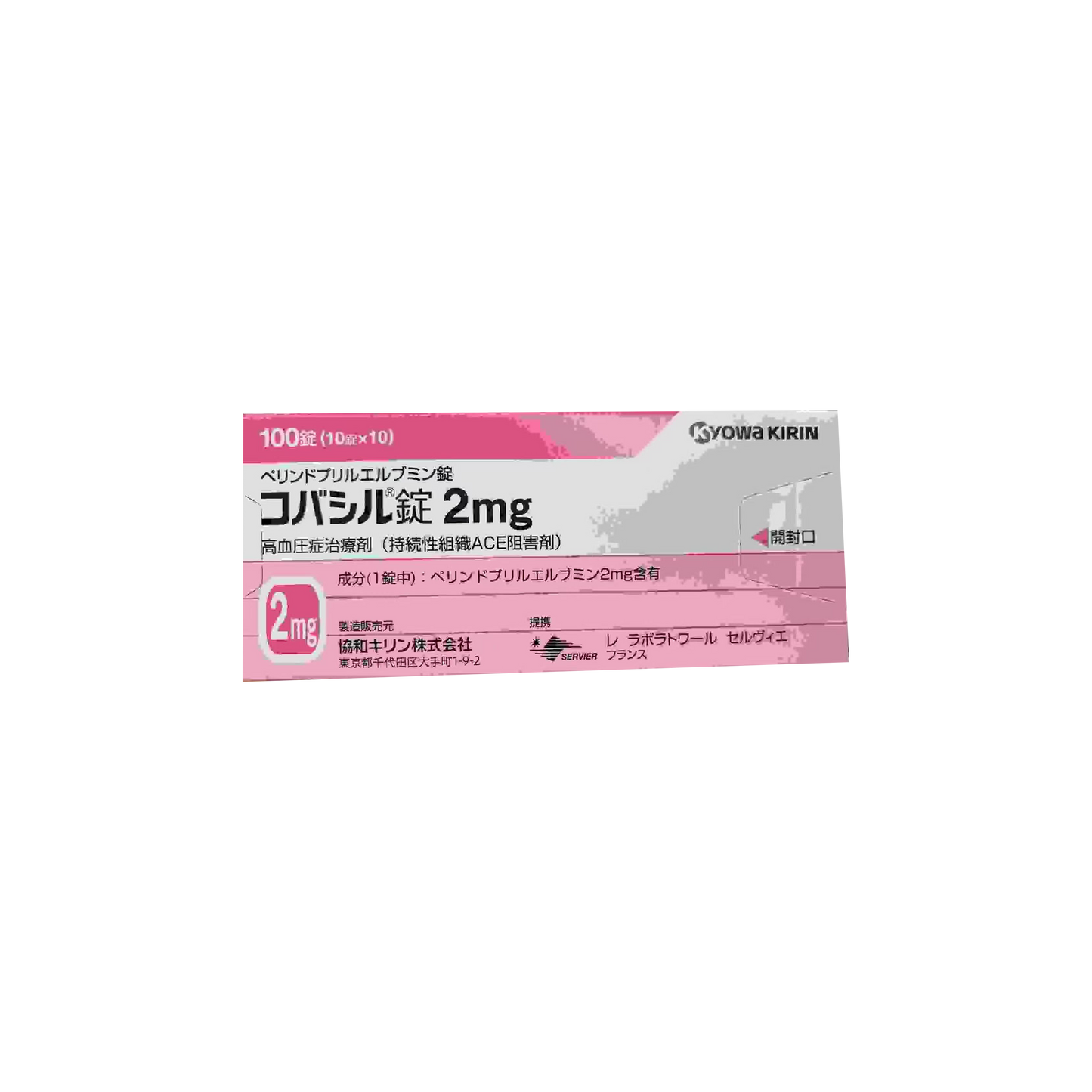
Perindopril tablets 2mg 100 tablets (Perindopril Erbumine 2mg) (Kyoho Hypertension Lowering Blood Pressure)
Perindopril tablets 2mg 100 tablets (Perindopril Erbumine 2mg) (Kyoho Hypertension Lowering Blood Pressure)
Regular price
¥11,000 JPY
Regular price
Sale price
¥11,000 JPY
Unit price
/
per
Couldn't load pickup availability
Perindopril tablets contain perindopril (an ACE inhibitor), which lowers blood pressure by inhibiting angiotensin-converting enzyme and can also improve cardiac function and protect kidney function. It is indicated for hypertension and congestive heart failure.
I. Basic Drug Information
- Common name : Perindopril Erbumine
- English name : Perindopril Erbumine Tablets
- Product name : コバシル 2mg, コバシル 4mg
- Dosage form : Tablets (2mg identification code KH220, 4mg identification code KH221, both in PTP packaging)
- Indications : Hypertension
-
Element :
- 2mg Specification: Each tablet contains 2mg of petrol elubmin;
- 4mg Specification: Each tablet contains 4mg of petrol elubmin;
- Additives: yellow iron triphosphate, ruthenium acid, crystalline sulfonate, etc.
- Appearance : Tablets, specific appearance not described in detail, identification codes are KH220 (2mg) and KH221 (4mg).
- Storage and shelf life : Store at room temperature; shelf life is 3 years.
II. Usage and Dosage
- The usual adult dosage is 2-4 mg orally once daily (after breakfast), based on the phenidate elubmin formula.
- Dosage can be adjusted according to age and symptoms, with a maximum daily dose not exceeding 8 mg.
III. Taboos
- Those with a history of allergy to any of the ingredients in this product.
- Currently using the アンジオテンシン receptor ネプリライシン blocking agent (such as Serotonin water and substance) or 36 days after stopping the drug patients within hours.
- Patients with a history of angioedema (such as ACEI-induced, hereditary/acquired/idiopathic angioedema).
- Patients who are undergoing dialysis using adsorbers such as the Adsorbent sulfuric acid-immobilized sulfate or the Adsorbent sulfuric acid immobilized sorbent membrane (AN69).
- Pregnant women or women who may be pregnant.
- Diabetic patients currently using Alisekirenfaru salt (except those with extremely poor blood pressure control).
IV. Precautions
-
Special populations :
- Patients with renal artery stenosis: May worsen kidney function; avoid use unless necessary.
- Patients with hyperkalemia: May worsen symptoms, avoid use unless necessary; patients with renal impairment or diabetes need to monitor their blood potassium levels.
- For those with severe hypertension or those who strictly restrict salt intake: start with a low dose and gradually increase it, being wary of sudden drops in blood pressure.
- For patients with renal impairment: if creatinine clearance is ≤30mL/min or serum creatinine is ≥3mg/dL, the dosage should be reduced or the dosing interval extended.
- For hemodialysis patients: start with a low dose, gradually increase the dose, and be wary of sudden drops in blood pressure.
- For women of reproductive age: Take the medication after confirming that you are not pregnant and have regular check-ups; stop taking the medication immediately after becoming pregnant.
- Breastfeeding women: weighing treatment against the benefits of breast milk, animal studies show components enter breast milk.
- Pediatrics: No efficacy and safety data available.
- Elderly patients: Start with a low dose and monitor blood pressure and renal function (elevation of BUN and creatinine may occur).
-
Medication instructions :
- It may cause dizziness or vertigo, affecting driving or working at heights.
- It is recommended to stop taking medication 24 hours before surgery.
- PTP tablets must be removed from the packaging before consumption to avoid accidental swallowing and esophageal damage.
-
Drug storage : Store at room temperature; shelf life is 3 years.
V. Adverse Reactions
-
Serious side effects :
- Angioedema (frequency unknown): Manifests as swelling of the face, tongue, larynx, etc., accompanied by difficulty breathing. The medication should be stopped immediately and symptomatic treatment should be given (such as adrenaline injection and airway protection).
- Acute kidney failure (<0.1%), hyperkalemia (frequency unknown).
-
Other side effects :
- Allergic reactions: rash, itching (0.1~5%).
- Kidneys: Elevated BUN and serum creatinine (0.1-5%).
- Blood: Decreased red blood cells, decreased hemoglobin, etc. (0.1~5%).
- Neuropsychiatric symptoms: dizziness, headache (0.1-5%); drowsiness, tinnitus, etc. (<0.1%).
- Circulatory system: hypotension (0.1~5%); palpitations, etc. (<0.1%).
- Digestive system: nausea, stomach discomfort (0.1~5%); constipation, abdominal pain, etc. (<0.1%).
- Metabolism: Increased total cholesterol, increased triglycerides, etc. (0.1~5%).
- Liver: AST and ALT levels are elevated (0.1-5%).
- Respirator: Cough (more than 5%); tightness in the throat (0.1~5%).
VI. Drug Interactions
-
Not for use together :
- Certain adsorbers (such as Dekistran sulfuric acid immobilized selrose) and AN69 dialysis membranes may cause shock or allergic reactions.
- The combined use of acesulfame potassium salt by diabetic patients (except those with extremely poor blood pressure control) may increase the risk of kidney damage and hyperkalemia.
-
Use with caution when combining :
- Potassium-sparing diuretics and potassium supplements may increase blood potassium levels, so blood potassium levels should be monitored.
- Alisekirenfumarate (for non-diabetic patients): May increase the risk of kidney damage and hyperkalemia; avoid use in combination with other medications if you have impaired kidney function.
- Angiotensin II receptor antagonists: may increase the risk of kidney damage and hyperkalemia.
- Diuretic antihypertensive drugs: may cause a rapid drop in blood pressure, so start with a low dose.
- Lithium preparations: may cause lithium poisoning, blood lithium concentration needs to be monitored.
- Nonsteroidal anti-inflammatory drugs (NSAIDs): may weaken the blood pressure-lowering effect and increase the risk of kidney damage.
- Calogeonaze preparation: May cause excessive blood pressure reduction.
VII. Pharmacological effects
- Mechanism of action : As a prodrug, it is metabolized into the active compound perindoprilat, which inhibits angiotensin-converting enzyme (ACE), reduces the production of angiotensin II (lowers peripheral vascular resistance), and simultaneously inhibits bradykinin degradation (enhancing the antihypertensive effect).
- Antihypertensive effect : It can stably lower blood pressure for up to 24 hours without affecting cardiac output or blood flow to major organs, and improves hypertensive cardiomegaly and vascular remodeling.
VIII. Pharmacokinetics
- Absorption : It is rapidly absorbed after oral administration on an empty stomach and metabolized into active substances, with a Tmax of approximately 5.0 to 10.7 hours; food slows down the absorption rate but does not affect the amount absorbed.
- Distribution : The active ingredient has a plasma protein binding rate of 10.2-18.2%, and is widely distributed in tissues such as the bladder, liver, and kidneys, with low concentrations in the brain.
- Metabolism : It is mainly hydrolyzed into active substances, and there are also metabolic pathways such as cyclization and glucuronic acid conjugation.
- Excretion : 21-26% is excreted unchanged and 3-10% is excreted in urine as the active substance; excretion is slowed in patients with renal impairment and blood drug concentration is higher in the elderly.
IX. Clinical Research
- Monotherapy for mild to moderate hypertension: efficacy rate 69.5-77.8%, long-term use (1 year) efficacy rate 78.0-94.7%.
- Combined diuretics/calcium antagonists: efficacy rate 80.0~82.1%.
- The main side effect was cough (5.9~16.1%), and the overall safety profile was good.
10. Packaging Specifications
- Cosmetics tablets 2mg: PTP packaging, 100 tablets (10 tablets × 10).
- Cosmetics tablets 4mg: PTP packaging, 100 tablets (10 tablets × 10).
XI. Production Information
- Manufacturer : Kyowa Kirin Co., Ltd.
Share