1
/
of
1
ゼリア新薬工業株式会社
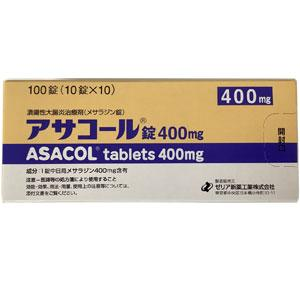
Asacol mesalazine tablets 400mg 100 tablets (Asacol mesalazine tablets ASACOL tablets) for Zelia enteritis
Asacol mesalazine tablets 400mg 100 tablets (Asacol mesalazine tablets ASACOL tablets) for Zelia enteritis
Regular price
¥9,500 JPY
Regular price
Sale price
¥9,500 JPY
Unit price
/
per
Couldn't load pickup availability
Asacol mesalazine tablets are commonly used to treat ulcerative colitis.
I. Basic Drug Information
- Generic name : Mesalazine tablets
- English name : Mesalazine Tablets
- Product Name : ASACOL Tablets 400mg
- Dosage form : pH-dependent release film-coated tablets
- Indications : Ulcerative colitis (excluding severe cases)
-
Element
- Active ingredient : Each tablet contains 400mg of mesalazine from the Japanese Pharmacopoeia.
- Excipients : lactose hydrate, hydroxypropyl methylcellulose, magnesium stearate, talc, povidone, calcium carboxymethyl cellulose, triethyl citrate, yellow ferric oxide, ferric oxide, polyethylene glycol 6000EP.
-
Properties
- Color and dosage form : pH-dependent release film-coated tablets with a reddish-brown to brown hue.
-
shape :
- Major diameter 14.7mm, minor diameter 5.9mm;
- Thickness 6.5mm;
- Mass 547.9mg;
- Identification code: ZP65.
II. Usage and Dosage
-
Adult standard dose
- General instructions : 2400 mg of mesalazine per day, divided into 3 oral doses after meals.
- During remission : If necessary, the dosage can be adjusted to 2400mg once a day after meals.
- During the active period : 3600 mg of mesalazine per day, divided into 3 oral doses after meals.
- Dosage adjustment : The dosage may be reduced appropriately depending on the patient's specific condition.
III. Taboos
The following patients are prohibited from using this product:
- Patients with a history of allergy to any of the ingredients in this medicine.
- Patients with a history of allergy to salicylates (cross-allergy may occur).
- Patients with severe kidney damage.
- Patients with severe liver dysfunction.
IV. Precautions
(a) Special populations
-
Patients with impaired kidney function
- Patients with severe renal impairment: Contraindicated, as it may lead to further deterioration of renal function.
- Patients with impaired renal function (except for severe renal impairment): Delayed excretion may cause side effects.
-
Patients with impaired liver function
- Patients with severe liver dysfunction: Contraindicated, as it may lead to further deterioration of liver function.
- Patients with impaired liver function (except for severe liver damage): Delayed metabolism may lead to side effects.
- Pregnant women : Use only in pregnant women or women who may become pregnant when the benefits of treatment outweigh the risks. Animal studies have not shown that mesalazine is teratogenic.
- Breastfeeding women : The decision to continue breastfeeding should be weighed against the combined benefits of treatment and the nutritional necessity of breast milk. There are reports that mesalazine can be transferred into breast milk.
- Children : No clinical studies have been conducted in children.
- Elderly individuals : Their general physiological functions (such as kidney and liver function) are generally declining, requiring close monitoring and cautious medication administration.
- Patients with a specific history of allergies : Patients with a history of allergy to sulfonamide drugs (such as sulfapyridine) should use this medication with caution. If acute allergic symptoms such as abdominal cramps, abdominal pain, fever, severe headache, or rash occur, the medication should be discontinued immediately.
(II) Medication Instructions
- The effectiveness of a daily dose of 3600 mg for more than 8 weeks has not been established. It should not be administered blindly. The patient's condition should be closely monitored, and the dose should be appropriately reduced based on the severity of the illness and the extent of the lesions.
- When this drug is used in combination with mesalazine enema, the total dosage of mesalazine should be increased, especially in patients with impaired liver and kidney function and the elderly. The dosage should be appropriately reduced and the patient should be closely monitored. If any abnormalities are found, appropriate measures such as dose reduction or discontinuation of the drug should be taken.
- When administering the medication, patients should be informed to remove the tablet from the PTP packaging before taking it to avoid accidentally swallowing the PTP packaging, as the hard, sharp corners of the packaging may pierce the esophageal mucosa and even cause perforation leading to serious complications such as mediastinitis.
- This medicine is a controlled-release formulation and must be swallowed whole. Do not chew or grind it in a mortar and pestle.
- It is normal to find pills in feces after taking the medication.
- Urine containing mesalazine or its metabolites may turn reddish-brown upon contact with bleach containing hypochlorite, but this is nothing to worry about.
(III) Drug Preservation
- Store at room temperature.
- Once opened, PTP packaging should be kept away from moisture.
- Because moisture absorption may affect solubility, the tablets should be removed from the PTP packaging before taking them.
- If repackaging is required, avoid storing in damp conditions and avoid storing in automatic repackaging machines.
- If tablets fall inside the automatic packaging machine, they may crack; please operate with caution.
V. Adverse Reactions
(a) Allergic reaction
-
Severe allergic reaction (frequency unknown)
- Toxic epidermal necrosis and lysis (TEN): Symptoms may include large-area skin necrosis and peeling. The medication should be stopped immediately and emergency measures should be taken.
- Drug-induced allergic syndrome: Initial symptoms include rash and fever, which may be accompanied by liver damage, lymph node swelling, leukocytosis, eosinophilia, and the appearance of atypical lymphocytes. It is often accompanied by reactivation of viruses such as human herpesvirus 6 (HHV-6). Symptoms may recur or become prolonged after discontinuation of the drug, requiring close observation.
-
Other allergic reactions
- Incidence 0.1%~1%: rash, urticaria, itching.
(ii) Digestive system reactions
- Serious reactions (frequency unknown): Acute pancreatitis requires monitoring of serum amylase. If symptoms such as abdominal pain occur, discontinue the medication immediately and seek treatment.
-
Other reactions
- Incidence 0.1%~1%: Abdominal pain, diarrhea, abdominal distension, nausea, indigestion, bloating, and elevated blood amylase.
- Unknown frequency: vomiting, elevated lipase, bloody stools, bloody stools.
(iii) Other serious adverse reactions
- Hematologic system (frequency unknown): aplastic anemia, pancytopenia, agranulocytosis, leukopenia, neutropenia, thrombocytopenia. Regular blood tests are required during medication.
- Cardiovascular system (frequency unknown): myocarditis, pericarditis, pleurisy. If symptoms such as chest pain, abnormal electrocardiogram, or pleural effusion occur, discontinue medication immediately and seek treatment.
- Respiratory system (incidence 0.1%): Interstitial lung disease (such as interstitial pneumonia, eosinophilic pneumonia). If symptoms such as dyspnea, chest pain, and cough occur, discontinue the medication immediately and seek treatment.
- Urinary system (frequency unknown): interstitial nephritis, renal papillary necrosis syndrome, renal insufficiency; renal function needs to be monitored during medication.
-
liver
- Incidence rate of 1% or higher: Elevated bilirubin.
- Incidence 0.1%~1%: Elevated AST, elevated ALT, elevated γ-GTP, elevated alkaline phosphatase (Al-P), elevated lactate dehydrogenase (LDH).
- Unknown frequency: Hepatitis, liver function impairment, jaundice require regular monitoring of liver function indicators.
(iv) Other adverse reactions
| system | Incidence rate above 1% | Incidence rate: 0.1%~1% | Frequency unknown |
|---|---|---|---|
| blood | eosinophilia | Leukopenia, monocytosis | anemia |
| kidney | Elevated levels of urinary N-acetyl-β-D-glucosidase (NAG) | Elevated blood urea nitrogen (BUN) | Elevated serum creatinine and decreased creatinine clearance (refer to overseas information) |
| other | Elevated C-reactive protein (CRP) | Headache, dizziness, joint pain, and abnormal sensations (such as numbness). | Fever, tinnitus, muscle pain, weight loss (refer to overseas information), alopecia, lupus-like syndrome, increased erythrocyte sedimentation rate (refer to overseas information), fatigue |
VI. Drug Interactions
(a) Concomitant medications that require attention
| Drug Name | Clinical symptoms and treatment methods | Mechanism of action and risk factors |
|---|---|---|
| azathioprine, mercaptopurine | Myelosuppression may occur | Reports suggest that mesalazine may inhibit mercaptopurine methyltransferase activity, thereby hindering the metabolism of these drugs. |
VII. Pharmacological effects
(I) Mechanism of Action
In in vitro experiments, mesalazine exhibits the following effects:
- Hydrogen peroxide scavenging effect;
- Singlet oxygen scavenging;
- The reducing power of 1,1-diphenyl-2-picrylhydrazine radicals;
- Inhibition of lipid peroxidation;
- Leukotriene B4 has an inhibitory effect.
(II) Effects in the experimental colitis model
In a 3% sodium dextran sulfate-induced colitis model, oral administration of mesalazine 100 mg/kg resulted in the following effects:
- Improvement in bloody stools;
- Increased red blood cell count and hemoglobin level;
- The number of white blood cells is reduced.
VIII. Pharmacokinetics
(a) Absorption
-
Single-dose administration : The pharmacokinetic parameters of the unaltered plasma after a single oral administration of this drug to healthy adult males on an empty stomach are shown in the table below:
| Dosage (mg) | Time to Peak Concentration (Tmax) (hr) | Peak Concentration (Cmax) (ng/mL) | Half-Life (t1/2) (hr)
| ---- | ---- | ---- | ---- |
|400|14.7±9.0|58.8±68.4|14.3±11.6|
|1200|12.3±6.3|550.6±636.0|33.9±28.5|
|2400|14.0±5.9|719.6±566.1|24.7±21.6|
|4800|18.0±11.0|1723.6±625.6|9.1±8.2|
(Note: The maximum approved single dose is 2400 mg during the remission period.) - Repeated administration : 6 healthy adult males were given 1200 mg of mesalazine orally 3 times a day for 7 consecutive days. The plasma concentration of the unchanging substance reached steady state from day 2, with no significant fluctuations compared to a single dose.
- Dietary effects : In healthy adult males (6 cases), there were no statistically significant differences in pharmacokinetic parameters between fasting and postprandial administration of the drug after a single oral dose of 2400 mg.
- Tissue distribution : Six patients were orally administered 400 mg, and the concentration in the small and large intestinal mucosa was measured 22 hours later. The results showed that the concentration in the large intestinal mucosa was the highest, about 10 times that in the upper and lower small intestine.
(ii) Excretion
- In healthy adult males, after a single oral administration of this drug (400 mg, 1200 mg, 2400 mg, or 4800 mg of mesalazine), the urinary excretion rate of the unaltered form was 0.3%–1.2% within 96 hours, and the urinary excretion rate of the acetylated form was 17.1%–23.6%.
- After a single oral administration of mesalazine at doses of 2400 mg and 4800 mg, the fecal excretion rates of the unaltered individuals were 40.1% and 31.7% within 96 hours, respectively, while the fecal excretion rates of the acetylated individuals were 5.9% and 2.1%, respectively.
- Diet and repeated administration have no significant effect on the urinary and fecal excretion of this drug.
IX. Clinical Research
(a) Domestic Phase III Trial
A double-blind intergroup comparative trial conducted on patients with active or remission ulcerative colitis in China showed that this drug is effective for ulcerative colitis when administered three times a day.
-
Effects on patients with active ulcerative colitis
During medication Dosing group (mg/day, 3 times a day) UC-DAI score reduction (activity index) [95% confidence interval] Remission rate (%) Effectiveness (%) 8 weeks 2400 1.5 (n=58) [0.7-2.3] 30.3 (20/66) 45.5 (30/66) 8 weeks 3600 2.9 (n=62) [2.3-3.5] 45.3 (29/64) 64.1 (41/64) (Note 1: UC-DAI score: The sum of scores for four items: frequency of bowel movements, bloody stools, mucosal findings during colonoscopy, and overall physician evaluation. Reduction rate = UC-DAI score before medication - UC-DAI score at final assessment; Note 2: Remission rate: The proportion of cases with a UC-DAI score ≤2 and a bloody stool score = 0 at the final assessment; Note 3: Efficacy rate: The total proportion of cases that achieved remission and cases that did not achieve remission but showed a reduction in UC-DAI score ≥2.)
-
Classification by severity
| During treatment | Severity (UC-DAI score) | Treatment group (mg/day, 3 times a day) | Reduction in UC-DAI score (activity index) |
| ---- | ---- | ---- | ---- |
|8 weeks| 3~5| 2400| 1.7 (n=23)|
|8 weeks| 3~5| 3600| 1.8 (n=27)|
|8 weeks| 6~8| 2400| 1.3 (n=35)|
|8 weeks| 6~8| 3600| 3.7 (n=35)| -
Classification by lesion extent
| Dosage period | Lesion extent | Dosage group (mg/day, 3 times a day) | UC-DAI score reduction (activity index) |
| ---- | ---- | ---- | ---- |
|8 weeks| Proctitis type| 2400| 1.8 (n=22)|
|8 weeks| Proctitis type| 3600| 1.7 (n=23)|
|8 weeks| Other types| 2400| 1.3 (n=36)|
|8 weeks| Other types| 3600| 3.6 (n=39)| - Incidence of adverse reactions : 40.9% (27/66 cases) in the 2400mg group and 48.4% (31/64 cases) in the 3600mg group. Major adverse reactions included elevated urinary NAG (13.6% in the 2400mg group and 12.5% in the 3600mg group), elevated CRP (9.1% in the 2400mg group and 7.8% in the 3600mg group), elevated eosinophil count (9.1% in the 2400mg group), and elevated serum bilirubin (7.8% in the 3600mg group).
-
Classification by severity
-
Effects on patients with ulcerative colitis in remission
During medication Dosing group (mg/day, 3 times a day) Incidence of no bloody stool (%) [95% confidence interval] Non-recurrence rate (%) 48 weeks 2400 76.9 (50/65) [64.9-86.4] 80.0 (52/65) (Note 4: Non-recurrence rate: Recurrence is defined as a bloody stool score ≥1 and a UC-DAI score ≥3. The proportion of non-recurrence cases)
- The incidence of adverse reactions was 44.6% (29/65 cases). The main adverse reactions included elevated urinary NAG, elevated conjugated bilirubin, elevated serum bilirubin, and elevated eosinophil count (9.2% each).
(ii) Dosage booster test (comparison between once-daily and three-daily dosing)
For patients with ulcerative colitis in remission, the non-relapse rate was used as the primary evaluation indicator to verify the non-inferiority of once-daily administration versus three-daily administration when the drug was administered at 2400 mg/day for 48 weeks. The results showed that the non-inferiority could be verified in the primary analysis.
| usage | Number of cases | Non-relapse rate (%) [95% confidence interval] | Between-group difference (%) [95% confidence interval] |
|---|---|---|---|
| Once a day | 301 | 88.4 [84.3-91.7] | -1.3 [-6.2-3.7] |
| 3 times a day | 299 (Note 7) | 89.6 [85.7-92.8] | - |
| (Note 5: The definition of non-relapse rate is the same as in Note 4; Note 6: Intergroup difference = once-daily dosing group - three-daily dosing group, with a non-inferiority threshold of -10%; Note 7: Two cases where relapse status was missing at the time of final determination were excluded.) |
- Incidence of adverse reactions : 4.3% (13/302 cases) in the once-daily group and 5.3% (16/301 cases) in the three-daily group. The main adverse reactions were elevated urinary NAG (1.7% in both groups) and abdominal distension (1.0% in the three-daily group).
10. Packaging Specifications
PTP packaging: 100 ingots (10 ingots x 10), 500 ingots (10 ingots x 10 x 5)
XI. Production Information
- Manufacturer : Zelia New Drug Industry Co., Ltd.
- Company Address : 10-11 Nihonbashi Kofunecho, Chuo-ku, Tokyo
Share