1
/
of
1
日本新薬株式会社
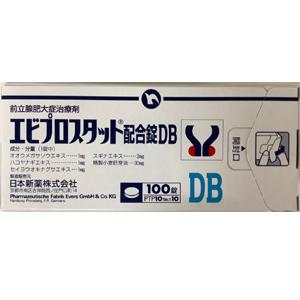
Eviprostat DB tablets 100 tablets (Eviprostat DB for prostate urinary difficulties)
Eviprostat DB tablets 100 tablets (Eviprostat DB for prostate urinary difficulties)
Regular price
¥5,000 JPY
Regular price
Sale price
¥5,000 JPY
Unit price
/
per
Couldn't load pickup availability
Eviprostat (D-type) is used to treat urinary difficulties, residual urine, and urinary frequency associated with benign prostatic hyperplasia (BPH).
I. Basic Drug Information
- Generic Name : Anise Extract, Broom Flower Extract, Yarrow Extract, Horsetail Extract, Refined Wheat Germ Oil Complex Tablets
- English name : Eviprostat Tablets DB
- Product name : Ethropod compound tablet DB
- Dosage form : Enteric-coated film-coated tablets
- Indications : Benign prostatic hyperplasia (BPH) accompanied by dysuria, residual urine and feeling of residual urine, and urinary frequency.
-
Element :
- Active ingredients (per tablet): Anise extract 1mg, Broom flower extract 1mg, Yarrow extract 1mg, Horsetail extract 3mg, Refined wheat germ oil 30mg
- Additives: Lactose hydrate, crystalline cellulose, light anhydrous silica, corn starch, croscarmellose sodium cellulose, ascorbate palmitate, methyl methacrylate copolymer LD, triethyl citrate, talc, hydroxypropyl methylcellulose, titanium dioxide, polyethylene glycol 6000, carnauba wax
-
Characteristics :
- Formulation characteristics: White enteric-coated film-coated tablets, identification code 222
- Properties of the active ingredient:
- Anise extract: a dark brown liquid with a distinctive odor and a slightly bitter taste.
- Broom flower extract: a green to dark brown liquid with a distinctive odor and a bitter taste.
- Yarrow extract: a brownish-yellow to greenish-brown liquid with a characteristic odor and a slightly bitter taste.
- Horsetail extract: a brown powder with a distinctive odor and a slightly bitter taste.
- Refined wheat germ oil: a pale yellow, clear liquid, almost insoluble in water and ethanol (95%), miscible with light oil (40–60°C), with a specific gravity of approximately 0.925 and a refractive index of approximately 1.475.
II. Usage and Dosage
The usual dosage is one tablet, three times a day, taken orally. The dosage may be adjusted according to the symptoms.
III. Taboos
(The document does not explicitly list the specific groups of people who are contraindicated; this needs to be added.)
IV. Precautions
-
Special populations :
- Patients with comorbidities or a history of related medical conditions should use this medication with caution.
- Patients with kidney dysfunction and liver dysfunction should pay attention.
- Special populations such as those of reproductive age, pregnant women, breastfeeding women, and children need to pay attention to medication safety.
- Elderly people should use medication with caution.
-
Medication instructions :
- For medications packaged in PTP (Potentially Transplanted Toxin) packaging, patients must be instructed to remove the PTP sheet before taking the medication to avoid accidental swallowing of the PTP sheet, which could lead to esophageal mucosal puncture, perforation, and serious complications such as mediastinitis.
- Medication storage : Store at room temperature; shelf life 3 years.
V. Adverse Reactions
- Allergic reactions : Skin may experience allergic symptoms such as rashes and itching (incidence rate 0.1-5%), and erythema multiforme may also occur (incidence rate unknown).
- Digestive system reactions : Loss of appetite, abdominal pain, stomach discomfort, stomach ache, and nausea may occur (incidence rate 0.1–5%).
-
other :
- Liver: Possible complications include abnormal liver function and jaundice (incidence unknown).
- Metabolic abnormalities: Elevated blood uric acid levels may occur (incidence 0.1–5%).
- Other symptoms may include fatigue (occurrence rate 0.1–5%) and numbness (occurrence rate unknown).
VI. Drug Interactions
- Merging taboos : (Not explicitly listed in the document, to be added)
- Merge Notes : (Not explicitly listed in the document, to be added)
VII. Pharmacological effects
- Adjusting biomembrane function : (The document does not explicitly specify this content; it needs to be added later)
- Improve metabolic abnormalities : Through the synergistic effect of various components, it may affect metabolic-related functions (such as indicators like uric acid in the blood).
- Regulating blood lipids : (The document does not explicitly specify the corresponding content; this needs to be added later)
- Protecting blood vessels : (The document does not clearly specify the corresponding content and needs to be supplemented)
-
Other uses :
- Effects on urination function: In rats with lower urinary tract obstruction, it can inhibit spontaneous bladder contractions during urine storage, improve urinary frequency, increase bladder capacity and reduce residual urine volume in rats with cystitis; it can also reduce urethral resistance in patients with benign prostatic hyperplasia, enhance bladder smooth muscle tension, and promote urine excretion.
- Anti-inflammatory effects: The components synergistically inhibit various types of edema in the rat paws and reduce prostatic edema and bladder mucosal inflammation in patients with benign prostatic hyperplasia.
- Antioxidant effects: Anise extract, broom extract, and horsetail extract have superoxide and hydroxyl radical scavenging effects, while yarrow extract has hydroxyl radical scavenging effects.
- Effect on prostate weight: Subcutaneous or oral administration of the extract inhibited prostate weight growth in rats.
- Urinary tract disinfection and sterilization effects: Yarrow has antibacterial properties, while star anise and horsetail have antibacterial and diuretic effects, which can prevent urinary tract bacterial infections.
VIII. Pharmacokinetics
- Absorption : (Details are not clearly stated in the document and will be supplemented later)
- Excretion : (Details are not clearly stated in the document and will be supplemented later)
- Other : including blood concentration, distribution, metabolism, etc. (detailed data not specified in the document, to be supplemented)
IX. Clinical Research
- Domestic double-blind controlled trial (with placebo as control): After 3-4 weeks of administration, it was confirmed that the drug is effective and safe for treating subjective symptoms such as difficulty urinating, urinary frequency, and residual urine sensation associated with benign prostatic hyperplasia. The incidence of side effects in the drug administration group was 2.9% (1 case of loss of appetite and 1 case of abnormal sensation/pruritus).
- In domestic clinical trials, the efficacy rate for benign prostatic hyperplasia (BPH) was 62.1% (300/483).
- Equivalence test (comparison between this agent and Etotron tablets):
- Subjective symptoms (change in total IPSS score): -5.9±4.9 in the treatment group (n=46), and -5.9±6.2 in the control group (n=46).
- Subjective symptom improvement: The proportion of effective cases with a reduction of more than 50% in the total IPSS score was 41.3% (19/46).
- The incidence of side effects was 9.5% (3 cases of elevated uric acid in the blood and 2 cases of stomach pain).
10. Packaging Specifications
- 100 tablets [10 tablets (PTP) x 10]
- 500 tablets [10 tablets (PTP) x 50]
- 1050 tablets [21 tablets (PTP) x 50]
- 500 tablets [bottle, bulk]
XI. Production Information
- Manufacturer : Nippon Yaku Co., Ltd.
Share