1
/
of
1
沢井製薬株式会社
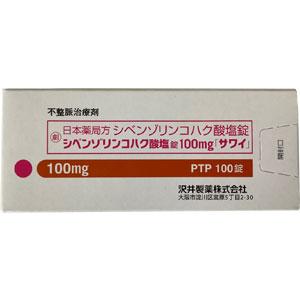
Cibenzoline Succinate 100mg 100 tablets Cibenzoline Succinate Cibenzoline Succinate Tablets Arrhythmia
Cibenzoline Succinate 100mg 100 tablets Cibenzoline Succinate Cibenzoline Succinate Tablets Arrhythmia
Regular price
¥4,700 JPY
Regular price
Sale price
¥4,700 JPY
Unit price
/
per
Taxes included.
Couldn't load pickup availability
Cebenzoline succinate belongs to the class of antiarrhythmic drugs. It treats ventricular arrhythmias (such as premature ventricular contractions) by inhibiting myocardial sodium channels and stabilizing cell membranes.
I. Basic Drug Information
- Generic name : Cibenzoline Succinate
- English Name : CIBENZOLINE SUCCINATE Tablets [SAWAI]
- Product Name : Cefenoxazoline Succinate Tablets 50mg "Sawai" / 100mg "Sawai"
- Dosage form : Film-coated tablets
- Indications : Frequent arrhythmias (ventricular/supraventricular premature contractions) when other antiarrhythmic drugs are ineffective or unavailable.
-
Element :
- Each tablet contains 50 mg or 100 mg of cefotaxime succinate (based on free base, a 50 mg tablet contains 34.2 mg of cefotaxime succinate, and a 100 mg tablet contains 68.4 mg).
- Additives: α-starch, lactose, crystalline cellulose, magnesium stearate, etc.
-
Characteristics :
- 50mg tablet : White round film tablet, 6.1mm in diameter and 3.2mm thick, identification code SW CZ 50.
- 100mg tablet : White oval film tablet, 7.1mm in diameter and 3.7mm thick, identification code SW CZ 100.
II. Usage and Dosage
- Adults : Starting dose 300mg/day (6 tablets of 50mg or 3 tablets of 100mg), taken orally in 3 divided doses after meals; if the effect is insufficient, the dosage can be increased to [a higher dose]. 450mg/day (maximum dose).
-
Renal insufficiency :
- Mild to moderate (Scr 1.3~2.9mg/dL): halve the dose (150~225mg/day).
- Severe (Scr ≥3.0mg/dL): reduce the dose to 1/3 (100mg/day).
- For the elderly : It is recommended to start from 150mg/day Initially, inpatient monitoring lasts for 1-2 weeks.
- Contraindications : This medication is contraindicated in dialysis patients, patients with high-degree atrioventricular block, and patients with congestive heart failure.
III. Taboos
- Patients with high-degree atrioventricular/sinoatrial block, congestive heart failure, angle-closure glaucoma, or a tendency to urinary retention.
- Those allergic to any of the ingredients in this product.
- Patients currently using QT interval prolonging drugs (such as bardenfeline, moxifloxacin, rivaroxaban, etc.).
- Patients undergoing dialysis (blood drug concentration rises sharply, easily leading to hypoglycemia).
IV. Precautions
1. Special populations
- Pregnant women : Use only when the benefits outweigh the risks (animal studies showed no teratogenicity, but human data are insufficient).
- During lactation : The medication may be secreted into breast milk, so it is necessary to weigh whether to stop the medication or stop breastfeeding.
- Children : No clinical data available, contraindicated.
- Elderly individuals : Due to decreased liver and kidney function, the dosage needs to be reduced and electrocardiogram and blood glucose should be monitored (as they are prone to hypoglycemia).
2. Medication Instructions
-
Monitoring requirements :
- Regularly check electrocardiograms (PQ/QRS prolongation, QT interval), blood pressure, liver and kidney function, and blood sugar (especially for diabetic patients).
- Stop taking the medication immediately if you experience palpitations, dizziness, or confusion.
- Anticholinergic reactions : dry mouth, difficulty urinating, blurred vision; in severe cases, medication must be discontinued.
- Driving/operating machinery : May cause dizziness and hypoglycemia. Avoid dangerous operations while taking this medication.
3. Drug Preservation
- Storage: Store at room temperature, avoid moisture.
- Validity period: 3 years.
V. Adverse Reactions
1. Allergic reaction
- Rare: rash, erythema, itching (<1%).
2. Digestive system reactions
- Common symptoms (1%~2%): dry mouth, nausea, constipation; rare symptoms: abdominal pain, vomiting.
3. Serious adverse reactions (requiring immediate discontinuation of medication)
- Cardiovascular : Ventricular fibrillation (Torsades de Pointes), cardiogenic shock (frequency unknown).
- Metabolism : Hypoglycemia (1% unsatisfied, manifested as cold sweats and altered consciousness).
- Other : interstitial pneumonia (fever, cough), liver damage (elevated AST/ALT), granulocytopenia.
VI. Drug Interactions
| Combination drug categories | Risks and Handling |
|---|---|
| QT interval prolonging drugs | Contraindicated combined use (such as moxifloxacin and amiodarone) may induce fatal arrhythmias. |
| Hypoglycemic drugs (such as SGLT2i) | Increased risk of hypoglycemia necessitates blood glucose monitoring and adjustments to the blood glucose control regimen. |
| CYP2D6/3A4 inhibitors | For example, ketoconazole may increase blood drug concentration, so the dosage needs to be reduced (e.g., the dosage of clarithromycin in combination should be ≤150mg/day). |
VII. Pharmacological effects
-
Mechanism of action :
- It belongs to class Ia antiarrhythmic drugs , inhibiting sodium channels (prolonging action potential duration) and inhibiting calcium channels at high concentrations (class IV effect).
- It reduces myocardial automaticity, inhibits reentry excitation, and prolongs atrioventricular conduction.
-
Pharmacological characteristics :
- It is effective for both ventricular and supraventricular arrhythmias, especially in new-onset myocardial infarction with arrhythmias.
- Improves myocardial ischemia metabolism and reduces ATP consumption (animal experiments).
VIII. Pharmacokinetics
- Absorption : Rapid oral administration; fasting Tmax 1.3-1.5 hours; postprandial Cmax decreases by 10%-15% (does not affect AUC).
- Excretion : 55%~62% is excreted unchanged via the kidneys, with a half-life of 5.3 hours (for normal kidney function), which can be extended to 15~18 hours in severe kidney damage.
- Distribution : 50%~53% plasma protein binding rate; does not easily cross the blood-brain barrier.
IX. Clinical Research
- Premature ventricular contractions : A domestic phase III trial (163 cases) showed that the 300mg/day group had an efficacy rate of 66.7%, which was better than placebo (P<0.05).
- Supraventricular premature beats : The efficacy rate was 57.1% in 70 patients, and the incidence of side effects was 16.7% (mainly dry mouth and constipation).
- Safety : Common side effects include prolonged PQ on ECG (1%~2%), and the incidence of serious arrhythmias is <0.5%.
10. Packaging Specifications
- 50mg tablets : PTP packaging, 100 tablets/box (10 tablets x 10 blisters).
- 100mg tablets : PTP packaging, 100 tablets/box (10 tablets x 10 blisters).
XI. Production Information
-
Manufacturer : Sawai Pharmaceutical Co., Ltd.
Share