1
/
of
1
帝人ファーマ株式会社
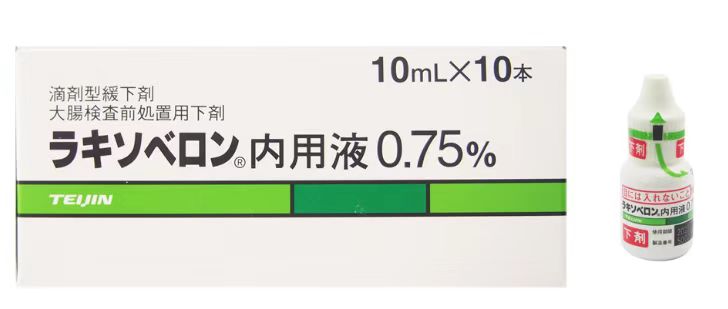
Laxoberon Sodium Picosulfate Oral Solution 0.75% 10ml x 10 vials Laxoberon Oral Solution 0.75% Takeda Constipation Water Bisacodyl Sodium Hydrate Preparation
Laxoberon Sodium Picosulfate Oral Solution 0.75% 10ml x 10 vials Laxoberon Oral Solution 0.75% Takeda Constipation Water Bisacodyl Sodium Hydrate Preparation
Regular price
¥5,000 JPY
Regular price
Sale price
¥5,000 JPY
Unit price
/
per
Taxes included.
Couldn't load pickup availability
Pico sodium sulfate oral solution is commonly used for various types of constipation, postoperative bowel movement assistance, and to promote defecation after injection of contrast agents (barium sulfate).
I. Basic Drug Information
- Generic name : Bisacodyl sodium hydrate preparation (Bisacodyl Sodium Hydrate Preparation)
- English Name : Sodium Picosulfate Hydrate Preparation; Laxoberon Solution 0.75%
- Product Name : Laxoberon Internal Solution 0.75%
- Dosage form : Liquid (droplets)
-
Indications
- Various types of constipation
- Postoperative bowel movement assistance
- Promoting bowel movements after administration of contrast agent (barium sulfate)
- Preoperative removal of intestinal contents
- Removal of intestinal contents during pre-procedure procedures for colon examination (X-ray, endoscopy)
-
Element
- Active ingredient : Japanese bisacodyl sodium hydrate (ピコスルファートナトリウム hydrate), content is 7.5mg/mL
- Additives : Methyl parahydroxybenzoate (Parabenzoic acid), Sodium hydroxide (Hydroxybenzoic acid), D-Sorbitol (D-Sorbitol), Hydrochloric acid (hydrochloric acid)
-
Properties
- Color and properties: A colorless to slightly yellow clear liquid, slightly viscous, odorless, and sweet in taste.
- pH value: 5.0~7.5
- Physicochemical properties of the active ingredient: Sodium bisacodyl hydrate is a white crystalline powder, odorless and tasteless; it is extremely soluble in water, slightly soluble in methanol, sparingly soluble in ethanol (99.5%), and almost insoluble in diethyl ether; it gradually changes color upon exposure to light. Its chemical name is Disodium 4,4'-(pyridin-2-ylmethylene)bis(phenyl sulfate) monohydrate, with the molecular formula [missing information]. C 18 H 13 NN a 2 O 8 S 2 ⋅ H 2 O , with a molecular weight of 499.42.
II. Usage and Dosage
(a) Various types of constipation
- Adults : Usually, take 10-15 drops (0.67-1.0 mL) orally once a day.
-
Children : Once a day, orally according to age. The specific dosage is shown in the table below. The dosage can be increased or decreased appropriately according to age and symptoms.
| Age | Drops (mL) |
| ---- | ---- |
|Under 6 months| 2 (0.13)|
|7~12 months| 3 (0.20)|
|1~3 years old| 6 (0.40)|
|4~6 years old| 7 (0.46)|
|Ages 7-15| 10 (0.67)|
(ii) Postoperative bowel movement assistance
- Adults : Usually, take 10-15 drops (0.67-1.0 mL) orally once a day. The dosage may be adjusted according to age and symptoms.
(iii) Promotion of defecation after administration of contrast agent (barium sulfate)
- Adults : Usually 6-15 drops (0.40-1.0 mL) orally, the dosage may be adjusted according to age and symptoms.
(iv) Exclusion of intestinal contents before surgery
- Adults : The usual oral dose is 14 drops (0.93 mL), which can be adjusted according to age and symptoms.
(v) Removal of intestinal contents during pre-procedure procedures for colon examination (X-ray, endoscopy)
- Adults : Usually, take 20mL orally 10-15 hours before the scheduled examination time. The dosage may be increased or decreased according to age and symptoms.
(vi) Instructions for use of quantitative drip containers
Typically, in a container filled with an appropriate amount of water, slowly squeeze the bottle as shown in the diagram to drip the water drop by drop.
III. Taboos
- Patients suspected of having acute abdominal pain: Increased intestinal motility may worsen symptoms.
- Patients with a history of allergy to any of the ingredients in this medicine
- In patients with intestinal obstruction or suspected obstruction (limited to the removal of intestinal contents during pre-procedure procedures for colonic examination (X-ray, endoscopy) only): Increased intestinal motility may worsen symptoms caused by obstruction and even lead to intestinal perforation.
IV. Precautions
(a) Special populations
- Pregnant women or women who may become pregnant : Administer the medication only when the benefits outweigh the risks.
- Elderly individuals : Due to the usual decline in physiological functions, it is necessary to pay attention to reducing the dosage, etc.
-
Patients with comorbidities or a history of pre-examination (limited to the removal of intestinal contents during pre-procedure procedures for colonic examination (X-ray, endoscopy)).
- Patients with intestinal stenosis and severe constipation: Increased intestinal motility may lead to ischemic enteritis or intestinal obstruction, and intestinal obstruction may even lead to intestinal perforation.
- Patients with diverticulosis: Increased intestinal motility may worsen the condition.
(II) Medication Instructions
- Enemas may be used if necessary to remove intestinal contents before surgery.
- When removing intestinal contents during pre-procedure procedures for colon examination (X-ray, endoscopy)
- It is necessary to confirm the patient's daily bowel habits and ensure that there is a normal bowel movement one day before or before administering this medication.
- If abdominal pain or other abnormalities occur after administration of this medication, an abdominal examination or imaging examination (such as X-ray, ultrasound, or CT scan) should be performed, and appropriate measures should be taken.
- If patients take medication at home, they may have difficulty managing side effects, so they should be advised to avoid taking it alone.
- Patients need to drink plenty of water.
- This medicine is for oral administration and should not be used as an ophthalmic medication (eye drops).
(III) Drug Preservation
- Storage method: Store at room temperature
- Validity period: 3 years
V. Adverse Reactions
(a) Allergic reaction
- Skin: Hives, rashes, etc. may occur (frequency unknown).
(ii) Digestive system reactions
- 0.1%~5% Symptoms not present: abdominal pain, nausea, vomiting, borborygmus, abdominal distension, diarrhea, etc.
- Frequency unknown: Abdominal discomfort
(iii) Other adverse reactions
- Liver: Elevated AST and ALT levels may occur (frequency unknown).
- Nervous system symptoms: Dizziness and transient loss of consciousness (frequency unknown) may occur. Note: When used as a pre-procedure treatment for colon examination, it may be accompanied by defecation or abdominal pain triggering a vasovagal reflex, resulting in the above symptoms.
- Serious adverse reactions (limited to the removal of intestinal contents during pre-procedure procedures for colon examinations (X-ray, endoscopy))
- Intestinal obstruction and perforation (frequency unknown): Patients with intestinal stenosis may experience intestinal obstruction, which can lead to intestinal perforation. Close observation is necessary, and appropriate measures should be taken promptly if abnormalities such as abdominal pain occur.
- Ischemic enteritis (frequency unknown): Requires close observation and prompt treatment if abnormalities occur.
Note: Adverse reaction frequency statistics include clinical trial and usage survey data at the time of approval.
VI. Drug Interactions
No information was provided regarding drug interactions.
VII. Pharmacological effects
(I) Mechanism of action (related to improving metabolic abnormalities and regulating intestinal function)
Bisaccharide sodium hydrate has almost no effect in the stomach and small intestine. Upon entering the large intestine, it is hydrolyzed by arylsulfatase, an enzyme derived from coliform bacteria, into its active bisphenol A (bisphenol A). The active bisphenol A exerts its laxative effect by acting on the intestinal mucosa as follows (based on rat experiments).
- Promotes intestinal peristalsis
- Inhibit water absorption
VIII. Pharmacokinetics
(a) Absorption
Specific absorption data were not explicitly mentioned, but it was stated that the active bisphenol A portion would be absorbed.
(II) Distribution
Oral administration to rats 14C - bisacodyl sodium hydrate 5 mg/kg, through radiometric assays and whole-body autoradiography, showed that the drug was mostly distributed in the gastrointestinal tract, with smaller amounts distributed in the liver, kidneys, blood, and lungs, and the distribution pattern remained almost unchanged after repeated administration.
(III) Metabolism
Bisaccharide sodium hydrate is not hydrolyzed in the small intestine. After entering the large intestine, it is hydrolyzed into bisphenol A by arylsulfatase, an enzyme derived from coliform bacteria. After some bisphenol A is absorbed, it undergoes a glucuronidation reaction in the liver.
(iv) Excretion
- Most of the bisphenol A bodies generated by hydrolysis in the large intestine are excreted directly in the feces.
- Partially absorbed bisphenol A (BPA) is conjugated with glucuronide in the liver and either excreted in the urine or secreted again into the duodenum with bile and excreted in the feces.
- Oral administration to rats The excretion of 14C - bisacodyl sodium hydrate 5 mg/kg in urine and feces over 72 hours was measured. The results showed that almost all radioactive substances were excreted from the body within 48 hours after administration; within 72 hours, 21% of the administered dose was excreted in urine and 72% in feces.
IX. Clinical Research
(I) Domestic clinical trials
A total of 81 institutions in China conducted clinical trials (including double-blind trials), and statistical analysis was performed on 1679 cases for efficacy evaluation. The efficacy rates for each disease are shown in the table below.
| disease | Valid or above (number of cases / total number of cases) | efficiency |
|---|---|---|
| Specific symptoms not clearly defined 1 | 750/899 | 83.4% |
| Specific symptoms not clearly defined 2 | 57/65 | 87.7% |
| Contrast agent excretion promotion | 489/516 | 94.8% |
| Pre-examination procedures for colon examination | 154/199 | 77.4% |
10. Packaging Specifications
10mL × 10 (quantitative drip type, light-proof, airtight container)
XI. Production Information
-
manufacturing enterprises
- Manufacturer and distributor: Teijin Fama Co., Ltd. (
- Company Address : 3-2-1 Kasumigaseki, Chiyoda-ku, Tokyo
Share