1
/
of
2
武田薬品工業株式会社
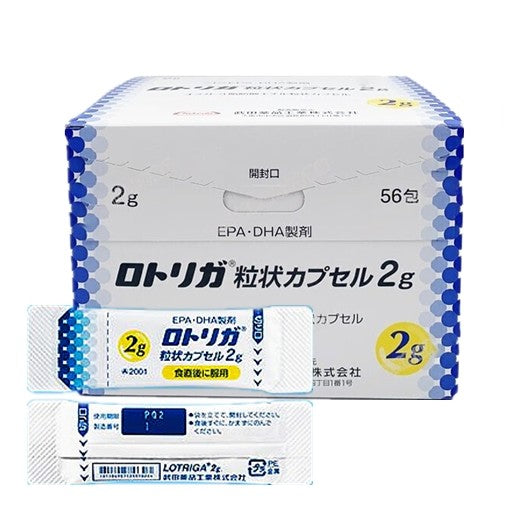
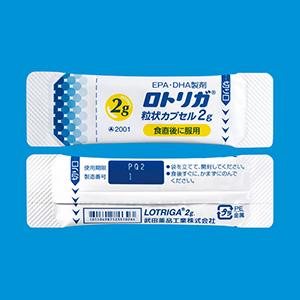
Omega-3 fatty acid ethyl granular capsules 2g (56 packets) LOTRIGA Granular Capsules 2g (Takeda Hyperlipidemia)
Omega-3 fatty acid ethyl granular capsules 2g (56 packets) LOTRIGA Granular Capsules 2g (Takeda Hyperlipidemia)
Regular price
¥20,000 JPY
Regular price
Sale price
¥20,000 JPY
Unit price
/
per
Taxes included.
Couldn't load pickup availability
Omega-3 fatty acid ethyl granules inhibit the liver's secretion of lipids (triglycerides) and promote the elimination of triglycerides from the blood, thereby lowering blood triglyceride levels. They are commonly used to treat hyperlipidemia.
I. Basic Drug Information
- Generic name : Omega-3 fatty acid ethyl granular capsules
- English name : LOTRIGA Granular Capsules 2g
- Product Name : Rotriga Granular Capsules 2g
- Dosage form : soft capsules, spherical in shape with a diameter of approximately 4 mm, colorless to pale yellow and transparent, identification code 2001.
- Indications : Hyperlipidemia
-
Element
- Active ingredients: 1 pack contains 2g of オメガ-3 fatty acid エチル, and the active ingredients include d-α-トコフェロール, ダイズ oil
- Additives: The main body of カプセル contains ゼラチン, concentrated グリセリン, D-ソルビトール liquid
- Properties : Omega-3 fatty acid ethylened ester is a pale yellow liquid, miscible with 2,2,4-trimethylpentane, ethanol (95%) and tetrahydrofuran, and almost insoluble in water.
II. Usage and Dosage
Normally, the adult dosage, based on ethyl omega-3 fatty acids, is 2g once daily, taken immediately after a meal. However, depending on the degree of triglyceride elevation, the dosage may be increased to 2g twice daily.
III. Taboos
- Patients with bleeding disorders (hemophilia, capillary fragility, peptic ulcer, urinary tract bleeding, hemoptysis, vitreous hemorrhage, etc.) may experience difficulty in stopping the bleeding.
- Patients with a history of allergy to any of the ingredients in this medicine.
IV. Precautions
-
Special populations
- Patients at high risk of bleeding (severe trauma, surgery, etc.): There is a risk of promoting bleeding.
- Patients with liver dysfunction: It is recommended to undergo liver function tests (AST, ALT, etc.).
- Pregnant women: This treatment should only be given to pregnant women or women who may become pregnant if the benefits outweigh the risks.
- Breastfeeding women: Consider the treatment benefits and the nutritional benefits of breast milk before deciding whether to continue or discontinue breastfeeding. Animal studies (rats) show that the drug can be transferred into breast milk.
- Pediatric et al.: Clinical trials have not yet been conducted on pediatric et al.
- Elderly: No special instructions are given, but their physical condition should be taken into account when administering medication.
-
Medication guidance
- Before administering medication, patients should be guided to improve their lifestyle habits, and risk factors for coronary artery disease such as hypertension, smoking, and diabetes should be fully considered.
- Blood lipid levels should be checked regularly during medication. If no therapeutic effect is observed, medication should be discontinued.
- Low-density lipoprotein cholesterol (LDL-C) levels may rise during medication use, so regular LDL-C checks are necessary.
- Taking this medicine on an empty stomach will affect its absorption, so it should be taken after meals and should not be chewed.
- A thorough examination should be conducted before using the medication to confirm hyperlipidemia.
- Medication storage : Store at room temperature; shelf life is 3 years.
V. Adverse Reactions
- Allergic reaction : 1%. Rash, boils, and itching may occur in unprotected children.
-
Digestive system reaction
- 1~5% Not full: diarrhea
- 1%: Unconscious: palpitations, abdominal pain, nausea, abdominal distension, constipation, tympanic bowel
- Unknown frequency: dyspepsia, gastroesophageal reflux disease, vomiting, gastrointestinal bleeding
-
Other adverse reactions
- Major side effects (frequency unknown): liver dysfunction, jaundice, and possible elevation of AST, ALT, AL-P, γ-GTP, LDH, and bilirubin; atrial fibrillation and coarse atrial fibrillation. Overseas clinical trials have reported that icosapentylic acid echelon (4g/day) increases the risk of atrial fibrillation or coarse atrial fibrillation requiring hospitalization. There are also domestic and international clinical trials reporting that omega-3 fatty acids containing icosapentylic acid echelon increase the risk of atrial fibrillation.
- Metabolism: 1% unsatisfactory results may lead to hyperglycemia; unspecified frequency may indicate gout.
- Neurological disorders: 1% of patients who are not fully hydrated may experience headaches or other symptoms; those with unclear frequency may experience taste abnormalities.
- Vascular disturbances: Unknown frequency may indicate hypotension.
- Ventilator use: 1% chance of nasal bleeding if not fully ventilated
- Liver: 1% of those who do not meet the criteria may experience liver dysfunction (elevation of AST and ALT).
VI. Drug Interactions
When used in combination with anticoagulants (such as Walfarin Kelium) or antiplatelet drugs (such as Aspirin), caution should be exercised, and close observation is necessary to be aware of side effects such as bleeding, as this drug has the effect of inhibiting platelet aggregation and may promote bleeding.
Furthermore, studies have shown that administering omega-3 fatty acid ecirucal with cinbastardine, atrolbastardine, or rosbastardine on an empty stomach as a single dose does not affect the blood concentrations of these HMG-CoA reductase inhibitors.
VII. Pharmacological effects
- Modulation of biomembrane function : No relevant information found.
- Improving metabolic abnormalities : Omega-3 fatty acid ethyls can inhibit the secretion of triglycerides by the liver and promote the disappearance of triglycerides in the blood, thereby reducing triglyceride levels. In addition, icosapentylic acid ethyls and docosaponic acid ethyls can reduce the triglyceride content in the liver and reduce the enzyme activity of fatty acid and triglyceride synthesis pathways.
- Regulating blood lipids : In various hyperlipidemia models with obesity, such as Wistar Fatty rats, it was found that administration of omega-3 fatty acid ethyls can reduce plasma triglycerides and total plasma cholesterol.
- Protecting blood vessels : No relevant information found.
VIII. Pharmacokinetics
-
absorb
- Single-dose administration: In 11 healthy adult males, after a single oral administration of 2 g of omega-3 fatty acid ethyls or placebo after breakfast, the AUC0-24 of icosaponic acid in this drug (8 cases) was 916.0±186.4 μg・h/mL, Cmax was 58.1±18.5 μg/mL, and Tmax was 6.0 (4-6) h; the AUC0-24 of docosaponic acid was 2,254.0±348.0 μg・h/mL, Cmax was 115.0±21.0 μg/mL, and Tmax was 6.0 (1-24) h.
- Repeated administration: In patients with high serum triglyceride levels (415 cases), 2g of omega-3 fatty acid ethyl was administered orally once or twice daily for 12 weeks. Under both administration methods, the plasma concentrations of icosaponic acid and docosaponic acid increased after 4 weeks of administration compared to before administration, and remained relatively stable after 4 weeks.
- Excretion : Primarily metabolized in mitochondria through β-oxidation to acetyl-CoA, which is then converted into CO₂ and H₂O via the TCA cycle and expelled mainly through exhalation.
-
other
- Distribution: In in vitro experiments, when [¹⁴C]icosaponic acid and [¹⁴C]dokosaponic acid were added to human plasma at concentrations of 20 and 200 μg/mL, respectively, the protein binding rates of both were above 99%.
- Metabolism: Ikosaponic acid echelate and dokosapakisaponic acid echelate are hydrolyzed in the small intestine and incorporated into triglycerides, phospholipids, etc., as constituent fatty acids, and are then translocated to various tissues. Reports indicate that icosaponic acid and dokosapakisaponic acid (2-200 μmol/L) have inhibitory effects on CYP2C9 and CYP2C19. However, in human plasma, the proportion of free fatty acids in total icosaponic acid and total dokosapakisaponic acid is low, suggesting a low likelihood of clinically problematic effects. In addition, in vitro experiments showed that, within the highest concentration range of 500 μg/mL, neither icosaponic acid nor docosaponic acid showed any inducing effect on CYP1A and CYP3A.
IX. Clinical Research
-
Domestic Phase III trial : A 12-week drug-controlled, double-blind comparative trial was conducted on patients with high serum triglyceride levels. The patients were given omega-3 fatty acid ethyl 2g/day (2g once after breakfast), 4g/day (2g once after breakfast and dinner), or icosapentyl ethyl 1.8g/day (0.6g once after each meal) orally.
- Pre-dosage values of fasting triglycerides in each group (mean ± standard deviation at -4 weeks, -2 weeks, and 0 weeks): 269.0 ± 77.5 mg/dL in the omega-3 fatty acid ethyl 2 g/day group, 277.5 ± 97.3 mg/dL in the 4 g/day group, and 271.8 ± 91.5 mg/dL in the icosaponic acid ethyl 1.8 g/day group.
- The primary analysis showed that the difference in the rate of change of fasting triglycerides between the omega-3 fatty acid ethyl 4g/day group and the icosaponic acid ethyl 1.8g/day group was -11.35% (-15.94 to -6.76) [point estimate (95% confidence interval)], indicating a significant triglyceride-lowering effect. The secondary analysis showed that the difference in the rate of change of fasting triglycerides between the omega-3 fatty acid ethyl 2g/day group and the icosaponic acid ethyl 1.8g/day group was 0.37% (-4.25 to 4.98) [point estimate (95% confidence interval)], indicating non-inferiority (allowable limit: 7%).
- The rates of change of other lipid parameters are shown in the table below:
| Lipid Parameters| Amir-3 Fatty Acids Tetra 2g (Min. 1) | Amir-3 Fatty Acids Tetra 4g (Min. 2) | Takolin-3 Fatty Acids Tetra 1.8g (Min. 3) |
| ---- | ---- | ---- | ---- |
| 総コレステロール| Value before administration 211.9±31.2mg/dL, change rate - 2.7±8.3%| Value before administration 212.0±30.2mg/dL, change rate - 3.7±9.6%| Pre-administration value 215.2±33.8mg/dL, change rate - 4.3±8.9% |
|HDL コレステロール| The value before administration is 45.8±9.9mg/dL, the change rate is 2.4±9.2%| The value before administration is 45.7±10.0mg/dL, the change rate is 4.3±11.2%| The value before administration is 45.6±10.2mg/dL, the change rate is 1.6±9.4% |
|LDL コレステロール| Value before administration 127.4±29.1mg/dL, change rate - 2.1±14.4%| Value before administration 125.7±28.5mg/dL, change rate - 1.1±16.7%| Pre-administration value 130.1±30.5mg/dL, change rate - 4.2±13.3%|
|non-HDL コレステロール| Value before administration 166.1±30.1mg/dL, change rate - 4.2±10.1%| Value before administration 166.2±28.4mg/dL, change rate - 5.9±11.9%| Pre-administration value 169.7±33.0mg/dL, change rate - 5.7±11.2%| - Incidence of side effects: 4.9% (10/205) in the omega-3 fatty acid ethyl 2g/day group, 8.1% (17/210) in the 4g/day group, and 5.1% (10/195) in the icosaponic acid ethyl 1.8g/day group. Major side effects: Diarrhea occurred in 2.0% (4/205) of the omega-3 fatty acid ethyl 2g/day group and 2.9% (6/210) of the 4g/day group.
-
Domestic Phase III trial (long-term administration trial) : Patients with high serum triglyceride levels were given omega-3 fatty acid ethyl 2g once daily (165 cases) or twice daily (171 cases), orally after meals, for 52 weeks. Results showed that both administration methods had a stable effect in lowering fasting triglycerides. Specific data are shown in the table below:
Administration method Value before administration (mg/dL) Change rate (%) Amir-3 Fatty Acids Etaru 2g (1 minute) 254.7±97.8 -13.9±30.3 Amir-3 Fatty Acids Etaru 4g (2 points) 270.0±101.2 -25.5±28.1
- Incidence of side effects: 13.3% (22/165) in the omega-3 fatty acid ethyl 2g/day group and 9.9% (17/171) in the 4g/day group. Major side effects: Diarrhea and elevated serum creatine phosphokinase levels both occurred in 1.8% (3/165) of the omega-3 fatty acid ethyl 2g/day group; diarrhea, constipation, abnormal liver function tests, elevated serum glucose, and elevated serum uric acid levels all occurred in 1.2% (2/171) of the 4g/day group.
10. Packaging Specifications
56 packs, 280 packs
XI. Production Information
Manufacturer : Takeda Pharmaceutical Co., Ltd.
Share