1
/
of
1
小野薬品工業株式会社
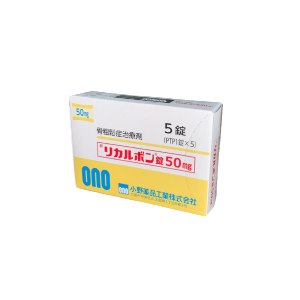
Recalbon minodronate tablets 50mg 5 tablets RECALBON Tablets Ono Osteoporosis
Recalbon minodronate tablets 50mg 5 tablets RECALBON Tablets Ono Osteoporosis
Regular price
¥17,500 JPY
Regular price
Sale price
¥17,500 JPY
Unit price
/
per
Taxes included.
Couldn't load pickup availability
Minodronate tablets reduce bone resorption and increase bone density by inhibiting osteoclast activity. They are suitable for osteoporosis and fracture prevention, and are especially beneficial for postmenopausal women or elderly patients.
I. Basic Drug Information
- Generic Name : Minophosphoric Acid Hydrate Tablets
- English Name : Minodronic Acid Hydrate Tablets
- Product Name : RECALBON® Tablets
- Dosage form : Film-coated tablets
- Indications : Osteoporosis
-
Element
- Active ingredient : Each tablet contains 50mg of minophosphoric acid hydrate.
- Additives : D-mannitol, croscarmellose sodium, hydroxypropyl cellulose, crystalline cellulose, magnesium stearate, hydroxypropyl methylcellulose, polyethylene glycol 6000, titanium dioxide, talc, ferric oxide
-
Properties
project Details surface - back - side - shape - Major diameter (mm) Approximately 13.1 Minor diameter (mm) Approximately 7.0 Thickness (mm) Approximately 4.1 Mass (g) Approximately 0.309 tone very pale red
II. Usage and Dosage
- The usual adult dose is 50 mg minodronate hydrate once every 4 weeks, taken orally with plenty of water (about 180 mL) or warm water upon waking.
- Do not lie down for at least 30 minutes after taking this medication , and avoid eating (except for water) and taking other oral medications.
III. Taboos
The following patients are prohibited from using this product:
- Patients with esophageal stricture or achalasia that cause delayed esophageal passage [This medication's delayed passage through the esophagus increases the risk of local esophageal side effects.]
- Patients who cannot keep their upper body upright for more than 30 minutes while taking the medication
- Patients with a history of allergy to any component of this drug or other bisphosphonates
- Patients with hypocalcemia [may experience a decrease in serum calcium levels, exacerbating hypocalcemia symptoms. [11.1.6 Reference]]
- Pregnant women or women who may become pregnant [9.5 reference]
IV. Precautions
-
Special populations
-
Patients with complications or a history of illness
- Patients with upper gastrointestinal disorders such as dysphagia, esophagitis, gastritis, duodenitis, or ulcers: This medication may irritate the mucosa of the upper gastrointestinal tract, potentially worsening underlying conditions. [11.1.1 Reference]
- Patients with severe renal impairment: ① May experience delayed excretion; ② According to an epidemiological survey in the domestic medical information database, among patients with renal impairment treated with bisphosphonates for osteoporosis, especially those with severe renal impairment (eGFR < 30 mL/min/1.73 m²), the risk of hypocalcemia (corrected serum calcium < 8 mg/dL) is increased compared with patients with normal renal function. [11.1.6 Reference]
- Women of childbearing age : Bisphosphonates should only be given to women who may become pregnant if the benefits of treatment outweigh the risks. After being absorbed by the bone matrix, bisphosphonates are gradually released into the systemic circulation; the amount released is related to the dosage and timing of administration. The relationship between the time between discontinuing bisphosphonates and pregnancy and the associated risks is currently unclear.
- Pregnancy : Contraindicated in pregnant women or women who may become pregnant. Similar to other bisphosphonates, in reproductive studies (rats), hypocalcemia leading to maternal death (presumably related to birth complications) and decreased birth rate were observed. [2.5 Reference]
- Breastfeeding women : The benefits of treatment and the nutritional benefits of breast milk should be considered in a comprehensive assessment before deciding whether to continue breastfeeding or discontinue the medication. Animal studies (rats) have shown that this drug can be transferred into breast milk.
- Children, etc .: No clinical trials with efficacy and safety indicators have been conducted for children and other populations.
-
Patients with complications or a history of illness
-
Medication guidance
- Patients should be instructed to take this medication with plain water (or warm water). If taken with beverages other than water (including milk, dairy products, and mineral water with extremely high calcium and magnesium content), food, or other medications, the absorption of this medication may be affected. Therefore, it should be taken after waking up and before the first meal, and patients should avoid eating or drinking anything other than water for at least 30 minutes after taking it.
- To reduce the risk of side effects on the esophagus and local area, it is crucial to ensure the medication reaches the stomach quickly. Please note the following when taking this medication: ① This medication may irritate the mouth and throat; do not chew or dissolve it in your mouth. ② Take it with plenty of water (approximately 180mL) (or warm water), and do not lie down for 30 minutes after taking it. ③ Do not take it before bedtime or upon waking.
- This medication is to be taken once every 4 weeks. Patients should be reminded to avoid missing a dose. If a dose is missed, take one tablet the following day.
- When delivering medications, patients should be instructed to remove the PTP blister pack before taking the medication. If the PTP blister pack is accidentally swallowed, its sharp edges may pierce the esophageal mucosa, potentially causing perforation and serious complications such as mediastinitis.
- If symptoms related to upper gastrointestinal disturbances occur, the patient should be instructed to discontinue this medication and seek medical attention. [Refer to 8.1, 9.1.1]
- After taking this medication, monitor changes in serum calcium levels. If hypocalcemia occurs, supplement with calcium and vitamin D as needed. However, note that calcium supplements and preparations containing calcium, aluminum, or magnesium may affect the absorption of this medication; therefore, they should be taken at different times. [Refer to 10.2, 11.1.6]
- Patients receiving bisphosphonates may develop osteonecrosis of the jaw or osteomyelitis of the jaw. Most reported cases are associated with invasive dental treatments such as tooth extraction or local infections. Known risk factors include malignancy, chemotherapy, angiogenesis inhibitors, corticosteroid therapy, radiation therapy, poor oral hygiene, and a history of dental treatment. Before starting this medication, the patient's oral health status should be assessed, and appropriate dental examinations should be scheduled if necessary. Invasive dental treatments should be completed whenever possible. If invasive dental treatments are required during treatment, discontinuation of this medication should be considered. Patients should also be fully informed about maintaining oral hygiene, having regular dental checkups, informing their dentist that they are using this medication, avoiding invasive dental treatments whenever possible, and seeking immediate dental or oral surgery if any abnormalities are observed. [11.1.2 Reference]
- There are reports that patients using bisphosphonates may develop osteonecrosis of the external auditory canal, with some cases related to ear infections or trauma. If patients continue to experience symptoms such as otitis externa, otorrhea, or ear pain, they should be advised to consult an otolaryngologist. [11.1.3 Reference]
- Patients using bisphosphonates long-term may experience atypical fractures of the femur, such as subtrochanteric, proximal femoral shaft, and proximal ulnar shaft, under non-traumatic or minor external force. Reports indicate that patients may experience prodromal pain in the thigh, groin, or forearm several weeks to months before a complete fracture. If such symptoms occur, X-ray examination and appropriate measures should be taken. Furthermore, bilateral fractures are possible; if an atypical fracture occurs on one side, the other side should be examined for symptoms and X-rays, and carefully observed. X-ray examination may reveal characteristic imaging features such as cortical thickening; if such features are present, appropriate measures should be taken. [11.1.4 Reference]
- Drug storage : Store at room temperature
V. Adverse Reactions
- Allergic reactions : Rash, itching, and allergic dermatitis may occur (frequency unknown).
-
Digestive system reaction
- Incidence rate 1% - 5% (inclusive): Stomach and abdominal discomfort, abdominal pain, gastritis
- Incidence less than 1%: reflux esophagitis, nausea (Note)
- Frequent symptoms unknown: vomiting (note), diarrhea, constipation, abdominal distension, indigestion, loss of appetite, stomatitis, cheilitis, thirst, gingivitis, oral paresthesia.
-
Other serious adverse reactions
- Upper gastrointestinal disturbances : These may include duodenal ulcers (0.4%), gastric ulcers (frequency unknown), and other upper gastrointestinal disturbances. [Refer to 8.1, 9.1.1]
- Osteonecrosis of the jaw, osteomyelitis of the jaw (frequency unknown) [8.3 Reference]
- Osteonecrosis of the external auditory canal (frequency unknown) [8.4 Reference]
- Atypical fractures : Atypical fractures may occur in the subtrochanteric region of the femur, proximal femoral shaft, proximal ulnar shaft, etc. (frequency unknown) [8.5 Reference]
- Liver dysfunction and jaundice : Liver dysfunction and jaundice may occur, accompanied by elevated AST and ALT levels (frequency unknown).
- Hypocalcemia : Hypocalcemia may present with symptoms such as convulsions, tetany, numbness, altered consciousness, and QT interval prolongation (frequency unknown) [2.4, 8.2, 9.2.1 See reference].
-
Other adverse reactions
system 1% - 5% (inclusive) Below 1% Frequency unknown blood - - Leukopenia, erythrocyte deficiency, thrombocytopenia, and monocyte proliferation. liver - - Elevated AST, ALT, γ-GTP, bilirubin, alkaline phosphatase, and LDH. kidney - - Elevated BUN, elevated uric acid, elevated creatinine Musculoskeletal system Decreased alkaline phosphatase - Decreased blood calcium, elevated CK, musculoskeletal pain (Note) (joint pain, back pain, muscle pain, limb pain, general pain, bone pain, etc.) Nervous system - - Numbness, sciatica, dizziness, headache other - - Chest pain, elevated cholesterol, hair loss, cystitis, sinusitis, fatigue (note), elevated blood pressure, elevated blood phosphorus, decreased blood phosphorus, facial edema, fever (note).
Note: Among the above adverse reactions, those marked with "Note" are acute phase reactions (occurring within 3 days after medication and usually recovering within a few days).
VI. Drug Interactions
| Drug name, etc. | Clinical symptoms and treatment methods | Mechanisms and risk factors |
|---|---|---|
| Beverages and foods other than water (especially foods high in calcium such as milk and dairy products) | Taking this medication at the same time may affect its absorption; therefore, avoid eating or drinking anything other than water for at least 30 minutes after taking this medication. | This drug may form complexes with polyvalent cations, therefore, combined use may affect absorption. |
VII. Pharmacological effects
- Adjusting biomembrane function : No specific details available.
- Improve metabolic abnormalities : By inhibiting the bone resorption function of osteoclasts and reducing bone metabolic turnover, it improves the abnormal bone metabolism in patients with osteoporosis.
- Regulating blood lipids : No specific information available.
- Protecting blood vessels : No specific information available.
-
Other pharmacological effects
- Bone resorption inhibition : In rat osteoclast culture system, it can inhibit the release of C-terminal peptide of type I collagen crosslinking in bone (in vitro experiment).
-
Effects on animal models of osteoporosis
- In a rat ovariectomy model, it can inhibit the increase in urinary deoxypyridinium phosphate concentration and the decrease in bone mineral density and bone strength.
- In a rhesus monkey ovariectomy model, it can inhibit the increase in the concentration of type I collagen cross-linked N-terminal peptide and deoxypyridinium kinase in urine, inhibit the decrease in bone mineral density and bone strength, and bone mineral density is positively correlated with bone strength.
- In a rat steroid-induced model, it can inhibit the increase in urinary deoxypyridinium phosphate concentration and the decrease in bone mineral density and bone strength.
- In a rat immobilization model, it can inhibit the decrease in bone mineral density.
- Effects on bone calcification : In normal rats, no calcification impairment was observed even with doses that increase bone mass 100 times; in rat and rhesus monkey ovariectomy models, no increase in osteoid width was observed.
- Effects on fracture healing : In a rat fibular fracture model, although callus resorption was delayed, no decrease in bone strength was observed.
VIII. Pharmacokinetics
-
absorb
-
Single-dose administration : Six postmenopausal women were given a single oral dose of 42 mg or 56 mg minodronate hydrate on an empty stomach. The plasma unchanged body concentration parameters and the urinary unchanged body excretion rate within 48 hours after administration are shown in the table below.
| Dosage | Tmax (hr) | Cmax (ng/mL) | AUC 0-∞ (ng・hr/mL) | T 1/2 (hr) | Urinary excretion rate (%) |
|----|----|----|----|----|----|
|42mg|1.0±0.5|10.9901±2.8488|52.87±17.51|41.1±38.0|0.25±0.09|
|56mg|0.9±0.6|15.4114±4.9493|69.33±21.12|34.3±8.7|0.27±0.17| -
Effects of food intake : In 24 postmenopausal women, a single oral dose of 50 mg minodronate hydrate showed that, compared with administration on an empty stomach, administration 30 minutes before a meal resulted in a Cmax that was approximately 0.6 times higher and an AUC that was approximately 0.4 times higher, indicating a significant decrease in absorption.
| Dosing conditions | Tmax (hr) | Cmax (ng/mL) | AUC 0-∞ (ng・hr/mL) | T 1/2 (hr) |
|----|----|----|----|----|
| Fasting | 1.1±0.6 | 16.759±7.185 | 77.88±35.52 | 31.9±8.6 |
| 30 minutes before meal | 0.7±0.3 | 11.935±8.636 | 38.68±27.90 | 35.0±13.6 | - Repeated administration : Twelve postmenopausal women were given 42 mg or 56 mg minodronate hydrate orally 30 minutes before meals (once every 4 weeks, for a total of 3 times). After repeated administration, the Cmax and AUC were 0.990 times and 0.998 times, respectively, in the 42 mg dose group and 0.962 times and 0.863 times, respectively, in the 56 mg dose group, with no significant accumulation observed.
-
Single-dose administration : Six postmenopausal women were given a single oral dose of 42 mg or 56 mg minodronate hydrate on an empty stomach. The plasma unchanged body concentration parameters and the urinary unchanged body excretion rate within 48 hours after administration are shown in the table below.
- Distribution : In in vitro experiments (ultracentrifugation), when the concentration of 14C-minophosphonic acid hydrate was 5-500 ng/mL, the human plasma protein binding rate was 61.2%-61.9%, which remained basically constant within this concentration range.
- Metabolism : In in vitro experiments, no metabolite was detected when minophosphonate hydrate was incubated in human liver and small intestinal microsomes; in CYP expression systems, it showed almost no inhibitory activity against human cytochrome P450 subtypes (CYP1A2, CYP2C9, CYP2C19, CYP2D6 and CYP3A4).
- Excretion : In 6 postmenopausal women, 42 mg or 56 mg of minodronate hydrate was administered orally on an empty stomach. The urinary excretion rates without change within 48 hours after administration were 0.25% and 0.27%, respectively.
IX. Clinical Research
- Bone mineral density testing : In a 52-week phase II/III trial in patients with degenerative osteoporosis, results showed that the mean change in lumbar spine bone mineral density from the start of administration to the final evaluation was 6.461 ± 3.6467% in the minodronic acid hydrate 50 mg once every 4 weeks group and 6.730 ± 3.9890% in the 1 mg once daily group. After Dunnett-adjusted, the difference in the mean change in lumbar spine bone mineral density at the final evaluation between the 50 mg once every 4 weeks group and the 1 mg once daily group (95% confidence interval) was -0.269 (-1.1093 - 0.5706), confirming that the 50 mg once every 4 weeks group was non-inferior to the 1 mg once daily group. In addition, the bone metabolism markers (urinary type I collagen cross-linked N-terminal peptide: urinary NTX, serum bone type alkaline phosphatase) were decreased in both groups, and the trends of change were basically similar.
| During medication | Lumbar spine mean bone mineral density [rate of change] ± standard deviation | |
|---|---|---|
| 50mg once every 4 weeks (dose group) | 1 mg once daily dosing group | |
| 12 weeks after administration | 3.308±3.3502% (201 cases) | 3.777±3.3070% (204 cases) |
| 24 weeks after administration | 4.731±3.9057% (201 cases) | 5.152±3.8511% (204 cases) |
| 36 weeks after administration | 5.612±3.8303% (201 cases) | 5.945±3.3789% (204 cases) |
| 52 weeks after administration | 6.462±3.6558% (200 cases) | 6.767±3.9733% (200 cases) |
| Final evaluation ※2) | 6.461±3.6467% (201 cases※3) | 6.730±3.9890% (204 examples※4) |
Regarding safety, among the 228 subjects evaluated for safety, 30 (13.2%) experienced side effects (including abnormal clinical test values). The main side effects were abdominal discomfort in 5 cases (2.2%), upper abdominal pain in 3 cases (1.3%), and decreased serum alkaline phosphatase in 3 cases (1.3%).
Note: ① The basic treatment consisted of oral calcium 610mg and vitamin D3 400IU after dinner daily; ② The final evaluation was performed after 52 weeks of treatment or at the time of discontinuation; ③ There were 3 male patients among the 201 cases; ④ There were 2 male patients among the 204 cases.
2. Fracture Trial : In a 2-year phase III double-blind trial (fracture trial) in patients with degenerative osteoporosis, the cumulative incidence of vertebral fractures in the minodronate hydrate 1 mg once daily group (1 mg formulation group) and the placebo group was 10.4% and 24.0%, respectively (relative risk reduction rate of 59%), which was confirmed by Log-rank test (p<0.0001) to have a significant preventive effect on fractures.
2. Fracture Trial : In a 2-year phase III double-blind trial (fracture trial) in patients with degenerative osteoporosis, the cumulative incidence of vertebral fractures in the minodronate hydrate 1 mg once daily group (1 mg formulation group) and the placebo group was 10.4% and 24.0%, respectively (relative risk reduction rate of 59%), which was confirmed by Log-rank test (p<0.0001) to have a significant preventive effect on fractures.
| project | 1mg formulation group (n=339) | Placebo group (n=328) |
|---|---|---|
| Incidence of vertebral fracture (cumulative)※6) | 10.4% | 24.0% |
| Incidence of new vertebral fractures (cumulative) ※7) | 7.8% | 18.5% |
| Incidence of vertebral fracture after 24 weeks of drug administration (cumulative)※6) | 4.7% | 16.6% |
Furthermore, after 2 years of administration, the change rate ± standard deviation of mean lumbar spine bone mineral density in the 1mg formulation group (83 cases) at the final evaluation was 8.267 ± 5.3360%, which was significantly higher than that in the placebo group (t-test, p < 0.0001). Regarding safety, among the 354 subjects evaluated for safety, 57 (16.1%) experienced side effects (including abnormal clinical examination values). The main side effects were gastrointestinal discomfort in 14 cases (4.0%), upper abdominal pain in 8 cases (2.3%), and gastritis in 7 cases (2.0%).
In the extended 1-year follow-up trial, the cumulative incidence of vertebral fractures in the 1 mg group (194 patients) after 3 years of administration was 12.4%, with annual cumulative incidence rates of vertebral fractures of 6.7% in year 1, 3.6% in year 2, and 3.2% in year 3. In the 1 mg group (56 patients), the change in mean lumbar bone mineral density at the final evaluation after 3 years of administration was 10.271 ± 5.9692%. During the 3-year period from the start of the fracture trial to the end of the follow-up trial, 26 out of 219 subjects in the safety evaluation group (11.9%) experienced side effects (including abnormal clinical examination values). The main side effects were gastritis in 6 cases (2.7%), stomach discomfort in 5 cases (2.3%), and upper abdominal pain in 4 cases (1.8%).
Note: ① The basic treatment consists of 600 mg of calcium and 200 IU of vitamin D3 taken orally after dinner daily; ② Incidence of vertebral fracture (cumulative) ※6) refers to new fractures + aggravation of existing vertebral fractures; ③ Incidence of new vertebral fracture (cumulative) ※7) refers to only newly occurring fractures; ④ At the time of final evaluation ※8) refers to 104 weeks after administration or at the time of discontinuation of medication; ⑤ At the time of final evaluation ※9) refers to 156 weeks after administration or at the time of discontinuation of medication.
10. Packaging Specifications
The patient was given 1 or 5 PTP tablets (1 tablet x 5) packaged together.
XI. Production Information
Manufacturer : Ono Soup Industry Co., Ltd.
Company Address : 1-8-2, Kyutaro-cho, Chuo-ku, Osaka City
Share