1
/
/
2
沢井製薬株式会社
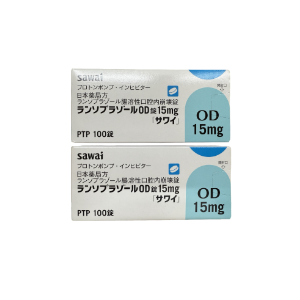
Lansoprazole orally disintegrating tablets 15mg 100 tablets Lansoprazole (for gastrointestinal ulcers)
Lansoprazole orally disintegrating tablets 15mg 100 tablets Lansoprazole (for gastrointestinal ulcers)
定價
¥2,400 JPY
定價
售價
¥2,400 JPY
單價
/
每
已包含稅額。
無法載入取貨服務供應情況
Lansoprazole orally disintegrating tablets are a proton pump inhibitor (PPI) primarily used to suppress gastric acid secretion and treat gastric acid-related digestive system disorders.
I. Basic Drug Information
- Generic name : Lansoprazole
- English name : Lansoprazole
- Product Name : Lansoprazole OD Tablets 15mg "Sawai", Lansoprazole OD Tablets 30mg "Sawai" (サワイ为泽井医药株式会社)
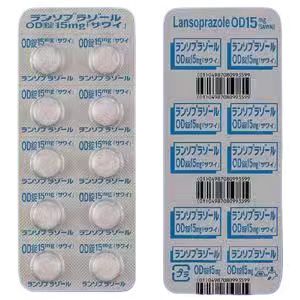
- Dosage form : Plain tablets (orally disintegrating tablets containing enteric-coated fine particles)
-
Indications :
-
Lansoprazole OD tablets 15mg :
- Gastric ulcer, duodenal ulcer, anastomotic ulcer, reflux esophagitis, Zollinger-Ellison syndrome, non-erosive gastroesophageal reflux disease;
- Inhibition of recurrence of gastric or duodenal ulcers when low-dose aspirin is administered;
- Inhibition of recurrence of gastric or duodenal ulcers when nonsteroidal anti-inflammatory drugs are administered;
- It can help eradicate Helicobacter pylori (for gastric ulcers, duodenal ulcers, gastric MALT lymphoma, idiopathic thrombocytopenic purpura, gastric cancer after endoscopic treatment, and Helicobacter pylori-infected gastritis).
-
Lansoprazole OD tablets 30mg :
- Gastric ulcer, duodenal ulcer, anastomotic ulcer, reflux esophagitis, Zollinger-Ellison syndrome;
- It can help eradicate Helicobacter pylori (applicable to the same conditions as 15mg).
-
Lansoprazole OD tablets 15mg :
-
Element :
-
Active ingredient :
- 15mg specification: Each tablet contains 15mg of lansoprazole (Japanese standard);
- 30mg specification: Each tablet contains 30mg of lansoprazole (Japanese standard).
- Excipients (both specifications are the same): Ethyl acrylate-methyl methacrylate copolymer, aspartame (L-phenylalanine compound), citric acid, triethyl citrate, crospovidone, crystalline cellulose, titanium dioxide, ferric oxide, aluminum hydroxide, magnesium stearate, talc, sodium bicarbonate, corn starch, lactose, hydroxypropyl cellulose, hydroxypropyl methyl cellulose, polyoxyethylene nonylphenyl ether, polysorbate 80, polyethylene glycol 6000, D-mannitol, methyl methacrylate copolymer LD, magnesium aluminum silicate, glyceryl monostearate, sodium lauryl sulfate, fragrance.
-
Active ingredient :
-
Characteristics :
- 15mg Specifications : White to slightly yellow with reddish-orange to dark brown spots; 8.5mm in diameter, 5.3mm in thickness, and approximately 285mg in weight; identification code "RANSO SW 15".
- 30mg Specifications : White to slightly yellow with reddish-orange to dark brown spots; Diameter 11.0mm, thickness 6.4mm, weight approximately 570mg; Identification code "RANSO SW 30".
II. Usage and Dosage
- For gastric ulcers, duodenal ulcers, anastomotic ulcers, and Zollinger-Ellison syndrome : the usual adult dose is 30 mg once daily orally; the treatment course for gastric ulcers and anastomotic ulcers is up to 8 weeks, and for duodenal ulcers, it is up to 6 weeks.
-
Reflux esophagitis :
- Standard treatment: Adults take 30 mg orally once daily for up to 8 weeks.
- Maintenance therapy: 15 mg once a day orally. If the effect is insufficient, the dose can be increased to 30 mg once a day.
- Non-erosive gastroesophageal reflux disease (15mg strength only) : Adults take 15mg once daily orally for up to 4 weeks.
- Suppression of ulcer recurrence during low-dose aspirin/nonsteroidal anti-inflammatory drug administration (15mg strength only) : Adults take 15mg once daily orally.
-
Assisted eradication of Helicobacter pylori :
- Option 1: Adults take lansoprazole 30mg + amoxicillin hydrate 750mg (potency) + clarithromycin 200mg (potency) once, twice a day for 7 consecutive days; clarithromycin can be increased to 400mg (potency) once, twice a day as the upper limit.
- Option 2 (after Option 1 fails): Adults take lansoprazole 30mg + amoxicillin hydrate 750mg (potency) + metronidazole 250mg once a day for 7 consecutive days.
III. Taboos
- Patients with a history of allergy to any of the ingredients in this medicine.
- Patients currently taking rilpivirine hydrochloride.
IV. Precautions
-
Special populations :
- Patients with liver or kidney dysfunction: Drug metabolism and excretion may be delayed, so caution is advised.
- Pregnant women: Use only when the benefits outweigh the risks (animal studies show higher fetal blood drug concentrations than maternal concentrations, and rabbit studies show increased fetal mortality).
- Breastfeeding women: The benefits of treatment should be weighed against the nutritional value of breast milk, and consideration should be given to whether to temporarily suspend breastfeeding (animal studies have shown that the drug enters breast milk).
- Children: No clinical studies have been conducted, and safety has not been confirmed.
- For older adults: It is recommended to start with a low dose and be aware of the decline in physiological function.
-
Medication instructions :
- PTP packaging must be removed from the aluminum foil liner before consumption to avoid accidental swallowing of the aluminum foil, which could cause esophageal damage.
- The tablet can be placed on the tongue and dissolved by saliva before being taken (no water required), or it can be taken with water.
- Maintenance treatment for reflux esophagitis should be limited to patients with recurrent episodes and regular endoscopic examinations are required. If there is no improvement after 2 weeks of medication for non-erosive gastroesophageal reflux disease, other causes should be investigated.
-
Medication storage :
- Store at room temperature; shelf life is 3 years.
- Avoid moisture after opening.
V. Adverse Reactions
-
Allergic reaction :
- Severe reactions: anaphylactic shock (<0.1%), generalized rash, facial edema, difficulty breathing, etc.
- Other: rash, itching (0.1-5%), erythema multiforme, subacute cutaneous lupus erythematosus (frequency unknown).
-
Digestive system reaction :
- Severe reactions: severe enteritis with bloody stools, such as pseudomembranous colitis (<0.1%), and liver dysfunction (<0.1%, accompanied by jaundice, elevated AST/ALT, etc.).
- other:
- Common indications: loose stools, diarrhea, constipation, dry mouth, abdominal distension (0.1~5%); nausea, vomiting, abdominal pain, stomatitis (<0.1%).
- Helicobacter pylori eradication: loose stools (13.7%), diarrhea (9.1%), abnormal taste, abdominal distension (1-5%); nausea, vomiting, abdominal pain (<1%).
VI. Drug Interactions
- Contraindications : Concomitant use with rilpivirine hydrochloride may reduce its efficacy (due to inhibition of gastric acid secretion and reduced absorption of rilpivirine).
-
Merging Notes :
- Theophylline: May reduce its blood concentration (this drug induces liver metabolic enzymes).
- Tacrolimus: May increase its blood concentration (this drug competitively inhibits liver metabolism).
- Digoxin: May enhance its effect (gastric acid inhibition reduces digoxin hydrolysis).
- Itraconazole and tyrosine kinase inhibitors (such as gefitinib) may reduce their efficacy (gastric acid inhibition reduces absorption).
- Magnesium sulfate: may weaken its laxative effect (gastric acid inhibition reduces solubility).
- Methotrexate: May increase its blood concentration (mechanism unknown; it is recommended to discontinue this drug at high doses).
VII. Pharmacological effects
- Mechanism of action : Lansoprazole is converted into its active form at the acid-producing site of gastric parietal cells. It binds to the SH group of H⁺,K⁺-ATPase (proton pump), inhibiting enzyme activity and thus inhibiting gastric acid secretion.
- Inhibitory effect on gastric acid secretion : It significantly inhibits gastric acid secretion stimulated by pentagastrin and insulin, as well as gastric acid secretion at night and 24 hours, with the effect lasting for more than 24 hours.
- It helps eradicate Helicobacter pylori by increasing gastric pH and enhancing the activity of antibiotics such as amoxicillin and clarithromycin.
VIII. Pharmacokinetics
-
absorb :
- In healthy adults, a single oral dose of 30 mg (capsule) on an empty stomach resulted in a Tmax of approximately 1.7 hours, a Cmax of approximately 1104 ng/mL, and an AUC of approximately 5218 ng·h/mL, with no accumulation in the body.
- Orally disintegrating tablets are bioequivalent to ordinary capsules.
- Excretion : It is mainly excreted in urine as metabolites, and the original drug was not detected; the urinary excretion rate 24 hours after administration is 13.1-23.0%.
IX. Clinical Research
-
Common indications :
- The cure rates were as follows: gastric ulcer 87.8% (505/575), duodenal ulcer 93.9% (418/445), anastomotic ulcer 89.5% (17/19), and reflux esophagitis 91.0% (61/67).
-
Helicobacter pylori eradication :
- Gastric ulcer: 30mg lansoprazole + 750mg amoxicillin + 200mg clarithromycin regimen, 7-day course of treatment with a sterilization rate of 87.5% (84/96).
- Duodenal ulcer: The sterilization rate of the same treatment was 91.1% (82/90).
10. Packaging Specifications
-
15mg specification :
- PTP packaging (including desiccant): 100 tablets (10 tablets x 10), 140 tablets (14 tablets x 10), 500 tablets (10 tablets x 50), 700 tablets (14 tablets x 50);
- Bulk (including desiccant): 200 tablets.
-
30mg specification :
- PTP packaging (including desiccant): 100 tablets (10 tablets x 10);
- Bulk (including desiccant): 200 tablets.
XI. Production Information
Manufacturer : Sawai Pharmaceutical Co., Ltd.
Share