1
/
/
1
トーアエイヨー 株式会社
Frandol isosorbide dinitrate patches 40mg 100 patches (for myocardial infarction and angina)
Frandol isosorbide dinitrate patches 40mg 100 patches (for myocardial infarction and angina)
定價
¥11,000 JPY
定價
售價
¥11,000 JPY
單價
/
每
已包含稅額。
無法載入取貨服務供應情況
Isosorbide dinitrate patches are commonly used to treat angina, myocardial infarction (except in the acute phase), and other ischemic heart diseases.
I. Basic Drug Information
- Generic Name : Isosorbide dinitrate patch
- English name : Isosorbide Dinitrate Patches
- Product name : Frandol Tapes 40mg
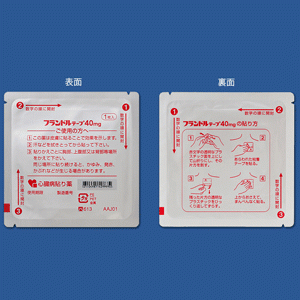
- Dosage form : Transdermal absorption patch; the patch itself is white, semi-transparent, and adhesive; the coating is transparent; dimensions are 63.5mm × 63.5mm; identification code 613; packaged in an aluminum bag.
- Indications : Angina pectoris, myocardial infarction (excluding the acute phase), other ischemic heart diseases (not applicable for angina pectoris remission, in which case rapid-acting nitrates or nitrites are required).
-
Element
- Active ingredient : Each patch contains 40mg of isosorbide dinitrate.
- Additives : Acrylic acid-octyl acrylate-ethylene copolymer, isopropyl methacrylate, polyisocyanate solution, etc.
-
Properties
- Properties of the active ingredient : Isosorbide dinitrate is a white crystalline or crystalline powder; extremely soluble in N,N-dimethylformamide or acetone, readily soluble in chloroform or toluene, slightly soluble in methanol, ethanol (95%) or diethyl ether, and almost insoluble in water; it will explode upon rapid heating or impact. Its chemical name is 1,4:3,6-dehydrated-D-sorbitol dinitrate, with the molecular formula C₆H₈N₂O₈ and a molecular weight of 236.14.
- Formulation characteristics : The patch itself is white, semi-transparent, and adhesive; the coating material is transparent.
II. Usage and Dosage
- Target population : Generally used for adults; however, clinical studies have not been conducted on children, and the applicable regimen is currently unclear.
- Instructions for use : Apply one patch (40mg based on isosorbide dinitrate) to any area of the chest, upper abdomen, or back at a time.
- Replacement frequency : Replace once every 24 or 48 hours after application.
- Dosage adjustment : The dosage may be increased or decreased appropriately according to the patient's specific symptoms.
III. Taboos
The following patients are prohibited from using this product:
- Patients with severe hypotension or cardiogenic shock (vasodilation may further lower blood pressure and worsen symptoms).
- Patients with angle-closure glaucoma (which may lead to increased intraocular pressure)
- Patients with head trauma or cerebral hemorrhage (which may lead to increased intracranial pressure)
- Patients with severe anemia (low blood pressure may worsen anemia symptoms, such as dizziness, orthostatic vertigo, etc.)
- Patients with a history of allergy to nitrates or nitrites
- Patients currently using medications that stimulate guanylate cyclase (such as riociguat) or that inhibit phosphodiesterase 5 (such as sildenafil, vardenafil hydrochloride trihydrate, and tadalafil) may experience enhanced antihypertensive effects and trigger serious adverse reactions.
IV. Precautions
(a) Special populations
- For patients with low blood pressure (excluding severe hypotension) : vasodilation may cause a further decrease in blood pressure, requiring close monitoring of blood pressure.
- Patients with primary pulmonary hypertension : may experience decreased cardiac output, leading to shock.
- Patients with hypertrophic obstructive cardiomyopathy : May experience an increased intraventricular pressure gradient, worsening symptoms.
- Patients with hepatic impairment : This product is mainly metabolized in the liver. Impaired liver function may lead to persistently elevated blood drug concentrations, requiring dosage reduction.
- Pregnant women : Use only when the benefits of treatment outweigh the risks.
- Breastfeeding women should consider both the treatment benefits and the nutritional benefits of breast milk when deciding whether to continue breastfeeding (animal studies show that the drug can enter breast milk).
- Elderly patients : A sustained increase in blood drug concentration may occur; caution and close monitoring are necessary.
- Children : No clinical studies have been conducted in children, and the safety and efficacy are still unclear. Use is not recommended at this time.
(II) Medication Instructions
- This product is not for the relief of angina attacks; in such cases, rapid-acting nitrates or nitrites should be used. If the angina attack worsens or the treatment is ineffective after taking this medication, it is necessary to switch to another treatment regimen promptly.
- Patients currently using nitrates or nitrites should not abruptly discontinue their medication, as this may worsen their symptoms. If discontinuation is necessary, the dosage should be gradually reduced while other medications are being used in combination, and the patient should be informed that they must not discontinue the medication on their own.
- If excessive blood pressure drops during medication use, the patch should be removed immediately, and appropriate measures such as elevating the lower limbs or using vasopressors should be taken.
- Medication may cause orthostatic hypotension; patients should be reminded to be aware of this.
- In the initial stages of medication use, similar to other nitrate and nitrite drugs, headaches and other side effects may occur due to vasodilation. In such cases, analgesics can be used, or measures such as dose reduction or discontinuation of the medication can be taken. Side effects may also lead to decreased attention, concentration, and reflexes; in such cases, patients should avoid driving or operating dangerous machinery.
- If skin symptoms (such as irritation, rash, etc.) occur during medication, the application site can be changed, a corticosteroid ointment can be applied, or the medication can be discontinued.
- When delivering medications, patients and their families should be instructed to choose an application site that will not interfere with the use of the automated external defibrillator (AED).
- Prolonged use of this product or other nitrate or nitrite ester drugs may lead to drug resistance, resulting in reduced efficacy. Studies have shown that transdermal absorption formulations of similar compounds (nitroglycerin) can reduce drug resistance by setting a withdrawal period. Furthermore, there are reports of methemoglobinemia caused by the use of isosorbide dinitrate formulations; close monitoring is necessary.
- Avoid applying the patch to areas with skin lesions, eczema, or dermatitis. If the application area is sweaty, moist, or contaminated, wipe it clean with a tissue before applying the patch. Extra caution is needed in summer as occlusive therapy can easily trigger skin symptoms.
(III) Drug Preservation
- Storage conditions: Store at room temperature.
- Validity period: 3 years
- Packaging protection: Keep the packaging intact to prevent the medicine from getting damp or contaminated; use the medicine as soon as possible after opening, and store any remaining medicine properly to prevent children from accidentally taking it.
V. Adverse Reactions
(a) Allergic reaction
- Common: Contact dermatitis (including irritant contact dermatitis and allergic contact dermatitis), manifested as irritation, redness, itching, etc. at the application site (incidence exceeding 5%).
- Rare: Skin rash (incidence rate less than 0.1% to 5%)
- Rare: Mild hyperpigmentation may occur after contact dermatitis (incidence less than 0.1%).
(ii) Digestive system reactions
- Rare: Nausea (incidence rate less than 0.1% to 5%)
- Rare: stomach upset, loss of appetite, vomiting (incidence less than 0.1%)
(iii) Other system reactions
- Circulatory system : Decreased blood pressure is uncommon (occurrence rate less than 0.1% to 5%); dizziness, vertigo, hot flashes, flushing, and palpitations are rare (occurrence rate less than 0.1%).
- Nervous system : Headache is uncommon (incidence rate less than 0.1% to 5%); fatigue and malaise are rare (incidence rate less than 0.1%).
Note: The above adverse reaction rates are based on usage performance survey data. If any abnormalities occur, medication should be discontinued immediately and appropriate measures should be taken.
VI. Drug Interactions
(a) Drugs that are prohibited from being used in combination
| Drug categories | Drug Name | Clinical symptoms and treatment methods | Mechanism of action and risk factors |
|---|---|---|---|
| Drugs that stimulate guanylate cyclase | Leo Sigua (Adiperson) | This could lead to an excessive drop in blood pressure, causing serious adverse reactions. | Both can promote cGMP formation; their combined use will enhance the antihypertensive effect of this product by increasing cGMP levels. |
| Drugs that inhibit phosphodiesterase 5 | Sildenafil, Vardenafil hydrochloride trihydrate, Tadalafil | This could lead to an excessive drop in blood pressure, causing serious adverse reactions. | Both act on pathways related to blood pressure regulation, and their combined use significantly enhances their antihypertensive effect. |
(ii) Drugs that require caution when used in combination
| Drug categories | Drug Name | Clinical symptoms and treatment methods | Mechanism of action and risk factors |
|---|---|---|---|
| Alcohol | Alcohol | This may increase adverse reactions such as lowering blood pressure. If excessive blood pressure drop occurs, the patch should be removed, and measures such as elevating the lower limbs or using vasopressors should be taken. | Alcohol has a vasodilatory effect; when used in combination with this product, it will enhance the vasodilatory effect and aggravate the hypotensive effect. |
| diuretics | Various diuretics | This may increase adverse reactions such as lowering blood pressure. If excessive blood pressure drop occurs, the patch should be removed, and measures such as elevating the lower limbs or using vasopressors should be taken. | Diuretics can reduce blood volume and enhance the blood pressure-lowering effect of this product. |
| Vasodilators | Nitric acid and nitrite drugs | This may increase side effects such as headaches and lower blood pressure. If excessive blood pressure drop occurs, the patch should be removed, and measures such as elevating the lower limbs or using vasopressors should be taken. | Similar to this product in its mechanism of action, both have a vasodilatory effect; combined use will enhance the vasodilatory effect. |
VII. Pharmacological effects
(a) Regulating biomembrane function
The specific role related to regulating biomembrane function has not yet been explicitly mentioned.
(ii) Improve metabolic abnormalities
The specific effects related to improving metabolic abnormalities have not yet been explicitly mentioned.
(III) Regulating blood lipids
The specific effects related to regulating blood lipids have not yet been explicitly mentioned.
(iv) Protect blood vessels
Isosorbide dilates peripheral volume vessels, reducing cardiac preload; it also has a dilating and antispasmodic effect on the coronary arteries, improving the balance between myocardial oxygen supply and demand, thereby improving cardiac function and indirectly protecting blood vessels and the heart.
VIII. Pharmacokinetics
(a) Absorption
In 16 healthy adult males, after applying one patch of this product (containing 40 mg of isosorbide dinitrate) to the chest, the plasma concentration of isosorbide dinitrate reached 2.29 ± 0.23 ng/mL 6 hours after application, 2.60 ± 0.20 ng/mL 12 hours later, and then remained stable, remaining at 2.28 ± 0.19 ng/mL after 24 hours and 1.65 ± 0.12 ng/mL after 48 hours. This indicates that the product maintains a relatively stable blood concentration after transdermal absorption.
(ii) Excretion
Specific data regarding the excretion of this product has not yet been explicitly mentioned.
IX. Clinical Research
- Study subjects and drugs : This product and its bioequivalent Frandol patch were included in the study, totaling 342 patients (104 with this product and 238 with Frandol patch). The study targeted patients with angina, myocardial infarction (excluding the acute phase), and other ischemic heart diseases.
- Dosage regimen : Apply once every 24 or 48 hours.
-
Research findings :
Disease Name The proportion of moderate improvement or above angina 59.9% (199/332) Myocardial infarction (excluding acute phase, including cases complicated with angina) 59.3% (48/81) Other ischemic heart diseases 50.0% (5/10) - Other related studies : Exercise stress tests were conducted on patients with exertional angina using Frandol patches, which are bioequivalent to this product. Results showed that 48 hours after application, patients' exercise tolerance was significantly increased compared to before treatment. The treadmill test also demonstrated that Frandol patches can improve exercise tolerance, and the degree of improvement was positively correlated with the number of patches applied. A positive dose-response relationship was found between plasma isosorbide dinitrate concentration and exercise tolerance.
10. Packaging Specifications
| Packaging type | Specification |
|---|---|
| Aluminum bag packaging | 50 pieces [(1 piece × 10) × 5] |
| Aluminum bag packaging | 70 pieces [(1 piece × 7) × 10] |
| Aluminum bag packaging | 100 coins [(1 coin × 10) × 10] |
| Aluminum bag packaging | 350 pieces [(1 piece × 7) × 50] |
XI. Production Information
- Manufacturer : Toa Ayo Co., Ltd.
Share