1
/
/
1
日本新薬株式会社
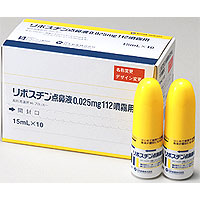
Livostin (Levocabastine Hydrochloride Nasal Spray) 0.025mg/112 spray. Dosage: 15ml x 10 sprays. Livostin Nasal Solution for Rhinitis.
Livostin (Levocabastine Hydrochloride Nasal Spray) 0.025mg/112 spray. Dosage: 15ml x 10 sprays. Livostin Nasal Solution for Rhinitis.
定價
¥16,000 JPY
定價
售價
¥16,000 JPY
單價
/
每
已包含稅額。
無法載入取貨服務供應情況
Levocabastine hydrochloride nasal spray rapidly relieves allergic rhinitis symptoms such as nasal congestion, runny nose, sneezing, and nasal itching by selectively antagonizing histamine H1 receptors.
I. Basic Drug Information
- Generic Name : Levocabastine Hydrochloride Nasal Spray
- English Name : Livostin® Nasal Solution
- Product Name : Riboschin Nasal Drops 0.025mg 112 (Japanese Product Name)
- Dosage form : Nasal spray (suspension)
- Indications : Allergic rhinitis
-
Element
- Active ingredient : Levocabastine hydrochloride
- Dosage : 0.27 mg per mL (0.25 mg as levocarbastine); 0.027 mg per spray (0.025 mg as levocarbastine); 1 container provides 112 sprays (equivalent to a 7-day supply).
- Additives : Benzalkonium chloride solution, disodium edetate hydrate, propylene glycol, polysorbate 80, hydroxypropyl methylcellulose, anhydrous disodium hydrogen phosphate, sodium dihydrogen phosphate monohydrate
-
Properties
- Color : White
- Shape : Suspension
- pH value : 6.0~8.0
- Other markings : Japanese Standard Product Classification Number 871329; Approval Number 21900AMX00770000; Sales Start Date November 1999; Revision Date May 2020 (1st Edition)
II. Usage and Dosage
- Dosage frequency : 4 times a day, specifically in the morning, noon, evening, and before bedtime.
- Single dose : 2 sprays per nasal cavity (0.05 mg of levocarbastine).
- Method of administration : inhalation via spray
III. Taboos
This medicine is contraindicated in patients with a history of allergy to any of its components.
IV. Precautions
(a) Special populations
- Patients with renal impairment : This drug is mainly excreted through the kidneys. When used by patients with renal impairment, the excretion time may be delayed. Caution should be exercised when using this drug and close monitoring is required.
- Pregnant women : This medication should only be used on pregnant women or women who may become pregnant if the benefit of treatment outweighs the potential risks. Animal studies (rats) have shown that oral administration of levocabastine at 80 mg/kg (equivalent to more than 10,000 times the clinical dose) resulted in fetal death and malformations (polydactyly, hydrocephalus, extra metatarsals, and aphthalmos).
- Breastfeeding women : The benefits of treatment and the nutritional benefits of breast milk should be considered before deciding whether to continue breastfeeding or discontinue medication. Studies have shown that levocabastine can be transferred into breast milk.
- Children : No clinical studies have been conducted on low birth weight infants, newborns, infants and young children, and use in this population should be carried out with extreme caution.
- Elderly : Although the amount of drug absorbed when administered via nasal administration may be less, the physiological functions of the elderly are usually reduced, so it is necessary to closely monitor the body's reaction when taking the medication.
(II) Medication Instructions
- When delivering the medication, patients should be instructed on how to properly perform the inhalation procedure according to the accompanying diagrams.
- Because this medicine is a suspension, the container must be shaken thoroughly before each use.
- Drowsiness may occur during medication use. Patients should be advised to avoid activities that pose a risk, such as driving or operating dangerous machinery.
- For patients taking antihypertensive drugs such as reserpine or alpha-methyldopa, these medications may cause nasal congestion as a side effect. If such patients use this medication for allergic rhinitis, the effect of this medication on improving nasal congestion symptoms may be masked, and its use should be under full clinical observation.
(III) Drug Preservation
- Storage conditions : Store at room temperature
- Validity period : 3 years
- Special requirements : Must be stored out of reach of children.
V. Adverse Reactions
(a) Allergic reaction
Shock and angioedema (manifested as difficulty breathing, facial swelling, etc.) may occur. If these occur, medication should be stopped immediately and emergency treatment measures should be taken (the frequency of occurrence is unknown).
(ii) Other systemic adverse reactions
| system | 0.1% or more | 0.1% or less | Frequency unknown |
|---|---|---|---|
| nasal cavity | Nasal irritation (pain, dryness, burning, discomfort) | Nasal discharge, nasal blockage, sneezing, nosebleeds | Nasal swelling |
| Infectious diseases | - | sinusitis | - |
| Nervous system | Drowsiness, headache | - | floating vertigo |
| Eye | - | - | Eyelid puffiness |
| Circulatory system | - | - | Tachycardia, palpitations |
| Respiratory system | - | Sore throat, discomfort in the throat | Cough, difficulty breathing, bronchospasm |
| Digestive system | - | nausea | - |
| Whole body disorder | - | - | Fatigue, lethargy |
| Clinical examination | - | eosinophilia | - |
Note: The frequency of adverse reactions includes data from usage surveys. Close observation is required during medication. If any abnormalities occur, medication should be discontinued immediately and appropriate measures should be taken.
VI. Drug Interactions
When used in combination with oxymetazoline, the absorption of this drug may be reduced; the specific mechanism of action is not yet clear. Close monitoring of efficacy is necessary when used in combination, and the dosing regimen should be adjusted if necessary.
VII. Pharmacological effects
- Mechanism of action : It specifically acts on histamine H1 receptors, exhibiting a strong and long-lasting antagonistic effect, which can improve symptoms such as sneezing, runny nose, and nasal congestion caused by allergic rhinitis.
-
Antihistamine effect
- In in vitro experiments, it can inhibit histamine-induced contraction of the guinea pig ileum and trachea.
- In in vivo experiments, it can inhibit histamine-induced death in guinea pigs and histamine-induced respiratory distress in guinea pigs; it can also inhibit the death induced by compound 48/80 in rats.
- Effects on allergic rhinitis models : In a rat model of allergic rhinitis, it can inhibit the increase in vascular permeability induced by histamine and antigens.
VIII. Pharmacokinetics
- Absorption : In healthy adults, 0.2 mg of levocabastine hydrochloride was administered intranasally every 6 hours, 3 times a day, for 11 consecutive days. The plasma drug concentration remained unchanged until the 5th day of administration, when steady state was reached without drug accumulation. The peak plasma concentration (Cmax) after the last dose was 11.99 ng/mL.
- Distribution : After a single oral administration of 0.5 mg of levocabastine to lactating women, trace amounts of the drug can be transferred into breast milk, and the drug concentration in breast milk is roughly equivalent to that in saliva (data from foreign studies).
- Metabolism : In healthy adults, after a single oral administration of 3H-levocabastine hydrochloride (1 mg as levocabastine), the radioactive substances in the urine were mainly unchanged drug, and the main metabolite was levocabastine glucuronide conjugate (data from foreign studies).
- Excretion : In healthy adults, when administered the drug according to the dosing regimen described in the Absorption section above, approximately 36% of the total dose is excreted in the urine as unchanged drug within 7 days after the last dose; the elimination half-life is approximately 38 hours.
IX. Clinical Research
In domestic clinical studies, a total of 211 patients with allergic rhinitis were included, including a controlled trial. Among them, 56.4% (119/211 patients) achieved moderate or greater improvement, further confirming the effectiveness of this drug.
10. Packaging Specifications
15mL x 10 bottles
XI. Production Information
Manufacturer : Nippon Yaku Co., Ltd.
Company Address : 14 Nishinoshomoncho, Kichijoin, Minami-ku, Kyoto City
Share