1
/
/
1
第一三共株式会社
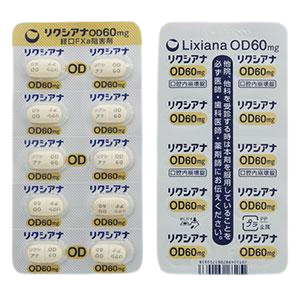
Lixiana OD Tablets 60mg 100 tablets (Lixiana OD Tablets, Daiichi Sankyo for Thrombosis Prevention)
Lixiana OD Tablets 60mg 100 tablets (Lixiana OD Tablets, Daiichi Sankyo for Thrombosis Prevention)
定價
¥100,000 JPY
定價
售價
¥100,000 JPY
單價
/
每
已包含稅額。
無法載入取貨服務供應情況
Lixian OD orally disintegrating tablets contain edoxaban (a factor Xa inhibitor), which prevents thrombus formation by inhibiting the activity of the coagulation factor. It is indicated for the prevention of stroke and systemic embolism in patients with non-valvular atrial fibrillation, and is also used to prevent venous thromboembolism.
I. Basic Drug Information
-
Generic Name : Eduxaban Tosylate Monohydrate Orally Disintegrating Tablets
-
English Name : Edoxaban Tosilate Hydrate Orally Disintegrating Tablets
-
Product name : LIXIANA OD Tablets (registered trademark of LIXIANA OD TABLETS®). Specific specifications include: LIXIANA OD tablets 15 mg, LIXIANA OD tablets 30 mg, and LIXIANA OD tablets 60 mg.
-
Dosage form : Intraorally disintegrating tablets (plain tablets, some specifications include a cut line)
- Licciaana OD Tablets 15mg: Diameter 6.6mm, thickness approximately 3.1mm, weight approximately 90mg, slightly yellowish-white.
- Licciaana OD Tablets 30mg: Diameter 8.6mm, thickness approximately 3.8mm, weight approximately 180mg, slightly reddish-white, contains secant lines.
- Licciaana OD Tablets 60mg: 13.4mm long diameter, 7.0mm short diameter, approximately 4.7mm thick, weighing approximately 360mg, slightly yellowish-white, oval shape with secants.
-
Indications
Indications Rikana OD tablet 15mg Rikana OD tablets 30mg Rikana OD tablets 60mg Inhibits the occurrence of ischemic stroke and systemic embolism in patients with nonvalvular atrial fibrillation. (Note 1, Note 2) have have Treatment and recurrence suppression of venous thromboembolism (deep vein thrombosis and pulmonary thromboembolism) Yes (Note 2) have have Inhibition of thrombus and embolism formation in patients with chronic thromboembolic pulmonary hypertension Yes (Note 2) have have Suppressing the occurrence of venous thromboembolism in patients undergoing lower extremity orthopedic surgery. have have none
Note 1: Consideration should be given based on age and patient condition [7.3 Reference]; Note 2: When switching from this medication to warfarin [8.5.4 Reference] -
Element
Product Name Active ingredients additive Rikana OD tablet 15mg One tablet contains edoxaban tosylate monohydrate (15 mg as edoxaban). D-Mannitol, Crystalline Cellulose, Crospovidone, Carboxymethyl Cellulose, Magnesium Stearate, Hydroxypropyl Cellulose, Fumaric Acid, Sorbitol Hydrate, Magnesium Stearate, Ferric Oxide Rikana OD tablets 30mg One tablet contains 40.4 mg of edoxaban tosylate monohydrate (30 mg as edoxaban). D-Mannitol, Crystalline Cellulose, Crospovidone, Carboxymethyl Cellulose, Magnesium Stearate, Hydroxypropyl Cellulose, Fumaric Acid, Sorbitol Hydrate, Magnesium Stearate, Ferric Oxide Rikana OD tablets 60mg One tablet contains 80.8 mg of edoxaban tosylate monohydrate (60 mg as edoxaban). D-Mannitol, Crystalline Cellulose, Crospovidone, Carboxymethyl Cellulose, Magnesium Stearate, Hydroxypropyl Cellulose, Fumaric Acid, Sorbitol Hydrate, Magnesium Stearate, Yellow Ferric Oxide -
Properties
- The active ingredient, edoxaban toluenesulfonate monohydrate, is a white to slightly yellowish-white powder with a melting point of approximately 249°C (decomposes). Its partition coefficient is -0.91 in 1-octanol/Britton-Robinson buffer (pH 4.0) and 1.72 in 1-octanol/Britton-Robinson buffer (pH 8.0).
- tablet:
- Licciaana OD Tablet 15mg: A pale yellowish-white tablet (orally disintegrating tablet) with possible yellow spots on the surface.
- Licsiana OD Tablets 30mg: Slightly reddish-white tablets (orally disintegrating tablets, containing a cleaver), with possible red spots on the surface.
- Licciaana OD Tablets 60mg: A pale yellowish-white tablet (orally disintegrating, oval-shaped with a cleavage), possibly with yellow spots on the surface.
II. Usage and Dosage
(a) Inhibition of the occurrence of ischemic stroke and systemic embolism in patients with nonvalvular atrial fibrillation
Normally, adults are given the following oral doses once daily, based on edoxaban:
- For those weighing less than 60kg: 30mg
- Weight 60kg and above: 60mg
In addition, depending on renal function and concurrent medication, the dose can be reduced to 30 mg once a day; for elderly patients with high bleeding risk, the dose can be reduced to 15 mg once a day, depending on age and patient condition.
(II) Treatment and recurrence suppression of venous thromboembolism, and inhibition of thrombus and embolism formation in patients with chronic thromboembolic pulmonary hypertension.
Normally, adults are given the following oral doses once daily, based on edoxaban:
- For those weighing less than 60kg: 30mg
- Weight 60kg and above: 60mg
Depending on renal function and concomitant medications, the dose may be reduced to 30 mg once daily; for patients with a creatinine clearance (CLcr) of 30 mL/min or higher but less than 50 mL/min, after assessing the individual risk of venous thromboembolism and bleeding risk, the dose may be reduced to 15 mg once daily orally [refer to 9.2.1 and 16.6.2].
(III) Inhibition of the occurrence of venous thromboembolism in patients undergoing lower extremity plastic surgery
Normally, the adult dose is 30 mg once daily orally, calculated as edoxaban. The first dose should be administered 12 hours after surgery, after confirming that there is no bleeding from the surgical wound [1.1 Reference]; if used in conjunction with epidural catheter removal or lumbar puncture, the first dose should be administered at least 2 hours after the above procedure; if the above procedure is required after the first dose, it should be performed at least 12 hours after the previous dose and at least 2 hours before the next scheduled dose [1.2 Reference].
(iv) Adjustment of medication use for special populations
-
Patients with renal dysfunction ([Refer to 9.2.1, 16.6.2, 16.6.3, 17.1.1, 17.1.3, 17.1.4])
Creatinine clearance rate (CLcr) (mL/min) Administration method 30≤CLcr≤50 30 mg orally once daily 15≤CLcr<30 Its efficacy and safety have not been established, and caution should be exercised when deciding whether to administer it; if administered, the dosage is 30 mg orally once daily (Note).
Note: When used for "inhibition of ischemic stroke and systemic embolism in patients with non-valvular atrial fibrillation", the dosage may be reduced to 15 mg orally once daily, depending on age and patient condition [7.3 Reference]. -
Patients using P-glycoprotein inhibitors (see [10.2, 16.7.2-16.7.7, 17.1.1, 17.1.3, 17.1.4])
Combined medication Administration method Quinidine sulfate monohydrate, beraprost hydrochloride, erythromycin, cyclosporine When used in combination, the dosage is 30 mg orally once daily. Azithromycin, clarithromycin, itraconazole, ritonavir, atazanavir hydrochloride, HIV protease inhibitors (such as ritonavir), etc. Taking full account of the treatment benefits and risks, this medication is only used in combination with other drugs in patients deemed suitable for such treatment; when used in combination, a once-daily oral administration of 30 mg of this drug is usually considered. -
For elderly patients (generally defined as those over 80 years of age), if the patient meets all of the following criteria, the treatment benefit and bleeding risk should be carefully considered before deciding whether to administer the medication; if medication is administered, a once-daily oral dose of 15 mg may be considered [refer to 1.1, 5.1, 7.1, 9.1.1, 9.1.2, 9.8.2, 10.2, 17.1.2]:
- The patient has one or more bleeding tendency factors (low body weight below 45 kg, creatinine clearance rate between 15 mL/min and 30 mL/min, history of bleeding in important organs such as the intracranial, intraocular, or gastrointestinal tract, use of antiplatelet drugs, or routine use of nonsteroidal anti-inflammatory drugs).
- The risk of bleeding is high at standard doses of this drug or at approved doses of other oral anticoagulants.
III. Taboos
The following patients are prohibited from receiving this medication:
- Patients with a history of allergy to any component of this drug [2.2 Reference]
- Patients currently experiencing bleeding (such as intracranial hemorrhage, retroperitoneal hemorrhage, or bleeding from other vital organs) [may experience increased bleeding] [1.1 Reference]
- Patients with acute bacterial endocarditis may experience thromboembolic symptoms associated with thrombus dissection.
- Patients with renal failure (creatinine clearance <15 mL/min) (used for "inhibition of ischemic stroke and systemic embolism in patients with non-valvular atrial fibrillation, treatment and recurrence inhibition of venous thromboembolism, and inhibition of thrombus and embolism formation in patients with chronic thromboembolic pulmonary hypertension") [1.1, 9.2.2 References]
- Patients with liver disease accompanied by coagulation disorders (used for "inhibition of ischemic stroke and systemic embolism in patients with non-valvular atrial fibrillation, treatment and recurrence inhibition of venous thromboembolism, and inhibition of thrombus and embolism formation in patients with chronic thromboembolic pulmonary hypertension") [1.1, 9.3.2 References]
- Patients with severe renal impairment (creatinine clearance <30 mL/min) (used for "inhibition of venous thromboembolism in patients undergoing lower extremity orthopedic surgery") [Refer to 1.1, 9.2.3]
IV. Precautions
(a) Special populations
- Patients at high risk of bleeding include those with bleeding tendencies, congenital or acquired bleeding disorders, uncontrolled severe hypertension, peptic ulcers or a history of such conditions, a history of gastrointestinal bleeding, gastrointestinal vascular malformations, diabetic retinopathy, malignant tumors or a history of such conditions, anemia, or those who have recently undergone intracranial hemorrhage or are in the early postoperative period after brain, spinal cord, or eye surgery. Bleeding may occur in these patients [1.1, 7.3 (see reference)].
- Low body weight patients : Patients weighing <40kg may have an increased risk of bleeding; clinical studies on the efficacy and safety of 60mg or 30mg once daily dosing have not yet been conducted [1.1, 7.3 References]
- Patients with renal impairment : This drug is excreted by the kidneys, and patients with renal impairment may have elevated blood drug concentrations, increasing the risk of bleeding [Ref. 1.1, 7.1, 7.4].
-
Patients with liver dysfunction :
- Patients with severe liver dysfunction may experience decreased production of clotting factors, increasing the risk of bleeding [1.1 Reference].
- Patients with liver disease and coagulation disorders: This medication is contraindicated due to increased risk of bleeding [Ref. 1.1, 2.5].
- Pregnant women and women who may become pregnant : administer only when the benefits of treatment outweigh the risks; animal studies (rats) have shown that the drug can be transferred to the fetus [9.6 Reference].
- Breastfeeding women : The decision to continue breastfeeding should be made by comprehensively considering the treatment benefits and the nutritional benefits of breast milk; animal experiments (rats) show that the drug can be transferred into breast milk [9.7 Reference].
- Children, etc .: No clinical studies involving children, etc. have been conducted yet [9.8 Reference]
- Elderly patients : Physiological functions are often declining, so medication should be administered cautiously while observing the patient's condition; for patients over 80 years of age with a high risk of bleeding, dose reduction should be considered [refer to 9.8.1, 9.8.2].
(II) Medication Instructions
- Routine coagulation function tests (such as prothrombin time-international normalized ratio PT-INR, activated partial thromboplastin time, APTT, etc.) cannot be used as indicators for monitoring the efficacy of this drug; sufficient observation of clinical symptoms is necessary [8.1 Reference].
- Adverse reactions such as bleeding may occur. If necessary, it is recommended to perform clinical examinations such as complete blood count (hemoglobin level and platelet count) and fecal occult blood test [refer to 1.1, 8.2, 11.1.1, 11.1.5].
- Patients should be instructed that if they experience any abnormal bleeding, such as nosebleeds, subcutaneous bleeding, gum bleeding, hematuria, hemoptysis, vomiting blood, or bloody stools, they should contact their doctor immediately [Refer to 1.1 and 8.3].
- Patients should be fully instructed not to discontinue medication on their own; if a dose is missed, two doses should not be taken at once, but a single dose should be taken immediately, ensuring an interval of at least 12 hours between doses [Refer to 8.4, 8.5].
- When switching this medication from other anticoagulants, please note the following:
- Switching from warfarin to this medication: After discontinuing warfarin, perform coagulation function tests such as PT-INR. Once the values are confirmed to have dropped below the lower limit of the therapeutic range, start administering this medication as soon as possible [5.3 Reference].
- Switching from unfractionated heparin to this drug: Initiate administration of this drug 4 ± 1 hours after discontinuation of continuous intravenous infusion [5.3 Reference].
- Switching from other anticoagulants (excluding warfarin and unfractionated heparin) to this medication: Begin administration of this medication at the next scheduled dosing time [5.3 Reference].
- Switching from this medication to warfarin: To maintain anticoagulation, patients taking 30 mg of this medication should combine it with 15 mg of this medication once daily and warfarin; patients taking 60 mg of this medication should combine it with 30 mg of this medication once daily and warfarin, until the PT-INR exceeds the lower limit of the therapeutic range; or after discontinuing this medication, combine warfarin with a non-oral anticoagulant (such as heparin), until the PT-INR exceeds the lower limit of the therapeutic range. Note that within 24 hours of discontinuing this medication, PT-INR cannot accurately reflect the anticoagulant effect of warfarin; PT-INR should be measured before the next expected dose of this medication [refer to 5.1, 8.5.5, 17.1.1, 17.1.3, 17.1.4].
- Switching from this medication to another anticoagulant (other than warfarin): After discontinuing this medication, begin administration of the other anticoagulant at the next scheduled dosing time [8.6 Reference].
- If surgery or invasive procedures are required during the administration of this medication, it is recommended to perform them 24 hours after discontinuation of the medication. If the procedure cannot be delayed, the urgency and bleeding risk should be assessed. After surgery or invasive procedures, once the patient's clinical condition is confirmed to be normal and there is no bleeding, the administration of this medication should be resumed as soon as possible. If necessary, alternative therapies (such as heparin) may be considered [refer to 1.1, 8.7].
- If a patient experiences life-threatening bleeding or bleeding that is difficult to stop during the administration of this medication, and neutralization of the anticoagulant effect is required, it is essential to refer to the electronic attachment for the neutralizing agent, adorxaban alpha (recombinant), and confirm the following precautions: "2. Contraindications", "7. Dosage and Administration Precautions", "8. Important Basic Precautions", "9. Precautions for Patients with Specific Backgrounds", and "11. Adverse Reactions" [Refer to 1.1 and 8.8].
- When used to "inhibit the occurrence of venous thromboembolism in patients undergoing lower extremity orthopedic surgery," it should, in principle, only be used during postoperative hospitalization. The course of treatment should be determined based on the individual patient's risk of venous thromboembolism and bleeding, and medication should not be continued blindly after the risk of venous thromboembolism has decreased. Domestic clinical studies have not explored the efficacy and safety of postoperative administration for more than 15 days [1.1, 8.9 References].
- When used in conjunction with spinal-epidural anesthesia or lumbar puncture, hematoma may form at the puncture site, compressing nerves and causing paralysis. Close monitoring for signs and symptoms of neurological disturbances is necessary during this combined use; any abnormalities should be addressed immediately with appropriate measures [1.2, 7.7 References].
(III) Drug Preservation
- Store at room temperature
- After being removed from the PTP packaging or opened from the plastic bottle, it must be stored in a moisture-proof environment [20.1 Reference].
- Validity period: 3 years
V. Adverse Reactions
(a) Allergic reaction
- Incidence unknown: angioedema, urticaria
- Incidence < 1%: rash, itching
(ii) Digestive system reactions
- Incidence < 1%: diarrhea, nausea, abdominal pain
(iii) Other significant adverse reactions
- Bleeding (incidence: gastrointestinal bleeding 1.3%, intracranial hemorrhage 0.3%, intraocular hemorrhage 0.2%, traumatic bleeding <0.1%, retroperitoneal hemorrhage incidence unknown): Severe bleeding can occur in various tissues and organs throughout the body, and there have been reported deaths; if clinically relevant bleeding occurs or bleeding worsens, the drug should be discontinued [refer to 8.2, 11.1.1]
- Acute kidney injury (incidence unknown): Acute kidney injury may occur after administration of oral anticoagulants. Some cases are accompanied by hematuria, and renal biopsy reveals a large number of red blood cell casts in the renal tubules [11.1.2 Reference].
- Liver dysfunction and jaundice (incidence unknown): Liver dysfunction and jaundice may occur, accompanied by elevated AST and ALT levels [11.1.3 Reference].
- Interstitial lung disease (incidence unknown): may be accompanied by hemoptysis and alveolar hemorrhage; if symptoms such as cough, shortness of breath, dyspnea, fever, and abnormal lung rales occur, chest X-ray, chest CT scan, and serum marker tests should be performed as soon as possible; if interstitial lung disease is suspected, medication should be discontinued and appropriate treatment such as glucocorticoids should be given [11.1.4 Reference].
- Thrombocytopenia (incidence unknown) [8.2 Reference]
(iv) Statistics on other adverse reactions
| system | Incidence rate 1-10% (Unfulfilled) | Incidence rate < 1% | Incidence rate unknown |
|---|---|---|---|
| blood | anemia | Increased platelet count, increased eosinophil count | -- |
| Bleeding tendency | Nosebleed, hematuria (positive blood in urine, etc.), subcutaneous hemorrhage, contusion, traumatic bleeding | Excessive menstrual bleeding, intra-articular hematoma | -- |
| liver | abnormal liver function | Elevated levels of gamma-glutamyl transferase (γ-GTP), alanine aminotransferase (ALT), bilirubin, aspartate aminotransferase (AST), alkaline phosphatase (ALP), and lactate dehydrogenase (LDH). | -- |
| Nervous system | -- | Headache | dizziness |
| Allergic reaction | -- | Rash, itching | Angioedema, urticaria |
| other | -- | Edema, elevated uric acid, elevated triglycerides, fever | -- |
If the above adverse reactions occur, close observation is necessary, and appropriate measures such as discontinuing the medication should be taken if any abnormalities are found. If serious adverse reactions occur, appropriate treatments such as surgical hemostasis and transfusion of blood products (such as concentrated red blood cells, fresh frozen plasma, etc.) should be considered. [13 Reference]
VI. Drug Interactions
| Drug categories | Drug Name | Clinical symptoms and treatment methods | Mechanisms and Risk Factors |
|---|---|---|---|
| Anticoagulants | Heparin sodium, warfarin potassium, enoxaparin sodium, fondaparinux sodium, dabigatran mesylate, etc. [16.7.10 Reference] | Combination therapy may increase the risk of bleeding; the benefits and risks of treatment should be fully considered before deciding whether to use combination therapy. | They may mutually enhance each other's antithrombotic effects. |
| Thrombolytic agents | Urokinase, tissue plasminogen activator (t-PA) preparations, etc. | Combination therapy may increase the risk of bleeding; the benefits and risks of treatment should be fully considered before deciding whether to use combination therapy. | They may mutually enhance each other's antithrombotic effects. |
| Antiplatelet drugs | Aspirin, clopidogrel, ticagrelor, prasugrel, etc. [7.3, 16.7.9 (see references)] | Combination therapy may increase the risk of bleeding; the risk of bleeding is significantly increased when used in combination with two antiplatelet drugs, requiring more careful evaluation, and should only be used when the treatment benefit outweighs the risk. | -- |
| Nonsteroidal anti-inflammatory drugs | Diclofenac sodium, naproxen, etc. [7.3 Reference] | Combination therapy may increase the risk of bleeding. | -- |
| Selective serotonin reuptake inhibitors (SSRIs) and serotonin-norepinephrine reuptake inhibitors (SNIRIs) | -- | Combination therapy may increase the risk of bleeding; the benefits and risks of treatment should be fully considered before deciding whether to use combination therapy. | -- |
| P-glycoprotein inhibitors | Cyclosporine, azithromycin, clarithromycin, itraconazole, ritonavir, atazanavir hydrochloride, HIV protease inhibitors (such as ritonavir), etc. [Refer to 7.2, 7.5, 16.7.2-16.7.7] | This may increase the blood concentration of this drug; it should be administered according to the methods for adjusting the dosage when using concomitant medications as described in Section II, Dosage and Administration. | P-glycoprotein is inhibited, reducing the excretion of this drug. |
VII. Pharmacological effects
- Mechanism of action : In in vitro experiments, edoxaban competitively and selectively inhibits human activated coagulation factor X (FXa), but has weak inhibitory activity against serine proteases of other coagulation-related factors such as thrombin [18 Reference].
- Anticoagulant effect : In in vitro experiments, edoxaban prolongs human plasma prothrombin time (PT), activated partial thromboplastin time (APTT), and thrombin time (TT), with the prolongation effect intensity being PT>APTT>TT [18 Reference]
- Antithrombotic effect : In rat models of venous thrombosis, venous congestion thrombosis, arteriovenous shunt, and tissue factor-induced disseminated intravascular coagulation (DIC), a single oral dose of edoxaban dose-dependently inhibited thrombus formation; in rat models of venous thrombosis, edoxaban did not affect APTT at the dose exerting antithrombotic effect, but prolonged PT [19 Reference]
- Effects on hemostasis : In a rat tail hemorrhage model, higher doses of edoxaban, warfarin, and enoxaparin significantly prolonged bleeding time; the ratio of edoxaban's bleeding time extension at twice the dose (BT2) to the 50% inhibitory dose of thrombosis (ED50) in a rat venous thrombosis model (BT2/ED50) was >10.5, while the ratio for enoxaparin was 3.4 [20 References]
- Reversal of anticoagulant effect by blood coagulation factor preparations : In in vitro experiments, the PT prolongation induced by edoxaban in human plasma could be inhibited by recombinant activated coagulation factor VII, coagulation factor antibody bypass activity complex, and coagulation factor IX complex [21 Reference].
VIII. Pharmacokinetics
(a) Absorption
- In 35 healthy adults, the absolute bioavailability of edoxaban 60 mg administered orally was 61.8% (foreign data) [16.3 Reference].
- Twenty-four healthy adult males underwent a single oral administration of edoxaban OD tablets 60 mg (without water or with water) or edoxaban tablets 60 mg (with water) (on an empty stomach):
Dosage form Number of examples (n) Peak plasma concentration (Cmax) (ng/mL) Peak time (Tmax) (h) Half-life (t1/2) (h) Area under the curve (AUC0-48h) (ng・h/mL) OD tablets 60mg (taken anhydrous) twenty two 355 (0.50-3.00) 1.50 (30.9) 6.41 (30.9) 2030 (17.4) OD tablet 60mg (take with water) twenty three 316 (0.50-3.00) 1.50 (29.2) 6.21 (36.5) 2050 (16.9) Eduxaban tablets 60mg (taken with water) twenty three 348 (0.50-4.00) 1.00 (27.8) 6.70 (13.4) 1890 (16.9) (Note: Data are geometric mean (geometric coefficient of variation %), Tmax is the median (minimum - maximum), and t1/2 is based on plasma concentration data within 48 hours after administration) [14.1.3 Reference] - In 34 healthy adult males, after a single oral administration of edoxaban 30 mg on an empty stomach: Cmax was 218.9 ng/mL (geometric coefficient of variation 34.1%), Tmax was 1.0 h (range 0.5–3.0 h), t1/2 was 4.9 h, and AUC0–24 h was 1187.0 ng·h/mL (geometric coefficient of variation 21.7%) [16.1.1 Reference].
- When administered after a meal, Cmax increased by 13%, but had no effect on AUC [16.1.1 Reference].
(II) Distribution
- In 35 healthy adult males, the volume of distribution of edoxaban 30 mg administered via a single intravenous injection was 107 L (foreign data) [16.3 Reference].
- In 39 healthy adults and 18 healthy males who received single oral doses of edoxaban (90 mg and 120 mg respectively – note: the approved doses are 15 mg, 30 mg, and 60 mg), the ex vivo plasma protein binding rates at 2, 6, and 12 hours post-dose ranged from 40.0% to 58.9% (exogenous data) [16.3 Reference].
(III) Metabolism
Edoxaban is primarily metabolized by carboxylesterase 1 (CELase 1), conjugated, and by cytochrome P450 (CYP) 3A4. CYP3A4-mediated metabolism accounts for <10% of the administered dose (foreign data) [16.4 Reference].
(iv) Excretion
- In 35 healthy adult males, a single intravenous administration of edoxaban 30 mg resulted in a systemic clearance of 21.8 L/h, of which approximately 50% (10.7 L/h) was renal clearance [16.5 Reference].
- In a quality balance study of radiolabeled edoxaban administration, within 168 hours after administration, 35.4% of the radioactive material was excreted in urine and 62.2% in feces, with the majority (23.8% and 49.1%, respectively) excreted unchanged edoxaban; edoxaban was also mainly present in plasma as unchanged edoxaban (data from foreign individuals) [16.5 References]
- Based on plasma concentration data within 72 hours after administration, the half-life (t1/2) is 10–14 hours (foreign data) [16.5 Reference]
(v) Pharmacokinetics in Special Populations
-
Patients with renal dysfunction :
- 24 patients with renal impairment received a single oral dose of edoxaban 15 mg:
| Pharmacokinetic parameters | Creatinine clearance (CLcr) (mL/min) | | | | |
|----|----|----|----|----|----|
| |CLcr>80|80≥CLcr≥50 (Mild)|50>CLcr≥30 (Moderate)|30>CLcr (Severe)| Peritoneal dialysis|
|Cmax (ng/mL)|81.2 (31.7)|104 (46.7)|108 (38.5)|87.4 (34.1)|91.7 (57.0)|
|C24h(ng/mL)|2.34(28.1)|3.44(62.5)|5.90(38.4)|6.88(36.2)|8.24(53.9)|
|AUC0-inf(ng・h/mL)|443(22.3)|620(24.5)|794(25.6)|835(25.1)|963(42.5)|
|t1/2(h)|8.60(3.83)|8.15(2.82)|9.44(2.12)|16.9(10.4)|12.2(5.29)|
|CL/F (mL/min)|564 (22.3)|403 (24.5)|315 (25.6)|299 (25.1)|260 (42.5)|
|CLR(mL/min)|197(16.5)|121(37.8)|67.4(37.8)b)|32.5(49.3)|--|
(Note: Data are geometric mean (geometric coefficient of variation %), n=8; t1/2 is the arithmetic mean (standard deviation); b) n=7) [16.6.1 Reference] - In non-valvular atrial fibrillation patients with creatinine clearance of 15 mL/min ≤ CLcr < 30 mL/min, the expected steady-state AUC and Cmax are 2 times and 1.6 times, respectively, those of patients with normal or mild renal impairment (CLcr ≥ 50 mL/min) [7.1, 16.6.3 References].
- 24 patients with renal impairment received a single oral dose of edoxaban 15 mg:
- Patients with hepatic impairment : In 16 patients with mild to moderate hepatic impairment, a single oral dose of edoxaban 15 mg showed no significant difference in pharmacokinetics compared to healthy adults (foreign data) [16.6.4 Reference]
- Elderly patients : Four healthy elderly men were given edoxaban 90 mg orally once daily for 8 consecutive days (Note: the approved doses for this drug are 15 mg, 30 mg, and 60 mg). Compared with healthy adult men, their AUCtau levels were increased by 33% (foreign data) [16.6 Reference].
- Repeated administration : In 9 healthy adult males, edoxaban was repeatedly administered orally for 8 consecutive days, and no drug accumulation was observed [16.2 Reference].
IX. Clinical Research
(a) Inhibition of the occurrence of ischemic stroke and systemic embolism in patients with nonvalvular atrial fibrillation
-
International multicenter phase III trial : In an international multicenter phase III double-blind trial including Japan, 21,105 patients assessed for efficacy and 21,026 patients assessed for safety were given oral edoxaban (low-dose group: 30 mg, 15 mg for patients meeting the dose reduction criteria; high-dose group: 60 mg, 30 mg for patients meeting the dose reduction criteria) or the control drug warfarin sodium, once daily, with a median observation period of 2.8 years. The results showed that the non-inferiority of each edoxaban group compared with the control drug group was verified for the primary endpoint of stroke or systemic embolism incidence [11 Reference].
- Dose reduction criteria: Body weight ≤ 60 kg at randomization, creatinine clearance ≤ CLcr ≤ 50 mL/min, and concurrent use of beraprost, quinidine, or donepezil (not approved in Japan) [Refer to 7.1 and 7.2]
- Efficacy and incidence of major bleeding (international multicenter phase III trial/total population):
| Endpoint Event | Eduxaban Low-Dose Group (Number of Cases / Total Number of Cases, Annual Incidence) | Eduxaban High-Dose Group (Number of Cases / Total Number of Cases, Annual Incidence) | Warfarin Group (Number of Cases / Total Number of Cases, Annual Incidence) | Hazard Ratio (95% Confidence Interval) |
|----|----|----|----|----|
| Stroke or systemic embolism | 253/7002 (1.61%) | 182/7012 (1.18%) | 232/7012 (1.50%) | Low-dose group 1.07 (0.87-1.31)b); High-dose group 0.79 (0.63-0.99)b)|
| Ischemic stroke | 226/7002 (1.43%) | 135/7012 (0.87%) | 144/7012 (0.93%) | Low-dose group 1.54 (1.25-1.90) c); High-dose group 0.94 (0.75-1.19) c) |
| Hemorrhagic stroke | 18/7002 (0.11%) | 40/7012 (0.26%) | 76/7012 (0.49%) | Low-dose group 0.23 (0.14-0.39) c); High-dose group 0.53 (0.36-0.78) c) |
| Systemic embolism | 11/7002 (0.07%) | 8/7012 (0.05%) | 13/7012 (0.08%) | Low-dose group 0.83 (0.37-1.85) c); High-dose group 0.62 (0.26-1.50) c) |
| Cardiovascular mortality | 527/7034 (2.71%) | 530/7035 (2.74%) | 611/7036 (3.17%) | Low-dose group 0.85 (0.76-0.96)c); High-dose group 0.86 (0.77-0.97)c) |
| All-cause mortality | 737/7034 (3.80%) | 773/7035 (3.99%) | 839/7036 (4.35%) | Low-dose group 0.87 (0.79-0.96)c); High-dose group 0.92 (0.83-1.01)c) |
| Serious cardiovascular events (d)| 913/7034 (4.90%)| 827/7035 (4.41%)| 926/7036 (4.98%)| Low-dose group 0.98 (0.87-1.11)e); High-dose group 0.89 (0.78-1.00)e)|
| Non-fatal myocardial infarction | 148/7034 (0.78%) | 117/7035 (0.62%) | 125/7036 (0.66%) | Low-dose group 1.18 (0.93-1.49)c); High-dose group 0.93 (0.72-1.20)c) |
| Major hemorrhage | 254/7002 (1.61%) | 418/7012 (2.75%) | 524/7012 (3.43%) | Low-dose group 0.47 (0.41-0.55) c); High-dose group 0.80 (0.71-0.91) c) |
Note: a) The non-inferiority margin was set at a hazard ratio of 1.38; b) 97.5% confidence interval (multipleity correction applied for non-inferiority validation at each dose); c) 95% confidence interval; d) Composite endpoint: non-fatal myocardial infarction, non-fatal stroke, non-fatal systemic embolism, death from cardiovascular disease or hemorrhage; e) 99% confidence interval; mITT (modified Intent-to-Treat): all subjects who received at least one dose of the investigational drug, with the analysis period being the period of investigational drug administration + 3 days; ITT (Intent-to-Treat): all subjects, with the analysis period being from randomization to the last visit; safety analysis population: the analysis period is the period of investigational drug administration + 3 days.- Results from the Japanese subgroup (1010 patients assessed for efficacy and 1010 patients assessed for safety) showed that the trends in efficacy and safety were consistent with those in the general population [17.1.1 Reference].
-
Phase III trials in Japan : In a phase III double-blind trial conducted in Japan, 984 patients assessed for efficacy and 982 patients assessed for safety (non-valvular atrial fibrillation patients aged 80 years or older, at high risk of bleeding, and unable to use existing oral anticoagulants at the approved dosage) were given edoxaban 15 mg or placebo once daily, with a median observation period of 1.3 years. The results showed that the superiority of the edoxaban group in terms of the primary endpoint of stroke or systemic embolism was verified [12 Reference].
- High bleeding risk is defined as meeting one or more of the following criteria: severe renal impairment (creatinine clearance ≤ 15 mL/min CLcr < 30 mL/min), history of bleeding in vital organs such as the intracranial/intraocular/gastrointestinal tract, low body weight (≤ 45 kg), long-term use of acidic nonsteroidal anti-inflammatory drugs or combined use of one or more antiplatelet drugs [7.3 Reference].
- Currently approved dosages and administrations for oral anticoagulants are: warfarin (PT-INR controlled at 1.6-2.6), dabigatran etexilate 110 mg twice daily, rivaroxaban 10 mg once daily, apixaban 2.5 mg twice daily, or edoxaban 30 mg once daily [7.3 Reference].
- Efficacy and incidence of major bleeding (Phase III trial in Japan):
| Endpoint Event | Eduxacin Group (Number of Cases / Total Number of Cases, Annual Incidence Rate) | Placebo Group (Number of Cases / Total Number of Cases, Annual Incidence Rate) | Hazard Ratio (95% Confidence Interval) |
|----|----|----|----|
| Stroke or systemic embolism | 15/492 (2.3%) | 44/492 (6.7%) | 0.34 (0.19-0.61) |
| Major hemorrhage | 20/492 (3.3%) | 11/490 (1.8%) | 1.87 (0.90-3.89) |
Note: ITT (Intent-to-Treat): All randomly assigned subjects, with the analysis period from randomization to the end of investigational drug administration/at the time of drug discontinuation; Safety analysis population: Analysis period is the period of investigational drug administration + 3 days.
(II) Treatment and recurrence suppression of venous thromboembolism
International multicenter phase III trial : In an international multicenter phase III double-blind trial including Japan, 8240 patients (acute symptomatic venous thromboembolism) were evaluated for efficacy and safety. After initial heparin treatment, they were given oral edoxaban 60 mg (30 mg for patients meeting the dose reduction criteria) or warfarin sodium once daily for 3-12 months. The results showed that the non-inferiority of the edoxaban group over the control group was verified for the primary endpoint of recurrence of symptomatic venous thromboembolism within 12 months after randomization (a composite endpoint of deep vein thrombosis, non-fatal pulmonary embolism, and fatal pulmonary embolism) [13 Reference].
- Initial treatment regimen: The edoxaban group received low molecular weight heparin (enoxaparin sodium, not approved for this indication in Japan) or unfractionated heparin; the warfarin group received low molecular weight heparin (enoxaparin sodium, not approved for this indication in Japan) or unfractionated heparin combined with warfarin sodium until the PT-INR reached the specified value, and continued for 5-12 days before switching to the respective investigational drug [5.3 Reference].
- Reduction criteria: At randomization, body weight ≤ 60 kg, creatinine clearance ≤ CLcr ≤ 50 mL/min, and concurrent use of beraprost or quinidine; after randomization, concurrent use of ketoconazole (oral formulation, not approved in Japan), itraconazole, erythromycin, azithromycin, clarithromycin, or donepezil (not approved in Japan) [Refer to 7.1, 7.2].
- After the trial, switch to the warfarin regimen: combine low molecular weight heparin (enoxaparin sodium, not approved for this indication in Japan; unfractionated heparin is used in Japan) or fondaparinux sodium (not approved for the indication of suppressing recurrent venous thromboembolism in Japan) with warfarin until the PT-INR reaches 2.0-3.0 [8.5.4 Reference]
- Efficacy and safety (international multicenter phase III trial/total population):
| Endpoint Event | Eduardoxa group (number of cases/total number of cases, incidence rate) | Warfarin group (number of cases/total number of cases, incidence rate) | Hazard ratio (95% confidence interval) |
|----|----|----|----|
| Recurrence of symptomatic venous thromboembolism | 130/4118 (3.2%) | 146/4122 (3.5%) | 0.89 a) |
| At the time of registration, the diagnosis was symptomatic deep vein thrombosis | 83/2468 (3.4%) | 81/2453 (3.3%) | 1.02 (0.75-1.38) |
| Symptomatic pulmonary embolism at registration | 47/1650 (2.8%) | 65/1669 (3.9%) | 0.73 (0.50-1.06) |
| Major or clinically significant bleeding | 349/4118 (8.5%) | 423/4122 (10.3%) | 0.81 (0.71-0.94) |
Note: a) The non-inferiority margin was set at a hazard ratio of 1.5; mITT (modified Intent-to-Treat): all subjects who received at least one dose of the investigational drug, with the analysis period from randomization to 12 months later; safety analysis population: the analysis period was the period of investigational drug administration + 3 days.
- Results from the Japanese subgroup (209 patients assessed for efficacy and safety) showed that the efficacy and safety trends were consistent with those of the general population [17.1.3 Reference].
(III) Inhibition of thrombus and embolism formation in patients with chronic thromboembolic pulmonary hypertension
A Phase III physician-led trial in Japan : In a single-blind, Phase III physician-led trial conducted in Japan, 72 patients assessed for efficacy and 74 patients assessed for safety (patients with chronic thromboembolic pulmonary hypertension) were given oral edoxaban 60 mg (30 mg for patients meeting the dose reduction criteria) or warfarin potassium, once daily for 12 months. This trial included patients with stable and continuous warfarin anticoagulation therapy, and all subjects had a history of pulmonary thromboendarterectomy (PEA) or balloon pulmonary artery angioplasty (BPA) [5.5 Reference]. Results showed that the non-inferiority of the edoxaban group compared to the control group was verified for the primary endpoint, the ratio of resting pulmonary vascular resistance (log-transformed value) from baseline to 1 year after randomization; there was no significant difference in the incidence of major bleeding or clinically significant bleeding between the two groups [14 Reference].
- Reduction criteria: Body weight ≤ 60 kg at randomization, creatinine clearance ≤ CLcr ≤ 50 mL/min, and concurrent use of drugs with P-glycoprotein inhibitory effects (quinidine sulfate monohydrate, beraprost hydrochloride, erythromycin, cyclosporine, azithromycin, clarithromycin, ketoconazole, itraconazole, ritonavir, atazanavir hydrochloride, HIV protease inhibitors) [7.1, 7.2 References]
- Eduxaban to Warfarin Switching: To maintain anticoagulation, patients taking edoxaban 30 mg are given a combination of edoxaban 15 mg once daily and warfarin; patients taking edoxaban 60 mg are given a combination of edoxaban 30 mg once daily and warfarin, until PT-INR exceeds the lower limit of the therapeutic range [8.5.4 Reference].
- Efficacy and safety (Phase III physician-led trial in Japan):
| Indicators | Idusha Team | Warfarin Team |
|----|----|----|
| Baseline mean pulmonary vascular resistance (standard deviation) (number of cases) | 2.406 (1.003) (36) | 2.597 (1.127) (36) |
| Mean pulmonary vascular resistance (standard deviation) after 1 year of drug administration (number of cases) | 2.274 (0.932) (36) | 2.582 (0.941) (34) |
| Least square mean of pulmonary vascular resistance ratio at rest (logarithmic transformed value) (number of cases) [95% confidence interval] | -0.069 (36) [-0.149~0.010] | 0.014 (34) [-0.068~0.096] |
| Least squares mean of pulmonary vascular resistance ratio at rest (logarithmic transformed value) -0.083 [-0.198~0.031] a) |--|
| Major or clinically significant bleeding (number of cases / total number of cases, incidence) | 1/37 (2.7%) | 2/37 (5.4%) |
Note: a) The non-inferiority margin was set at 0.172; Efficacy analysis: Among the 72 subjects who met the trial protocol, 70 subjects who obtained resting pulmonary vascular resistance data 1 year after randomization were included. An analysis of covariance was performed with the treatment group as a factor and the log-transformed baseline resting pulmonary vascular resistance as a covariate; Safety analysis population: All subjects who received at least one dose of the investigational drug.
(iv) Inhibition of the occurrence of venous thromboembolism in patients undergoing lower extremity plastic surgery
-
International multicenter phase III trial (patients undergoing total knee arthroplasty) : In a phase III double-blind trial conducted in Japan and Taiwan, 594 patients assessed for efficacy and 703 patients assessed for safety (patients undergoing total knee arthroplasty) received oral edoxaban 30 mg (once daily for 11-14 days) or subcutaneous enoxaparin 2000 IU (twice daily for 11-14 days), the control drug. The results showed that the non-inferiority of the edoxaban group to the control group in terms of the incidence of venous thromboembolism was verified; there was no significant difference in the incidence of major bleeding or clinically significant bleeding between the two groups [15 Reference].
- Four patients in the edoxaban group experienced massive hemorrhage, three of whom had a hemoglobin drop of more than 2 g/dL, and one of whom required a transfusion of more than 4 units of blood and had a hemoglobin drop of more than 2 g/dL [17.1.5 Reference].
- Efficacy and safety (international multicenter phase III trial):
| Indicators | Total Population - Edoxaban Group | Total Population - Enoxaparin Group | Japanese Subgroup - Edoxaban Group | Japanese Subgroup - Enoxaparin Group |
|----|----|----|----|----|
Incidence of Venous Thromboembolism (number of cases) [95% confidence interval] | 7.4% (22/299) [4.9~10.9] | 13.9% (41/295) [10.4~18.3] | 7.3% (20/273) [4.8~11.0] | 12.2% (33/270) [8.8~16.7] |
| Incidence of venous thromboembolism between groups [95% confidence interval] | -6.5% [-11.6~-1.6] | -- | -4.9% [-10.0~0.1] | -- |
Incidence of major or clinically significant bleeding (number of cases) [95% confidence interval] | 3.7% (20/323) [4.0~9.4] | 6.2% (13/323) [2.4~6.8] |--|--|
Note: The non-inferiority threshold is set at 5%. -
Phase III trials in Japan (patients undergoing total hip arthroplasty) : In a phase III double-blind trial conducted in Japan, 503 patients assessed for efficacy and 604 patients assessed for safety (patients undergoing total hip arthroplasty) received oral edoxaban 30 mg (once daily for 11-14 days) or subcutaneous enoxaparin 2000 IU (twice daily for 11-14 days), the control drug. The results showed that the non-inferiority of the edoxaban group to the control drug group in terms of the incidence of venous thromboembolism was verified; there was no significant difference in the incidence of major bleeding or clinically significant bleeding between the two groups [16 References]
- Two patients in the edoxaban group experienced massive hemorrhage, both presenting with a hemoglobin decrease exceeding 2 g/dL [17.1.6 Reference].
- Efficacy and safety (Phase III trial in Japan):
| Indicators | Eduxaban Group | Enoxaparin Group |
|----|----|----|
Incidence of venous thromboembolism (number of cases) [95% confidence interval] | 2.4% (6/255) [1.1~5.0] | 6.9% (17/248) [4.3~10.7] |
| Incidence of venous thromboembolism between groups [95% confidence interval] | -4.5% [-8.6~-0.9] |--|
Incidence of major or clinically significant bleeding (number of cases) [95% confidence interval] | 2.6% (8/303) [1.3–5.1] | 3.7% (11/301) [2.1–6.4] |
Note: The non-inferiority threshold is set at 8%. -
Phase III trials in Japan (patients undergoing hip fracture surgery) : In a Phase III trial conducted in Japan, 73 patients undergoing efficacy evaluation and 88 patients undergoing safety evaluation (patients undergoing hip fracture surgery) received open-label oral administration of edoxaban 30 mg (once daily for 11-14 days) or subcutaneous injection of enoxaparin 2000 IU (twice daily for 11-14 days). Results showed [17 References]:
- One patient in the edoxaban group experienced massive hemorrhage, characterized by a decrease in hemoglobin exceeding 2 g/dL [17.1.7 Reference].
- Efficacy and safety (Phase III trial in Japan):
| Indicators | Eduxaban Group | Enoxaparin Group a) |
|----|----|----|
Incidence of venous thromboembolism (number of cases) [95% confidence interval] | 6.5% (3/46) [2.2~17.5] | 3.7% (1/27) [0.7~18.3] |
Incidence of major or clinically significant bleeding (number of cases) [95% confidence interval] | 3.4% (2/59) [0.9–11.5] | 6.9% (2/29) [1.9–22.0] |
Note: a) The enoxaparin group was the reference group, and the control group was not used for statistical comparison.
10. Packaging Specifications
| Product Name | Packaging | Specification |
|---|---|---|
| Rikana OD tablet 15mg | Plastic bottles (brown), PTP packaging | 100 tablets/bottle; 100 tablets (10 tablets x 10)/box; 140 tablets (14 tablets x 10)/box |
| Rikana OD tablets 30mg | Plastic bottles (brown), PTP packaging | 100 tablets/bottle; 100 tablets (10 tablets x 10)/box; 140 tablets (14 tablets x 10)/box |
| Rikana OD tablets 60mg | Plastic bottles (brown), PTP packaging | 100 tablets/bottle; 100 tablets (10 tablets x 10)/box; 140 tablets (14 tablets x 10)/box |
XI. Production Information
Manufacturer : Daiichi Sankyo Co., Ltd.
Share