1
/
/
1
あすか製薬株式会社
Prostal Chlormadinone Acetate Tablets 25mg: 100 tablets Chlormadinone Acetate Tablets Prostate
Prostal Chlormadinone Acetate Tablets 25mg: 100 tablets Chlormadinone Acetate Tablets Prostate
定價
¥11,000 JPY
定價
售價
¥11,000 JPY
單價
/
每
已包含稅額。
無法載入取貨服務供應情況
Chlorpheniramine acetate tablets can shrink an enlarged prostate and lower the concentration of testosterone in the blood, thereby inhibiting the proliferation of tumor cells. They can also improve symptoms such as difficulty urinating, a feeling of incomplete urination, and frequent urination. Generally, it is suitable for the treatment of benign prostatic hyperplasia and prostate cancer.
I. Basic Drug Information
- Generic Name : Chlorpheniramine Acetate Tablets
- English name : Chlormadinone Acetate Tablets
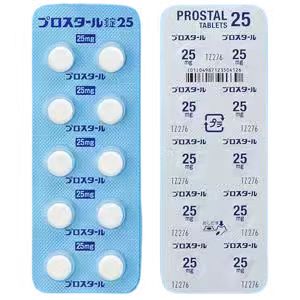
- Product Name : PROSTAL TABLETS 25
- Dosage form : Tablets
-
Indications :
- Benign prostatic hyperplasia
- Prostate cancer (only for patients with metastatic prostate cancer when other therapies are difficult to treat)
-
Element :
- Active ingredient: Each tablet contains 25mg of chlorpromazine acetate.
- Additives: lactose hydrate, Tomokonsun, and カルメロースカルシウム, タルク, ステアリンマグネシウム
-
Characteristics :
- Slightly yellow pigment tablets, 8.0 mm in diameter, 3.1 mm thick, weighing 200 mg, identification code TZ 276
II. Usage and Dosage
- Benign prostatic hyperplasia : 25 mg twice daily, orally after meals, based on chlormadinone acetate.
- Prostate cancer : 50 mg twice daily, orally after meals, based on chlormadinone acetate.
- The dosage can be adjusted according to the symptoms.
III. Taboos
- Patients with severe liver disorders or liver disease (due to impaired metabolic capacity, the burden on the liver may be increased, leading to worsening of symptoms).
IV. Precautions
-
Special populations :
- Patients with heart disease or a history of it: Symptoms may be aggravated by sodium and fluid retention.
- People with diabetes may experience impaired glucose tolerance.
- For patients with meningioma or a history of meningioma: the necessity of medication needs to be assessed, as the blood drug concentration may continue to rise due to impaired physiological function; during medication, attention should be paid to meningioma-related symptoms such as headache and motor paralysis, and medication should be discontinued if necessary.
- Patients with renal dysfunction: dosage and dosing intervals should be adjusted with caution.
- Patients with liver dysfunction: This product is contraindicated for patients with severe liver dysfunction/liver disease.
- Elderly individuals: Due to the decline in physiological functions, attention should be paid to dosage and dosing intervals, and medication should be administered with caution.
-
Medication instructions :
- Once medication is started, it should be administered at least once a month for the first 3 months, and then liver function tests should be performed regularly thereafter (due to cases of death from severe hepatitis).
- Pay attention to monitoring blood glucose and urine glucose (diabetes and hyperglycemia may occur).
- If low potency occurs during administration, the treatment benefit should be assessed, and the medication should be discontinued or the therapy changed if necessary.
- PTP-packaged medications must be removed from the PTP blister pack before consumption to avoid accidental swallowing of the blister pack, which could cause damage or perforation of the esophageal mucosa.
-
Medication storage :
- Storage method: Store at room temperature
- Validity period: 5 years
V. Adverse Reactions
-
Allergic reaction :
- Below 0.1%: Rash
- Frequency unknown: itching
-
Digestive system reaction :
- 0.1~5%: Unpleasant feeling in the stomach
- Less than 0.1%: Nausea, constipation, diarrhea, loss of appetite, thirst
- Frequency unknown: vomiting, abdominal pain
-
Other important adverse reactions :
- Major side effects (less than 0.1%): congestive heart failure, thrombosis (brain, heart, lungs, limbs, etc.), severe hepatitis, liver dysfunction, jaundice (may occur 1-2 months after taking the drug, requiring immediate discontinuation and treatment).
- Endocrine system: 0.1-5% of women do not develop female breasts; frequency unknown. Blood levels of FSH, LH, and testosterone are decreased, while prolactin levels are increased.
- Urinary system: Less than 0.1% experience frequent urination, urethral discomfort, and lower abdominal pain.
- Circulatory system: Palpitation, chest tightness, and shortness of breath occur in less than 0.1% of cases.
VI. Drug Interactions
- There is no clear information available at this time.
VII. Pharmacological effects
- Anti-androgen effect : It exerts its anti-prostate effect by inhibiting the selective uptake of testosterone by the prostate and inhibiting the binding of 5α-dihydrotestosterone to androgen receptors.
- Regulates hormone secretion : Inhibits the biosynthesis of testosterone in the hypothalamus-pituitary system and testes, thereby reducing blood testosterone levels.
- Inhibits tumor proliferation : It has an inhibitory effect on the proliferation of androgen-dependent tumors (such as S-115, CWR22 human prostate cancer).
VIII. Pharmacokinetics
-
absorb :
- After a healthy adult male takes 25 mg orally on an empty stomach, the time to peak plasma concentration (Tmax) is 3.8 hours and the half-life (T1/2) is 6.9 hours.
- The peak plasma concentration (Cmax) and area under the plasma concentration-time curve (AUC) of drugs administered after eating were significantly higher than those administered on an empty stomach, which may be related to the stimulation of bile secretion by eating.
-
distributed :
- In male rats, after oral administration, the drug was most concentrated in the liver, followed by the kidneys, adrenal glands, and fat; the plasma protein binding rate was approximately 99% (in vitro balanced dialysis method).
- Metabolism : It produces a variety of metabolites, mainly hydroxylated compounds at the 2 and 3 positions, among which the 3β-hydroxy compound has an activity approximately 0.7 times that of the unmodified compound.
- Excretion : In patients with prostate cancer, after oral administration of 100 mg of [3H]-chlormadinone acetate, 11.2% was excreted in urine and 25.7% in feces within 3 days.
IX. Clinical Research
-
Benign prostatic hyperplasia (BPH ):
- Double-blind controlled trial (2 tablets daily for 16 weeks): efficacy rates were 66.7% (32/48) and 69.2% (27/39), respectively.
- General clinical trials (1 tablet once, twice a day): efficacy rate 59.7% (92/154).
-
Prostate cancer :
- Multicenter general clinical trial (mainly 100 mg/day, observed for more than 3 months): 186 cases, with an effective rate of 63.4%, of which the effective rate in untreated patients in stages A to D was 67.1% (114/170).
10. Packaging Specifications
- 100 tablets (10 PTP tablets x 10)
XI. Production Information
Manufacturer: Ako Manufacturing Co., Ltd.
Share