1
/
/
1
第一三共株式会社
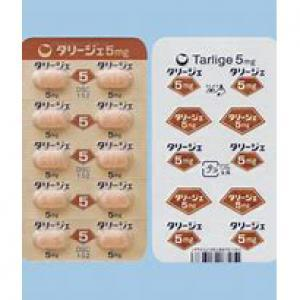
Tarlige Milosabalone Besylate 5mg 100 tablets (TARLIGE TABLETS) - Ichisankyo Neuropathic Pain
Tarlige Milosabalone Besylate 5mg 100 tablets (TARLIGE TABLETS) - Ichisankyo Neuropathic Pain
定價
¥29,000 JPY
定價
售價
¥29,000 JPY
單價
/
每
已包含稅額。
無法載入取貨服務供應情況
Milosabaline besylate is used to treat peripheral neuropathic pain.
I. Basic Drug Information
-
Generic Name : Mirogabalin Besilate Preparation
-
English name : TARLIGE TABLETS, OD TABLETS
-
Product name : Tarlige Tablets, Tarlige OD Tablets
-
Dosage form :
- Ordinary tablets (フィルムコーティング Tablets): 2.5mg, 5mg, 10mg, 15mg specifications
- Intraoral disintegrating tablets (tablets): 2.5mg, 5mg, 10mg, 15mg (OD tablets)
-
Indications : Neuropathic pain (including diabetic peripheral neuropathy, postherpetic neuralgia, and central nervous system disorders such as post-spinal cord injury neuralgia).
-
Element :
| Trade name (sales name) | Active ingredients | Additives |
| --- | --- | --- |
| Tadrangea Tablets 2.5mg | 1 tablet contains 4.39mg of milogabalin benzylsulfonate (equivalent to 2.5mg of milogabalin) | D-Mannitol, Crystalline Cellulose, Calcium Carboxymethyl Cellulose, Stearyl Alcohol, Citric Acid Hydrate, Magnesium Methionine, Magnesium Stearate, Hydroxypropyl Methylcellulose, Titanium Dioxide, Talc, Yellow Ferric Oxide |
| Milegapasrin Tablets 5mg | 1 tablet contains 8.78mg of milogabalin benzylsulfonate (equivalent to 5mg of milogabalin) | Ferric oxide |
| Milegapasrin Tablets 10mg | 1 tablet contains 17.56mg of milogabalin benzylsulfonate (equivalent to 10mg of milogabalin) | - |
| Milegapasrin Tablets 15mg | 1 tablet contains 26.34mg of milogabalin benzylsulfonate (equivalent to 15mg of milogabalin) | - |
| Targee OD Tablets 2.5mg | 1 tablet contains 4.39mg of milogabalin benzyl sulfonate (equivalent to 2.5mg of milogabalin) | D-Mannitol, Crystalline Cellulose, Carboxymethyl Cellulose, Hydroxypropyl Cellulose, Stearyl Alcohol, Citric Acid Hydrate, Magnesium Methionine, Hydroxypropyl Methylcellulose, Crospovidone, Aspartame Calcium, Yellow Ferric Oxide, Magnesium Stearate |
| Targee OD Tablets 5mg | 1 tablet contains 8.78mg of milogabalin benzyl sulfonate (equivalent to 5mg of milogabalin) | D-Mannitol, Crystalline Cellulose, Carboxymethyl Cellulose, Hydroxypropyl Cellulose, Stearyl Alcohol, Citric Acid Hydrate, Magnesium Methionine, Hydroxypropyl Methylcellulose, Crospovidone, Aspartame Calcium, Magnesium Stearate |
| Targee OD Tablets 10mg | 1 tablet contains 17.56mg of milogabalin benzyl sulfonate (equivalent to 10mg of milogabalin) | D-Mannitol, Crystalline Cellulose, Carboxymethyl Cellulose, Hydroxypropyl Cellulose, Stearyl Alcohol, Citric Acid Hydrate, Magnesium Methionine, Hydroxypropyl Methylcellulose, Crospovidone, Aspartame Calcium, Yellow Ferric Oxide, Magnesium Stearate |
| Tarigi OD Tablets 15mg | 1 tablet contains 26.34mg of milogabalin benzyl sulfonate (equivalent to 15mg of milogabalin) | D-Mannitol, Crystalline Cellulose, Carboxymethyl Cellulose, Hydroxypropyl Cellulose, Stearyl Alcohol, Citric Acid Hydrate, Magnesium Methionine, Hydroxypropyl Methylcellulose, Crospovidone, Aspartame Calcium, Magnesium Stearate | -
Characteristics :
| Product Name (Market Name) | Dosage Form | Color | Appearance | Size (mm) | Thickness (mm) | Weight (mg) |
| --- | --- | --- | --- | --- | --- | --- |
| Targe Tablets 2.5mg | Film-coated Tablet | Pale reddish-white | - | Diameter 6.7 | Approx. 3.4 | Approx. 105 |
| Targee Tablets 5mg | Film-coated tablets (oval, with serrations) | Reddish-white | - | Major diameter 10.8, minor diameter 5.7 | Approx. 3.8 | Approx. 208 |
| Targee Tablets 10mg | Film-coated tablets (oval, with cleavage) | Pale reddish-white | - | Major diameter 12.2, minor diameter 6.5 | Approx. 4.4 | Approx. 311 |
| Targee Tablets 15mg | Film-coated tablets (oval, with serrations) | Reddish-white | - | Major diameter 12.2, minor diameter 6.5 | Approx. 4.4 | Approx. 311 |
| Tarigi OD Tablets 2.5mg | Intraoral Disintegrating Tablet | Pale yellow-white | - | Diameter 6.6 | Approx. 2.8 | Approx. 90 |
| Targee OD Tablets 5mg | Intraoral Disintegrating Tablet (with cut) | White | - | Diameter 7.1 | Approx. 2.8 | Approx. 100 |
| Targe OD Tablet 10mg | Intraoral Disintegrating Tablet (with cut) | Pale yellow-white | - | Diameter 8.1 | Approx. 4.1 | Approx. 200 |
| Targee OD Tablets 15mg | Intraoral Disintegrating Tablet (with cut) | White | - | Diameter 9.6 | Approx. 4.5 | Approx. 300 |
II. Usage and Dosage
-
The usual adult dosage is 5 mg twice daily, calculated as milogabalin. This is followed by a gradual increase of 5 mg twice daily at intervals of at least one week, eventually reaching 15 mg twice daily. Depending on age and symptoms, the dosage may be adjusted within the range of 10 mg to 15 mg twice daily.
-
Dosage for patients with renal impairment : The dosage and dosing interval need to be adjusted according to the creatinine clearance (CLcr). Start with a low dose, and after confirming tolerability, if the effect is not good, the dose can be increased, as follows:
| Degree of renal impairment (CLcr: mL/min) | Daily dosage | Initial dose | Effective dose (minimum - recommended) |
| --- | --- | --- | --- |
| Mild (90>CLcr≥60) | 10-30mg | 5mg once, twice a day | 10mg-15mg once, twice a day |
| Moderate (60>CLcr≥30) | 5-15mg | 2.5mg twice daily | 5mg-7.5mg twice daily |
| Severe (including hemodialysis patients) (30>CLcr) | 2.5-7.5mg | 2.5mg once daily | 5mg-7.5mg once daily | -
Special dosage form administration method :
- OD tablets (orally disintegrating tablets): The tablet can be placed on the tongue and taken after it disintegrates due to saliva. No water is needed; it can also be taken with water.
- Do not take OD tablets while lying down without drinking water.
- PTP-packaged medications: must be removed from the PTP blister pack before administration to avoid serious complications such as esophageal mucosal damage caused by accidental ingestion of the PTP blister pack.
III. Taboos
This preparation is contraindicated in patients with a history of allergy to any of its ingredients.
IV. Precautions
(a) Special populations
- Patients with renal impairment : The dosage and dosing interval should be adjusted according to the creatinine clearance rate, as patients may experience elevated blood drug concentrations, which can easily lead to side effects.
- Pregnant women and women who may become pregnant : Use only when the benefits of treatment outweigh the risks. Animal studies (rats) show that the drug can cross the placenta.
- Breastfeeding women : The benefits of treatment should be weighed against the nutritional benefits of breast milk to determine whether to continue breastfeeding. Animal studies (rats) show that the drug can enter breast milk.
- Children : No clinical trials have been conducted in children, and safety and efficacy have not been established.
-
Elderly people :
- Many patients have decreased renal function, so the dosage and dosing interval should be adjusted according to the creatinine clearance rate, and the medication should be administered with caution.
- Symptoms may include dizziness, drowsiness, and loss of consciousness. There is a risk of falling and fracturing bones, so special attention is required.
(II) Medication Instructions
- Dizziness, drowsiness, and loss of consciousness may occur during medication use. Patients should avoid driving or operating dangerous machinery.
- It may lead to weight gain, so be alert to obesity. If signs of obesity appear, measures such as diet therapy and exercise therapy should be taken, and weight should be measured regularly, especially when the dosage is increased or the medication is used for a long time.
- This medication is for the symptomatic treatment of neuropathic pain, not for the treatment of the underlying cause. It is necessary to diagnose and treat the cause of the pain at the same time, and avoid blind use of medication.
- Abruptly stopping medication may cause withdrawal symptoms such as insomnia, nausea, diarrhea, and loss of appetite. If you need to stop taking the medication, you should gradually reduce the dosage and proceed with caution.
- Eye problems such as amblyopia, visual abnormalities, fogging, and diplopia may occur. During diagnosis and treatment, it is necessary to take a medical history based on the eye symptoms.
- International multicenter clinical trials (including those in Japan) have shown that suicide-related adverse events (such as attempted suicide and suicidal ideation) and deaths have occurred in the drug administration group. Clinical use requires close monitoring of patients' mental status.
(III) Drug Preservation
- Store at room temperature.
- After opening, it should be stored in a moisture-proof environment, especially OD tablets, which should be protected from moisture after opening.
- Yellow spots may appear on the surface of 2.5mg and 10mg OD tablets due to the use of pigments, which is normal.
- After opening, ordinary tablets may develop slight dents on the surface due to moisture absorption, which is normal.
V. Adverse Reactions
(a) Allergic reaction
- Manifestations: rash, urticaria, erythema, pruritus, etc.
- Treatment: If allergic symptoms occur, discontinue use and take appropriate measures.
(ii) Digestive system reactions
- Common symptoms include: dry mouth, gastritis, vomiting, increased appetite, decreased appetite, upper abdominal pain, constipation, abdominal distension, and gastroesophageal reflux disease.
- Occasional reactions: diarrhea, abdominal discomfort.
- Management: If symptoms are severe, it is necessary to assess whether to adjust the dosage or discontinue the medication.
(III) Other major adverse reactions
| system | Incidence rate ≥5% | Incidence rate < 5% | Incidence rate unknown |
|---|---|---|---|
| Nervous system | Drowsiness, floating dizziness | Postural dizziness, insomnia, loss of consciousness, headache, tremor, and sensory dullness | Memory impairment, amnesia, dysarthria, hallucinations, delirium, taste disturbances, loss of taste, headache, dizziness, tinnitus |
| Eyes | - | Fog Vision | Double vision, visual impairment, decreased vision |
| Blood system | - | eosinophilia | - |
| Circulatory system | - | Orthostatic hypotension, hypertension | Palpitations, hot flashes, and decreased blood pressure |
| liver | - | elevated liver enzymes | - |
| Urinary system | - | - | Urinary incontinence, urinary frequency, difficulty urinating, urinary retention |
| skin | - | rash | Urticaria, erythema, pruritus |
| other | edema | Weight gain, gait disturbances, abnormal sensations, vertigo, thirst, facial edema, falls, diabetes (elevated HbA1c, elevated blood sugar), fatigue, elevated serum CK, eyelid edema, muscle weakness, withdrawal symptoms | asthenia, pain |
(iv) Serious adverse reactions
- Severe neurological reactions : dizziness (incidence unknown), drowsiness (incidence unknown), loss of consciousness (incidence < 0.1%), which may lead to falls and fractures. If any abnormalities occur, the medication should be discontinued or the dosage reduced and appropriate measures should be taken.
- Liver dysfunction (incidence unknown): Elevated AST and ALT levels may occur. If accompanied by initial symptoms such as general malaise and loss of appetite, medication should be discontinued and appropriate treatment should be given.
VI. Drug Interactions
(a) Drug metabolism related
Milogabalone is primarily excreted through glomerular filtration and tubular secretion in the kidneys, involving transporters including organic anion transporter (OAT)1, OAT3, organic cation transporter (OCT)2, H+/organic cation antiporter (MATE)1, and MATE2-K. It is also metabolized by UDP-glucuronyl transferase (UGT).
(II) Concomitant medications requiring attention
| Drug Name | Clinical symptoms and treatment methods | Mechanism of action / Risk factors |
|---|---|---|
| Probenecid | May enhance the effect of this drug | Probenecid inhibits OAT1, OAT3, and UGT, which may lead to increased blood concentrations of this drug. |
| Cimetidine | May enhance the effect of this drug | Cimetidine inhibits MATE1 and MATE2-K, which may lead to an increase in the blood concentration of this drug. |
| Lorazepam, alcohol (drinking) | It may enhance attention and reduce the reduction of balance function. | Synergistic enhancement effect with the central nervous system depressant effect of this drug |
(iii) Drugs with no obvious interactions
When used in combination with ethanol, lorazepam, or tramadol, no significant effect on the pharmacokinetics of each drug was found. However, it should be noted that combined use may enhance central nervous system depression-related attention and balance impairment.
VII. Pharmacological effects
(I) Mechanism of Action
In the nervous system, milogabalin exerts its analgesic effect by binding to the α2δ subunit, a voltage-dependent auxiliary function of calcium channels, thereby inhibiting calcium currents. In addition, its analgesic effect may also be related to the activation of the norepinephrine pathway in the descending pain-inhibiting system.
(II) Specific pharmacological effects
-
Analgesic effect :
- In a rat model of partial ligation of the sciatic nerve, the pain threshold to mechanical stimulation was increased.
- In streptozotocin-induced diabetic rat models, it can increase the pain threshold to mechanical stimulation.
- In a rat model of spinal cord injury, it can increase the pain threshold to mechanical stimulation.
VIII. Pharmacokinetics
(a) Absorption
-
Single dose :
- In healthy adults, after a single oral dose of milogabalin tablets (3 mg, 5 mg, 10 mg, or 30 mg, calculated as milogabalin), peak plasma concentration (Cmax) is reached in 1 hour, with a half-life (t1/2) of 2.96–3.37 hours. Cmax and AUCinf (area under the infinite time plasma concentration-time curve) are directly proportional to the dose.
- In healthy adults, a single oral dose of 15 mg OD tablets (taken with or without water) and a regular tablet (taken with water) are bioequivalent, with 90% confidence intervals for Cmax and AUClast (area under the plasma concentration-time curve to the quantitative endpoint) in the range of 0.80-1.25.
- Effects of food : In healthy adults, a single oral dose of 15 mg (calculated as milogabalin) resulted in the following absorption rates: fasting Cmax was 230 ng/mL, Tmax was 1.00 hour, and AUClast was 884 ng・hr/mL; postprandial Cmax was 188 ng/mL (a decrease of approximately 18%), Tmax was 1.50 hours (a prolongation of 0.5 hours), and AUClast was 833 ng・hr/mL (a decrease of approximately 6%). Food had a relatively small effect on absorption.
- Repeated administration : Healthy adults take 10 mg or 15 mg (calculated as milogabalin) orally twice a day for 7 consecutive days. Steady state is reached after 3 days of administration. The half-life at 7 days is 2.43-2.83 hours. Cmax and AUCtau (area under the plasma concentration-time curve during the dosing interval) are directly proportional to the dose.
(II) Distribution
- Volume of distribution : In healthy adults, the apparent terminal volume of distribution (Vz/F) is 78.01-87.97 L after a single oral dose of 3 mg, 5 mg, 10 mg, or 30 mg (calculated as milogabarine).
- Blood cell transfer rate : In vitro experiments (14C labeling) showed that milogabalin can enter erythrocytes, with a whole blood concentration to plasma concentration ratio of 0.85-0.87.
- Plasma protein binding rate : In vitro experiments (14C labeling) showed that the plasma protein binding rate was 23.4-25.5% (ultracentrifugation method) at plasma concentrations of 0.1-10 μg/mL.
(III) Metabolism
In healthy adult males, a single oral dose of 30 mg (150 μCi) of 14C-labeled milogabaline resulted in the recovery of approximately 97% of the radioactivity in the urine, of which approximately 76% was in unaltered form. In addition to the unaltered form, the urinary metabolite was latanosomes (approximately 0.6%), and N-glucuronide conjugates metabolized by UGT were also detected.
(iv) Excretion
- Excretion routes : In healthy adults, the clearance (CL/F) of a single oral dose of 3 mg, 5 mg, 10 mg, or 30 mg (calculated as milogabalin) is 16.50-18.24 L/hr, the urinary excretion rate in unaltered individuals is 63.2-71.5%, and the renal clearance rate is 10.4-12.4 L/hr. Within 168 hours of administration, approximately 98% of the radioactive energy is excreted in the urine and approximately 1% in the feces.
- Effects of renal impairment : In patients with renal impairment, a single oral dose of 5 mg (calculated as milogabalin) leads to an increase in AUClast as CLcr decreases; in end-stage renal disease patients undergoing hemodialysis, 15.3% of the drug can be removed by 4 hours of hemodialysis.
- Effects of liver dysfunction : In patients with mild to moderate liver dysfunction, a single oral dose of 15 mg (calculated as milogabalin) resulted in Cmax that was 1.0 times and 0.8 times that of healthy adults, respectively, and AUCinf that was 0.9 times and 1.1 times that of healthy adults, respectively. Liver function had a relatively small impact on pharmacokinetics.
- Effects on the elderly : Healthy elderly individuals aged 55-75 years were given a single oral dose of 5 mg, 10 mg, or 15 mg (calculated as milogabarine) twice daily for 14 consecutive days. Steady state was reached after 3 days of administration. At 14 days, the half-life was 3.58-4.55 hours, and the AUC0-12hr was 1.13-1.24 times that of the first day of administration. There was no significant difference in pharmacokinetics between the elderly and healthy non-elderly individuals.
IX. Clinical Research
(a) Diabetic peripheral neuropathy pain (international multicenter phase III trial)
- Trial Design : 824 Asian patients, including 597 from Japan, were enrolled and divided into four groups: Milogabalin 15 mg/day group (5 mg/day, 10 mg/day for 1 week, 15 mg/day for 12 weeks, for a total of 14 weeks), 20 mg/day group (10 mg/day for 1 week, 20 mg/day for 13 weeks, for a total of 14 weeks), 30 mg/day group (10 mg/day, 20 mg/day for 1 week, 30 mg/day for 12 weeks, for a total of 14 weeks), and placebo group (14 weeks). The trial was a double-blind, controlled trial.
- Results : At week 14, pain scores showed a statistically significant improvement in the 30 mg/day group compared to the placebo group; the incidence of side effects was 18.8% (31/165 cases) in the 20 mg/day group and 36.4% (60/165 cases) in the 30 mg/day group. The main side effects were drowsiness (9.7% in the 20 mg group and 14.5% in the 30 mg group), floating dizziness (7.9% in the 20 mg group and 9.1% in the 30 mg group), peripheral edema (1.8% in the 20 mg group and 5.5% in the 30 mg group), and weight gain (1.8% in the 20 mg group and 5.5% in the 30 mg group).
(II) Postherpetic neuralgia (International multicenter phase III trial)
- Trial design : 763 Asian patients, including 611 from Japan, were included. The grouping and dosing regimens were the same as in the Diabetic Peripheral Neuropathic Pain Trial. The trial was a 14-week double-blind controlled trial.
- Results : At week 14, pain scores showed statistically significant improvement in both the 20 mg/day and 30 mg/day groups compared to the placebo group. The incidence of side effects was 35.3% (54/153 cases) in the 20 mg/day group and 44.5% (69/155 cases) in the 30 mg/day group. The main side effects were drowsiness (17.0% in the 20 mg group and 22.6% in the 30 mg group), floating dizziness (8.5% in the 20 mg group and 14.2% in the 30 mg group), weight gain (4.6% in the 20 mg group), and edema (7.1% in the 30 mg group).
(III) Central neurological disorder-related pain (International multicenter phase III trial)
- Trial Design : 299 Asian patients (post-spinal cord injury neuropathic pain), including 242 from Japan, were enrolled. Milogabalone was administered according to renal function (CLcr≥60mL/min: 10mg/day, 20mg/day for 1 week, then 20mg/day or 30mg/day for 12 weeks; CLcr30-60mL/min: 5mg/day, 10mg/day for 1 week, then 10mg/day or 15mg/day for 12 weeks). Placebo was administered for 14 weeks. It was a double-blind, controlled trial.
- Results : At 14 weeks, pain scores showed a statistically significant improvement in the milogabalin group compared to the placebo group; the incidence of side effects was 41.1% (62/151 cases), with the main side effects being drowsiness (25.8%), floating dizziness (6.6%), and weight gain (4.6%).
(iv) Long-term drug administration study
- Diabetic peripheral neuropathy/postherpetic neuralgia : Asian patients were included (214 diabetic patients, including 165 from Japan; 237 postherpetic neuralgia patients, including 187 from Japan). Treatment lasted 52 weeks (4 weeks of gradual escalation and 48 weeks of dose adjustment). Pain intensity gradually decreased over time. At week 52, the pain intensity was 31.1 mm (baseline 42.1 mm) in diabetic patients and 28.6 mm (baseline 43.5 mm) in postherpetic neuralgia patients. The incidence of side effects was 27.6% in the diabetic group and 39.7% in the postherpetic neuralgia group.
- Central nervous system pain : 210 Asian patients (including 200 Japanese patients) were included. The drug was administered for 52 weeks (4 weeks of gradual increase, 47 weeks of dose adjustment, and 1 week of gradual decrease). At 52 weeks, the pain intensity was 49.7 mm (baseline 61.4 mm). The incidence of side effects was 40.0%, mainly somnolence (15.2%), peripheral edema (9.0%), and floating dizziness (7.1%).
(v) Trial in patients with impaired renal function (Japan Phase III trial)
Patients with diabetic peripheral neuropathy or postherpetic neuralgia and impaired renal function were included (30 cases of moderate pain, CLcr 30-59 mL/min; 5 cases of severe pain, CLcr 15-29 mL/min). The medication was administered for 14 weeks (2 weeks of escalation and 12 weeks of maintenance). At week 14, the pain score decreased from 5.65 to 3.81 in the moderate group and from 5.97 to 3.83 in the severe group. The incidence of side effects was 30.0% in the moderate group (mainly drowsiness 13.3% and floating dizziness 6.7%), and 0% in the severe group.
10. Packaging Specifications
| Dosage form | Specification | Package |
|---|---|---|
| Regular tablets | 2.5mg, 5mg, 10mg, 15mg | PTP packaging (including desiccant), 100 tablets/box (10 tablets x 10 blisters) |
| Oral disintegrating tablets (OD tablets) | 2.5mg, 5mg, 10mg, 15mg | PTP packaging (including desiccant), 100 tablets/box (10 tablets x 10 blisters) |
XI. Production Information
-
Manufacturer : Daiichi Sankyo Co., Ltd.
Share